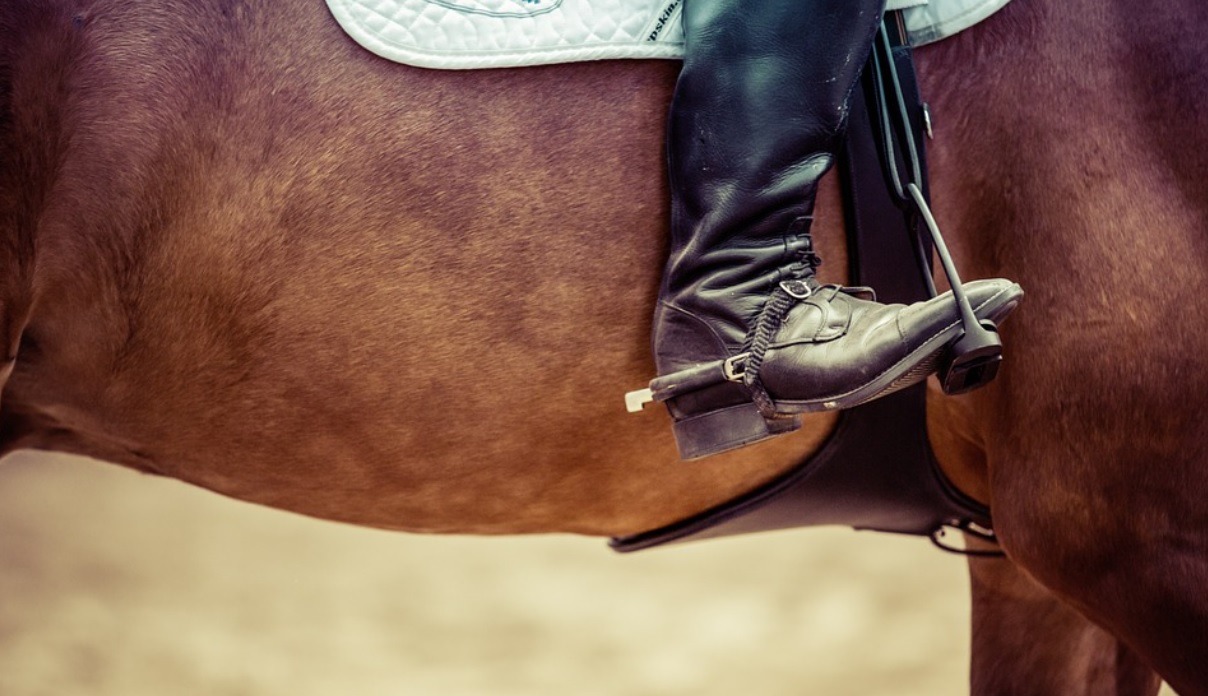
“Lowering your heels” is one of the first lessons in horseback riding. It’s an essential point for maintaining proper riding posture. While the phrase might sound simple, many beginners struggle with keeping their heels down during lessons, often having their instructors point it out repeatedly.
Some riders might feel they’re keeping their heels down, but from an instructor’s perspective, they are still elevated. This article explains the importance of heel position and provides tips on how to keep your heels down effectively.
Why Is It Important to Keep Your Heels Down?

Have you ever been corrected for raising your heels during horseback riding lessons? Some riders believe that sitting correctly on the stirrups will help fix their foot position, but that’s a misconception.
Many unconsciously lift their heels to find a more comfortable posture, but this is incorrect. When riding, if you instinctively raise your heels, your posture is compromised and your instruction might be questioned.
But why is it necessary to keep the heels down? Understanding this is key to actively maintaining the correct position.
The reasons include “using your legs effectively,” “stabilizing your seat and balance,” and “firmly placing the stirrups.” Let’s explore these reasons in detail.
Using Your Legs Effectively
When giving instructions to the horse via your legs, you might kick or pressure its belly. However, instructions given closer to the horse’s back are less effective. The horse reacts most sensitively to signals from its belly.
If your heels are raised and you apply leg pressure, your leg is closer to the horse’s back, which is not ideal. To communicate accurately and subtly, you must position your leg nearer to the horse’s belly.
Additionally, if your heels are up and you try to adjust your ankle, your range of motion is limited. The way to correctly use your leg includes actions like kicking with your belly or moving your ankle to dig into the horse’s belly. Starting with heels down allows you to move your ankle properly and give clearer signals.
Stabilizing Your Seat and Balance
If your posture isn’t correct, horse’s movements can easily destabilize you, risking loss of balance or even falls, which is dangerous.
To maintain proper balance, you need to lower your heels. Lower heels enable you to securely grip the horse with your thighs and ankles, helping you sit steady.
If your heels are down and you’re balanced, you can endure sudden stops or unexpected movements safely.
Proper Use of Stirrups
Many riders have experienced losing their footing when their foot slips out of the stirrup. If your foot slips out, you can’t support yourself properly, which disturbs your balance.
Lowering your heels also helps prevent slipping out of the stirrups. When heels are up, the weight shifts to your toes, making it harder to grip the stirrups and increasing the risk of slipping. Once your foot slides forward, it can get caught, leading to dangerous situations.
To firmly grip the stirrups, you need to keep your heels down and focus on maintaining a heel-centered stance.
Reasons Why Your Heels Rise

The heels are made of very strong muscles that support your weight and allow jumping and bouncing. Maintaining strong muscles unconsciously in a lowered position is difficult.
While riding, you need to stay concentrated, but you also need to focus on various aspects such as riding posture, hand position, and horse movement. It’s important to always be mindful of your heel position to improve your skills.
Countermeasures to Prevent Heels from Rising

One immediate countermeasure for heels rising is to relax and loosen up. When the body encounters large sways or movements, it naturally tries to keep balance, but this isn’t possible if you’re tense or stiff.
If your knees or thighs tense up, your heels are more likely to lift. Practicing “stirrup lifting,” where you lift your foot out of the stirrup, can help you learn to relax and ride with a proper posture.
Adjusting Stirrup Length

The length of the stirrups can significantly influence your riding posture. Although a generally recommended length exists, riders’ skill levels and habits sometimes require adjusting stirrup length.
If you find yourself pressing too hard with your stirrups and lifting your heels unintentionally, increasing the stirrup length can reduce the pressure and make it easier to keep heels down. Conversely, if you tend to be toe-heavy and struggle to lower your heels, shortening the stirrups can help.
Everyone’s ideal stirrup length varies, so it’s best to adjust gradually and find what works for you.