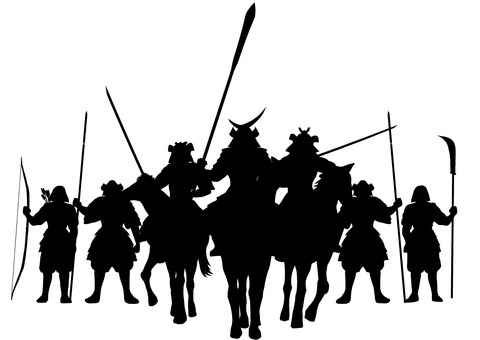
Stories from the Sengoku period are often taught in school classes, so many people have some memories of them. Additionally, many history enthusiasts enjoy movies themed around the Sengoku period. Such movies often depict military commanders riding horses into battle.
Horses played an active role during the Sengoku era, actively participating alongside humans. In this article, we will explore the notable horses that thrived during this turbulent time.
The Stocky Body Type of Sengoku Horses

When thinking of horses that thrived in the Sengoku era, many imagine the sleek and elegant horses seen in movies, often used for riding. However, the actual horses that played active roles during this period were not the tall, slender horses depicted in films. Instead, they were short-legged, stocky ponies.
Riding such ponies into fierce battles might seem reckless. Some may wonder if small horses can handle the weight of a heavily armored rider. Though small, these horses possessed considerable strength, which was crucial at the time. Moreover, the physique of adult Japanese men then was significantly different from today’s standards.
It is said that Japanese people are generally smaller compared to other populations worldwide, and during the Sengoku period, they were even smaller—meaning small ponies could easily serve as battle mounts.
While they couldn’t run as fast as thoroughbreds, their compact size and strength made them suitable for warfare.
The Fiery Temperament of Sengoku Horses

During the Sengoku period, many lives were lost in battles, and notably, many soldiers also lost their lives due to falls from horses. Many horses were easily startled by loud noises or had fierce temperaments that could throw off their riders.
While stallions could be made calmer through gelding, in Japan during the Sengoku era, the practice and technique of gelding were not yet common or even possible. As a result, riders of fiery-tempered horses often fell off or got bitten.
Horses Admired by Sengoku Warlords

This section introduces the horses favored by Sengoku warlords.
The most enthusiastic horse lover among Sengoku warlords was Nobunaga Oda, who reportedly loved many horses. His prized horses included names like ‘Oni Ashige,’ ‘Kojika-ge,’ ‘Oowashi-ge,’ ‘Tōmi Shika-ge,’ ‘Kogun,’ ‘Kawara-ge,’ ‘Daiku,’ ‘Shiroishi Shika-ge,’ ‘Ganze black,’ ‘Buchi,’ ‘Monokawa,’ ‘Yabaka-ge,’ ‘Aiso Buchi,’ and ‘Hoshigawa Ge.’
Other warlords also loved various horses: Takeda Shingen’s ‘Kurokumo,’ Tokugawa Ieyasu’s ‘Shiroishi’ and ‘Kurobuchi,’ Uesugi Kenshin’s ‘Hōjō Getsu-ge,’ and Toyotomi Hideyoshi’s ‘Oshu Kuro.’ Many horses cherished by warlords demonstrated remarkable achievements, such as enduring long-distance travel and protecting their masters.
Some horses were also inherited after their masters’ deaths, showing their strong bonds. An episode about Takeda Shingen’s beloved horse ‘Kurokumo’ mentions that it was a very spirited horse, and only Takeda Shingen himself could ride it.
How Sengoku Warlords Managed Their Horses

Many commanders had a favorite horse, even if it wasn’t openly called a ‘favorite.’ They would rank their horses and even take their preferred ones into battle, swapping them out when fatigued. Prominent figures like Takeda Shingen often took two or three favored horses into battle.
Because war during the Sengoku period was extremely dangerous, horses were seen not merely as transportation or battle tools but as cherished companions and family members. They were nurtured with care, with soldiers believing that animals like horses would not betray them, unlike humans.
Summary
What did you think of this? During movies depicting Sengoku battles, horses are always present. These sleek horses seem to participate actively alongside warlords, but surprisingly, they were actually small ponies. Many might find this fact amusing or shocking.
It is also surprising to learn that many soldiers lost their lives due to falls from horses, contrary to the popular image that only proficient riders existed during the Sengoku period.
Although these horses played a vital role in the dangerous battles, they were deeply loved and cared for by warlords. Learning that even fierce warriors cherished their horses might change your impression of them.
Understanding history through horses is fascinating and highly recommended.