Many people may have been moved and inspired by witnessing the performances of athletes across various sports at the Tokyo Olympics. Due to the COVID-19 pandemic, this event was unique in that spectators couldn’t attend the venues in person and had to watch from home on TV.
Among the many memorable moments in Olympic Equestrian, one topic that gained particular attention was the surprising presence of Daruma dolls in the obstacles.
Some might wonder why Daruma dolls appeared in an equestrian event. In this article, we introduce the results of the equestrian competitions and discuss the fascinating story behind the Daruma obstacle that drew attention during the Olympics.
Results of Show Jumping

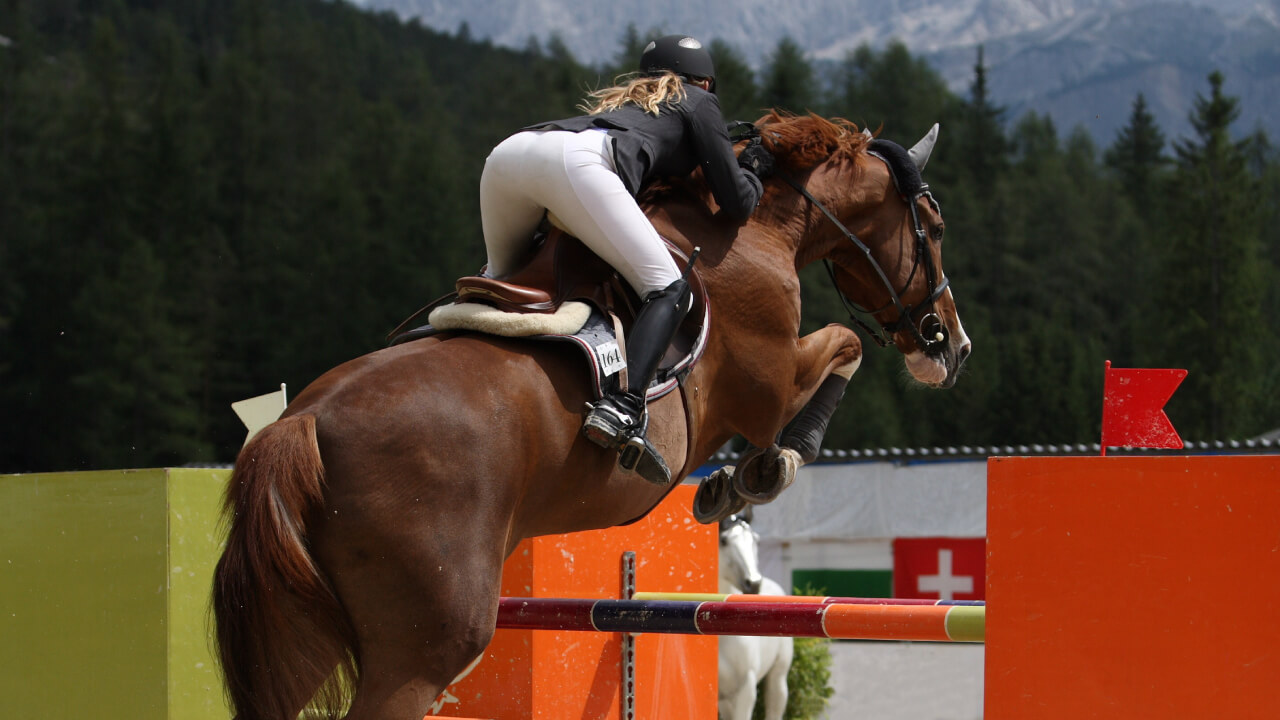
Show jumping involves clearing a series of obstacles set up inside the arena, aiming to complete the course in the shortest time without knocking down any obstacles. It is a speed competition where precision and agility are key. Here, we share the results of the show jumping event.
Japanese Competitors and Results
The show jumping qualifiers took place on August 3rd (individual preliminaries), August 4th (individual finals), August 6th (team preliminaries), and August 7th (team finals). Japanese athletes competing in show jumping were Takashi Saito, Hidenori Sato, and Daisuke Fukushima.
Takashi Saito, from Hokuso Riding Club, was a reserve rider in the Rio Olympics. He qualified for the finals with a time of 88.56 seconds, ranking first in the preliminaries, but finished 13th in the final with a time of 89.82 seconds, incurring penalties for exceeding the time and obstacle faults.
Hidenori Sato, from Paul Schockemöhle Stables, has Olympic experience from Beijing. He qualified 26th with a time of 90.40 seconds, and finished 25th in the final with a time of 84.63 seconds, with penalties for obstacles.
Daisuke Fukushima, from STAR HORSES, also competed in Rio. He qualified first with a time of 87.51 seconds but finished sixth in the final with a time of 87.57 seconds.
Japan’s team result in show jumping was disqualified due to the withdrawal of Saito and Sato.
Medalists in Individual Show Jumping
The gold medalist was Ben Ma from Great Britain, silver went to Pedr Fraaersson from Sweden, and bronze was won by Michael Venderflaaten of the Netherlands.
The team medals were awarded to Sweden (gold), the United States (silver), and Belgium (bronze).
Results of Dressage

Dressage involves guiding the horse through a series of precise movements demonstrating grace and harmony between horse and rider. Precision and elegance are key in this discipline. Here, we present the results of the dressage event.
Japanese Competitors and Results
The dressage qualifiers were held over two days, July 24 and 25, with team finals on July 27 and individual finals on July 28. Japanese representatives were Nobuo Hayashi, Kazuya Sado, and Hiroyuki Kitahara.
Nobuo Hayashi, from Irish Allan Riding School, participated in the qualifiers but was eliminated with a score of 65.714. Kazuya Sado, from the Japan Racing Association, scored 62.531 and was eliminated. Hiroyuki Kitahara, from the JRA, scored 66.304 and was also eliminated.
Japan’s team finished 14th in the team event.
Medalists in Dressage
The gold medal was awarded to Jessica von Bredow-Werndl of Germany, silver to Isabell Werth (Germany), and bronze to Charlotte Dujardin (Great Britain).
Germany and Great Britain took the team gold and bronze, respectively, with the United States claiming silver.
Results of Eventing

Eventing combines dressage, cross-country, and show jumping over three days. Competitors must perform all three phases with the same horse and rider throughout the event.
Here are the results of the eventing competition.
Japanese competitors and results
From July 30 to August 2, individual and team eventing took place. Japanese athletes participating in eventing were Kazuya Todoroki, Yoshiaki Oiwa, and Toshiyuki Tanaka.
Kazuya Todoroki, affiliated with the Japan Racing Association, scored 25.90 in dressage, finishing 7th, scored 27.50 in cross-country to finish 5th, and scored 31.50 in the preliminary show jumping, finishing 7th. In the final show jumping, he scored 31.90, finishing 4th overall.
Yoshiaki Oiwa, from Nittoh, had competed in previous Olympics, but during cross-country, he unfortunately fell off the horse and was disqualified. Toshiyuki Tanaka, from Riding Club Crein, also participated in previous Olympics; he scored 32.70 in dressage (29th), 63.50 in cross-country (35th), and 75.50 in preliminary show jumping (34th), failing to advance.
In the team event, Japan finished 11th due to Oiwa’s disqualification.
Medalists in Eventing
German representative Julia Klyefofsky won gold, British representative Tom McEwen took silver, and Australian representative Andrew Hoi earned bronze. The team medals went to Great Britain (gold), Australia (silver), and France (bronze).
By the way, What is the story behind “Daruma” that’s the biggest topic?

Arguably the biggest topic of the Olympic equestrian events is the unexpected appearance of a Daruma doll as an obstacle. On the third day of the eventing competition, a Daruma-shaped obstacle suddenly appeared. Those who watched the broadcast may have been curious about this.
This time, since the event was held in Japan, the obstacle featured designs unique to Japan, such as cherry blossoms, goldfish, and sumo wrestlers. Not only did the athletes perform flawless and elegant routines, but spectators also enjoyed the colorful and adorable obstacles, reflecting Japan’s culture.
Horses are naturally timid animals. While plants like cherry blossoms pose no problem, obstacles resembling Daruma dolls or sumo wrestlers might have seemed intimidating to the horses.
In fact, many riders received penalties when their horses were distracted by the Daruma obstacle during the individual qualifiers, which became a topic of discussion on social media. In the final round, the Daruma obstacle was replaced by a mascot character of Tokyo 2020, Miraitowa, which was said to be less stimulating to the horses.
Although the Daruma obstacle was unpopular among the horses, it certainly captivated viewers. The design of the obstacles, including the Daruma, beautifully showcased Japan’s culture. For example, the horses jumping over cherry blossoms appeared graceful and delicate.
Summary
In conclusion, even those who previously had little interest in equestrian sports might have become curious by paying attention to the Japanese-themed obstacles, especially the Daruma doll. This unique feature added charm and cultural touch to the competitions.
Although Japan did not win medals this time, the dedication and harmony of the riders and their horses left a strong impression. Despite some withdrawals and disqualifications, we sincerely applaud all the Japanese athletes who represented the nation in these challenging events.