When thinking of traditional Japanese horseback riding styles, the image of shooting targets with a bow while riding a horse — known as ‘Yabusame’ — likely comes to mind first. However, Japanese-style horsemanship encompasses many other techniques as well. In this article, we introduce various aspects of Japanese-style horsemanship, including gear, typical riding styles, and places where you can experience them.
What is Japanese Horsemanship?

Japanese Horsemanship and Martial Arts
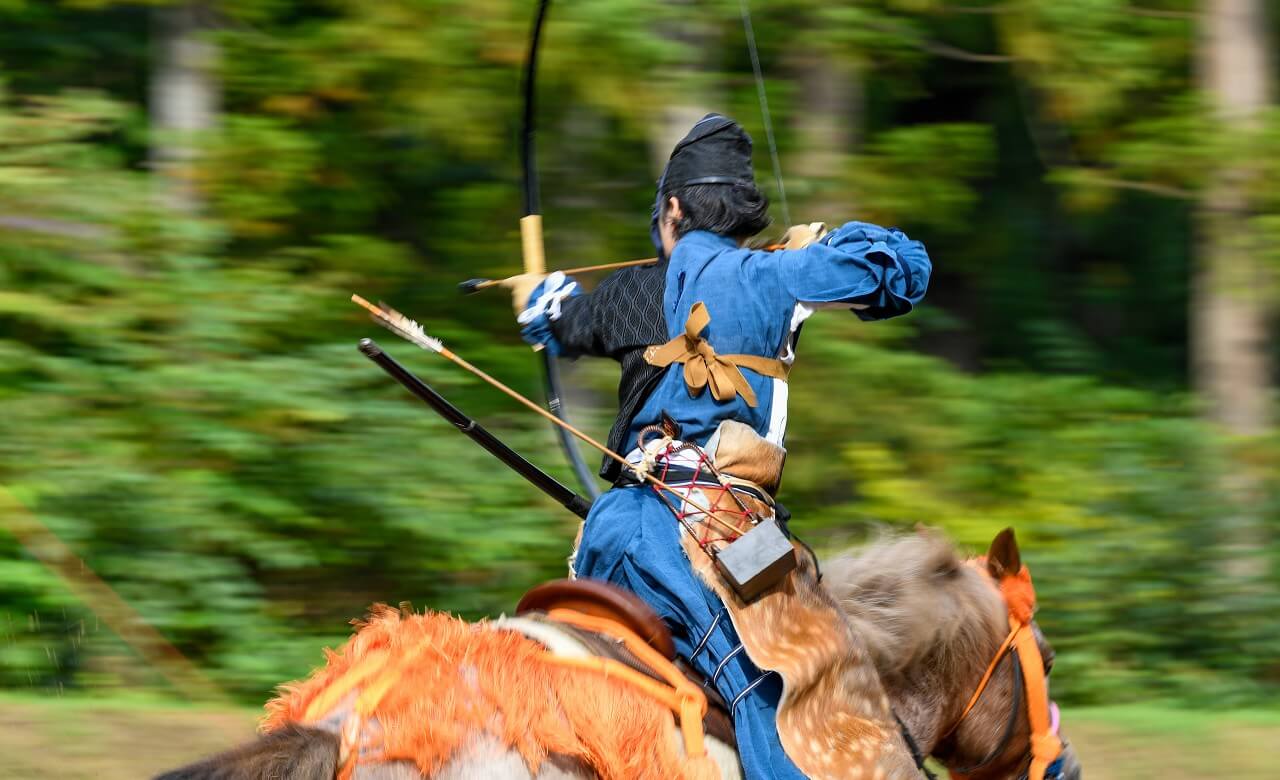
Japanese traditional horsemanship, known as ‘washi horsemanship’, was developed by samurai and has deep ties to martial arts. One of its most iconic forms is ‘Yabusame’, where archery is performed while riding at a gallop. Even today, groups study Japanese horsemanship, including competitions like ‘Washi riding’ and ‘Yabusame’, performed at shrine festivals and events.
There are several competitions and activities such as ‘Washi riding’ around designated courses, speed contests over approximately 150 meters called ‘Kurabe Uma’, and long-distance riding of about 30 km to reduce horse fatigue. Watching horses balanced using only their legs and core while managing weapons on moving gallops is spectacular. Historically, such competitions were held in front of swordsmen and lords, serving both as martial skill displays and as a way for samurai to showcase their abilities.
Gear in Japanese Horsemanship
The gear used in Japanese horsemanship is also traditional. The saddle, for example, is made of wood instead of leather. The stirrups are uniquely shaped, called ‘bukuro-abi’, with a curved board where the foot rests. Traditionally, decorations like tassels on the forehead, chest, and rump — called ‘Sankai’ — were used to protect the horse from arrows. The chest and rump straps are vital for keeping the saddle from slipping, and some believe Sankai served as armor against weapons.
Native Horses and Horsemanship
While show horses at shrines or in historical dramas are often purebred Thoroughbreds, actual Japanese horsemanship often features native Japanese horses, such as the Kiso breed. These small yet resilient horses, evolved to suit Japan’s climate and terrain, can run at speeds of about 50 km/h while carrying armed riders. They are particularly suited to rough mountain paths and less for flat tracks. The Japan Kiso Horse Preservation Association provides detailed information, including videos of traditional riding techniques.
Currently, Japan has only eight native horse breeds remaining, and their use outside tourism is limited, with many challenges in conservation. Expanding the recognition of Japanese-style horsemanship could help increase their opportunities and support their protection efforts.
Skills of Yabusame

Archery on horseback
Yabusame is a skill where riders shoot arrows at targets while galloping at high speed. The employed arrows are called ‘Kabura-ya’, which make a distinctive sound when soaring through the air. Typical targets are three, positioned for a basic shooting method called ‘Yoko-ji’, aiming at the target closest to the rider’s left. Other techniques include ‘Omono-ii’ — shooting at moving targets — ‘Oshimoji’ — shooting backwards while twisting the body — and aiming at ground targets on the left and right.
In traditional archery and Japanese horsemanship, the right hand that holds the bow and reins is called ‘Uma-te’, while the left hand holding the bow is called ‘Yumi-te’. The name ‘Yabusame’ possibly derives from an old phrase meaning ‘shooting while running,’ originally called ‘Yabase-uma’.
Yabusame as a Shrine Ritual
Yabusame has historically played both martial and religious roles, such as offerings to gods. Presently, various schools and shrine associations continue to preserve and practice Yabusame. Watching this traditional ritual performed during festivals or cultural events at shrines and castles is highly recommended.
Various Japanese Riding Styles

Seated Riding
Traditional Japanese armor can weigh about 20kg, which would add up to around 80kg for an adult man wearing it. Native Japanese horses like the Kiso breed are small, with a height of about 130–140cm, but are exceptional for their endurance and agility on challenging terrain. To reduce horse fatigue, a riding style called ‘Iiga-nori’ was developed, similar to the British ‘Honor Rearing’ method, allowing the horse to move freely without hindering its shoulders or back, thus maintaining high mobility.
Standing Over-Under Technique
If seated riding is the opposite of the ‘Iiga-nori,’ standing over-under, similar to the British ‘Two-point,’ aims to stabilize the upper body for better weapon handling. This technique involves using ‘Bukuro-abi’ stirrups with the unique Japanese design, gripping them firmly with the soles of the feet, and absorbing shocks through the knees. It allows the rider to be very stable and to make precise shots while maintaining a natural stance. Observing this in action, especially during Yabusame, reveals how perfectly the rider’s arm and face remain steady while galloping at full speed.
Learning Japanese Horsemanship

Interested in learning Japanese-style horsemanship, such as those introduced? Although few equestrian clubs stock native Japanese horses and traditional gear, some places offer lessons where you can experience Japanese horsemanship firsthand.
Koyo Dairiki So Horse Ranch
8529-86 Momozawa, Naru District, Yamanashi Prefecture
This ranch in Yamanashi aims to preserve and breed Kiso horses, offering trekking tours to visitors. They also periodically hold Yabusame lessons open to those over high school age, regardless of experience.
By attending lessons, you can participate in competitions, religious offerings, and demonstrations. Even a single session provides valuable experience and motivation to continue learning, especially if you aspire to achieve specific goals.
Saddle Back Ranch
415 Enoura, Odawara, Kanagawa Prefecture
This ranch by the sea allows visitors to interact with native Japanese horses and ponies. They also offer activities such as horse communication experiences and a ‘Horseback Archery School’.
The school teaches not only Japanese horsemanship but also includes lessons on its history. Check their website for upcoming schedules and opportunities.
Unaparte (Unaparte)
744 Takakane-cho, Hitachiota City, Ibaraki Prefecture
This riding club is surrounded by lush nature and offers riding experiences on ponies and native Japanese horses. Without membership requirements and by appointment only, lessons are personalized to each participant’s level and preferences, including Japanese-style horsemanship.
Mikari-no-Mori Ranch
1780 Kamo-cho, Omihachiman, Shiga Prefecture
This ranch near Kamo Shrine in Omihachiman has a long history associated with horses. They offer Yabusame lessons and practice sessions using the shrine grounds to help enthusiasts learn Japanese horse archery and related skills.
This article primarily covered areas around Kanto, but some local communities—such as shrine parishioners and Yabusame preservation groups—continue to pass down these traditions. If you live in a region where there are groups offering beginner lessons, reaching out could lead to your first experience in Japanese horsemanship.
Summary
Japanese traditional horsemanship, known as ‘washi horsemanship,’ involves techniques that utilize native Japanese horses to their fullest. Despite limited places to learn and experience it, those interested in Japanese horses and history should pursue this noble tradition. It offers exciting opportunities to handle weapons while riding—skills that can also benefit other types of riding, including British styles. Why not experience it for yourself?