
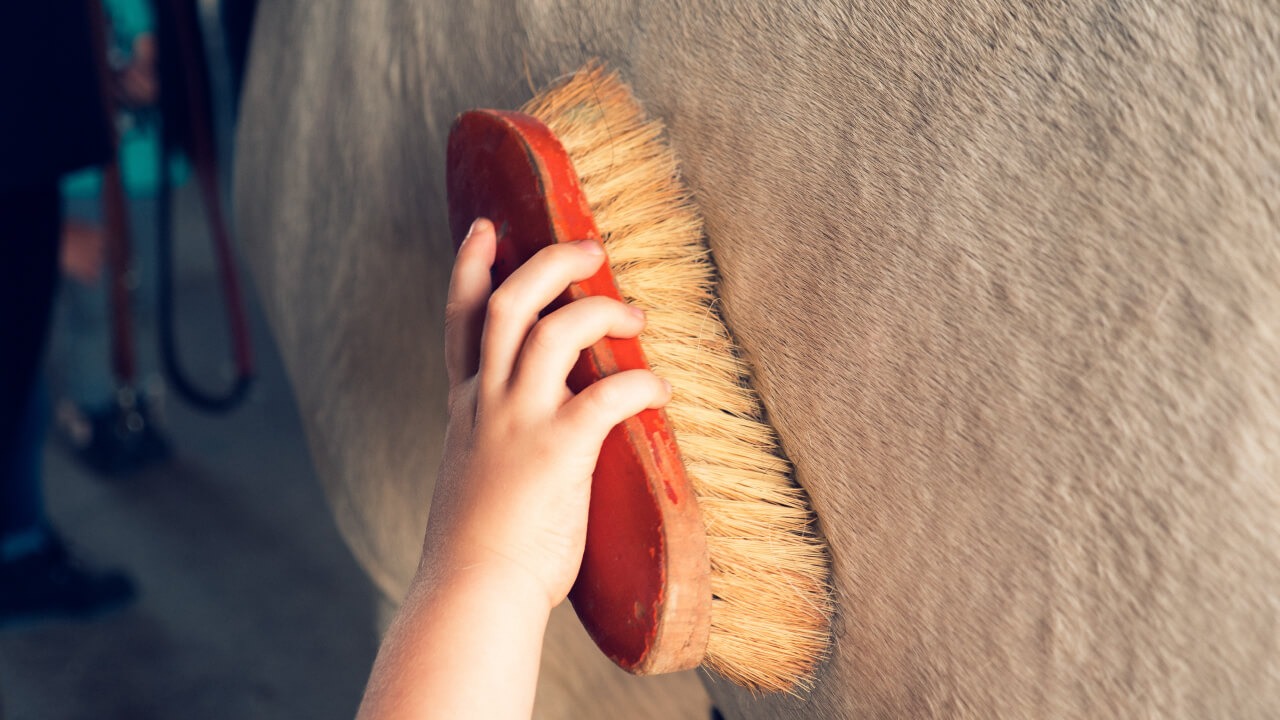
Root Brush

Many people have seen horses and felt ‘beautiful!’ This is not only due to their natural grace but also the daily grooming and care, which are crucial for both their appearance and health. How often and how should you groom your horse? Here, we introduce the essential grooming tools and proper techniques.
First, grooming is done when bringing the horse out of the stable for riding and after riding. After hoof care, use a root brush—thick and stiff-haired—to remove large dirt, mud, sweat, and shavings from the body.
Usage
Hold the root brush in your hand closest to the horse’s rear and brush diagonally from top to bottom along the hair growth. Be careful around the saddle area. Gently brush the belly and between the legs. When brushing the hind legs, stand slightly diagonally behind to keep the horse calm and ensure safety.
Check for any painful or uncomfortable spots when brushing. These may indicate skin issues or injuries. Horses cannot communicate with words and tend to hide weaknesses to avoid predators, so careful observation is necessary.
Root brushes come in various textures—hard, soft, nylon, natural hair, etc. For sensitive skin horses, choose softer brushes.
Benefits of Brushing
Brushing not only maintains the horse’s beauty and health but also provides a massage-like relaxation. It helps relieve muscle fatigue after riding or when confined in a small stall. Horses enjoy the relaxing sensation, but some dislike being touched, so always watch their reactions.
Hair Brush

The hair brush is a finishing tool with softer, shorter bristles that smooth the coat and add shine. Natural bristles include pig, horse, and sheep hair. Pig hair is softer than horse hair, but some brushes combine sheep wool with horse hair to adjust stiffness. Use softer brushes on sensitive areas like the face and belly.
After riding, clean the horse thoroughly with a hair brush before returning to the stable.
Usage
Use the same technique as the root brush: hold the brush close to the rear and brush along the hair growth diagonally downward. Keep one hand on the horse’s face to calm and prevent accidental injury. This gentle approach ensures comfortable grooming.
Hoof Pick

The hoof pick is a tool used to clean out dirt, manure, straw, mud, stones, and debris from inside the horse’s hoof—called ‘back scraping’. It has various shapes, such as metallic spatulas, hooked tools, or brushes. Choose one that is easy to handle.
The hooves may look tough, but they are vital—sometimes called the horse’s ‘second heart’. They contain many blood vessels, and proper blood circulation depends on hoof care. The heel expands and contracts with each step, acting like a pump that helps circulate blood back to the heart, while also cushioning impacts when the hoof hits the ground.
Regular care and observation of hooves are essential. Early detection of hoof problems can lead to faster treatment.
Usage
Keeping dirt, manure, straw, and debris out of the hooves prevents bacterial infection and hoof diseases. Clean the hooves twice daily—morning and evening—during stable cleaning, before and after riding. When cleaning, use the hooves pick to remove dirt from the sole and the underside of the hoof, following the natural shape of the hoof. Persistent dirt may require thorough cleaning, including along the hoof wall and sole. After cleaning, apply hoof oil to prevent cracking and keep the hooves moisturized, just like moisturizing skin. Proper hoof care maintains the horse’s health and prevents injuries.
Sweat Scraper

The sweat scraper is used to remove excess water from the horse’s body after washing. Various shapes exist, including T-shaped, loop, and shoehorn types made from stainless steel, plastic, or rubber.
Usage
During warmer seasons, horses may be washed with water or warm water. Thorough brushing with a curry comb is essential for cleaning the entire body, especially under the saddle, around the groin, behind the legs, and other areas prone to sweat accumulation. Using a sweat scraper, remove excess water to speed up drying. The horse’s large surface area holds a lot of water, and thorough drying prevents the hooves from become soft and weak, reducing the risk of hoof problems. Pay special attention to the belly and sides, where moisture tends to linger, potentially causing stomach issues. After using the sweat scraper, wiping with a towel against the coat’s direction helps the horse dry faster.
Summary

Horse grooming is typically performed before and after riding, often multiple times a day. Knowing the right tools and techniques is essential. Grooming is also an opportunity to bond with your horse, building trust and understanding. Always observe your horse’s reactions and health conditions. If any discomfort or pain is detected, investigate the cause. Consistent grooming helps maintain a healthy, happy horse for many years to come.