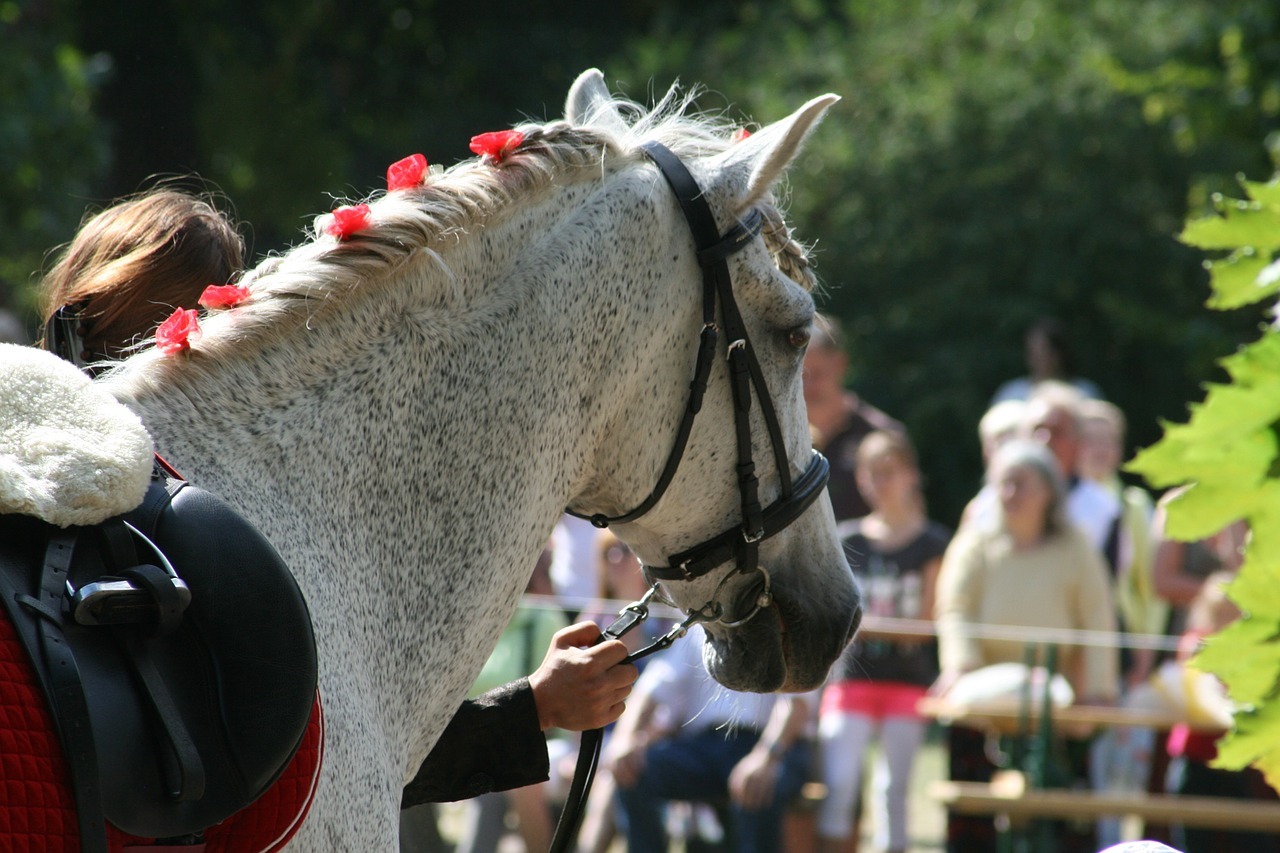
When you attend competitions or horse races, it’s common to see horses adorned with ribbons or intricately braided manes. While these decorations are undeniably cute, the red ribbon often has a special meaning beyond fashion…
Meaning of Red Ribbon on the Tail

Sign of Kick Habit
One common bad habit in horses is kicking tendency. While any horse may kick out of fear or discomfort, some horses exhibit frequent kicking even when not threatened, which is referred to as a kicking habit.
Correcting this habit is important, but it’s also crucial for handlers to be cautious to prevent accidents. The red ribbon tied at the base of the tail is a sign to others that the horse has this tendency, alerting them to be careful.
How to Stay Safe?
If a horse has a red ribbon on its tail, what precautions should nearby people take? The simplest but most important rule is to avoid approaching from behind. When riding, people should pass at a distance or keep a safe gap when crossing obstacle courses to prevent injuries.
If the horse kicks another horse or person, it could cause serious injury. Additionally, the rider might fall off due to the shock of the kick.
Is it purely for fashion?
Since horses have short hair, decorations are usually limited to the mane, tail, or bridle. Sometimes, in addition to the warning red ribbon, colorful ribbons and floral accessories are braided into the tail for aesthetic purposes.
Even for warning signs, there are no strict rules about materials or shapes. Horsespeople often use yarn pom-poms, red charms, or cute polka-dotted red ribbons creatively. You might see beautifully designed ribbons made by the groomers.
Meaning of Red Ribbon on the Head

Biting Habit Sign
The red ribbon on the head is a sign of bitting habit. This refers to horses that display a tendency to nip or chew on people or other horses. Although less dangerous than kicking, biting still poses a risk of injury because horse molars are capable of tearing tough grass.
Some horses also pull or toss their heads, which can cause unexpected accidents if the rider is light enough to be lifted.
How to Stay Safe?
If a horse has a biting tendency, keeping a safe distance is crucial, just like with kicking horses. Biting behaviors may stem from frustration or past negative experiences, so it’s important to respect their space and avoid provoking them.
Maintaining a safe distance helps both avoid injuries and allows horses and riders to train and compete comfortably.
Braided Mane and Bridle Decorations
The red ribbon used to signal biting tendencies is often attached to the mane at the neck. For events or races, horses may be decorated more elaborately, with ribbons tied or braided into the mane or headgear, matching the overall gear color.
In fashion-related decorations, colorful ribbons and floral embellishments may be used. Groomers often pick ribbons that match the gear or the horse’s appearance.
Why Do Horses Braide Their Manes?

Previously, we discussed the decorative aspects of horses with ribbons, but let’s also delve into why horses braid their manes.
While a flowing mane is stunning, in equestrian competitions it’s common to see horses with neatly braided manes. But why bother braiding when the mane looks beautiful as is?
Horses Wear “Formal Attire”
In dressage, both the rider and horse wear formal attire—like tails and top hats. Similarly, horses braid their manes to look tidy and elegant as part of formal presentation.
This isn’t mandatory, and some horses keep their natural wavy or straight manes with pride.
In show jumping, elaborate decorations are prohibited to emphasize the horse’s natural beauty. As a result, colorful ribbons or fancy embellishments are not allowed, so the focus remains on the horse’s inherent elegance.
Creating a Sleek Neck Line
Though not a strict rule, many trainers braid manes to create a neat and sleek appearance, making it easier to handle the reins and demonstrate proper head position during competitions.
Bridling and showing a well-maintained, braided mane can help horses appear more active and well-trained, which is often appreciated by judges. After the event, unbraiding reveals a natural, voluminous mane, which can be charming.
Finally, braiding can prevent hair from falling into the eyes of younger horses or ponies, especially when they are active or nervous.
Keeping Bangs Out of the Way
In addition to competitions, ponies and long-maned horses often have their manes braided for everyday riding. Braided or tied-up bangs are common, especially when they might obstruct sight.
Gathering long hair into neat braids makes grooming easier and adds a touch of cuteness, encouraging owners to experiment with different styles.
Summary
Horses with braided manes and ribbons look stylish and festive, making riding and watching more enjoyable. However, pay attention if horses have red ribbons on their tails or heads, as these indicate specific behavioral tendencies like kicking or biting. When working closely with such horses, extra caution is essential to ensure safety.