
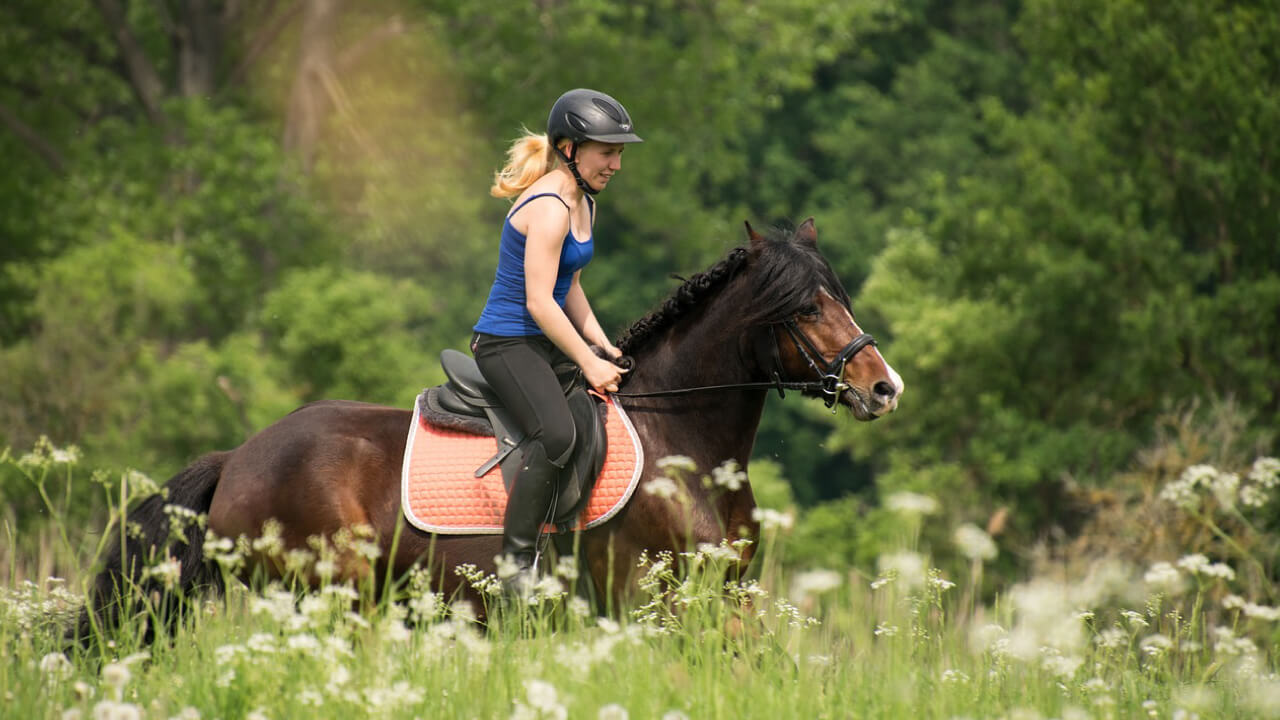
Many people have seen seniors at riding clubs on horses or horses appearing in movies and been captivated by their graceful gallop. In this article, we will explore the speed and techniques of the exhilarating trot (kakeashi)!
Racehorses are said to reach speeds of about 70 km/h, but how fast do riders typically go during a trot?
Mastering ‘Kakeashi’ for Swift, Graceful Running

When starting horseback riding, beginners usually practice walking (zembu) and then trot (hay-ashi). That elegant and swift gait is called ‘kakeashi’. Once you get comfortable with a steady trot, you can begin practicing kakeashi.
Kakeashi is perceived as ‘less bumpy and easier’ than a regular trot, but at first, its rhythmic movement and speed can feel intimidating, especially for beginners unfamiliar with the motion.
Another challenging aspect is ‘te-mae’ (lead side). During a walk, riders can change the lead by moving their body with the horse’s turning direction, maintaining the correct lead. But during kakeashi, the lead is fixed—when the horse is on the right lead, the left front leg leads, and vice versa.
Therefore, it’s important to communicate the intended lead from the start; otherwise, the horse may begin in the opposite lead, making motion less smooth. Proper lead control is crucial for comfortable, efficient riding.
① The inside of the circle when a horse is circling.
② The side of the front legs that contact the ground later.
Simply put, aligning these two aspects is called ‘matching the lead’.
Since mastering kakeashi involves understanding these details, we will explain the techniques in the second half of this article. First, let’s compare the speed of kakeashi to other modes of transportation.
How Fast is Kakeashi? 340 meters per minute (about 20 km/h)?

Whether it is a light canter when in a hurry or a full sprint during a race, the speed differs greatly, right?
For example, during a hurdle jump, kakeashi reaches around 340 m/min, which equals about 20 km/h. Cross-country gallops can reach up to 550 m/min (about 33 km/h).
Comparing it to everyday transportation, riding kakeashi at about 30 km/h is similar to riding a moped—speed is surprisingly swift, yet not too fast.
While these speeds may seem fast compared to walking, they are still manageable with proper control. Many riders find that they can enjoy the exhilaration while maintaining safety and comfort.
Developing proper posture and using aids correctly allows you to control and steer even at these speeds, making kakeashi a thrilling but safe gait to master.
During cross-country, it can reach 550 meters per minute (~33 km/h), similar to a moped.
Riders’ Posture During Kakeashi

Next, we will explain the rider’s posture during kakeashi.
Avoid leaning forward too much
If you start leaning forward when trying to accelerate into kakeashi, your weight shifts forward, making it harder for the horse to move smoothly. Keep a straight posture and signal the horse with your legs to initiate kakeashi.
Maintain a steady rein tension
Loosening the reins might seem like it will slow the horse down, but it can lead to uneven gait or incorrect leads. Keep the reins engaged enough to keep the horse’s neck flexible without pulling too hard, and maintain a balanced, secure position with your seat and feet.
Use your legs actively
If the speed drops, gently squeeze with your calves to help maintain kakeashi. Prompting the horse early prevents it from slipping into a walk or slowing unnecessarily, especially when turning or performing tight circles.
Summary
Mastering the techniques of starting and maintaining kakeashi is essential to enjoy a swift, smooth ride. Once you understand the meaning behind each aid, you will ride more comfortably and confidently, enjoying a true connection with your horse. Riding at these speeds feels exhilarating — once you get used to it, horseback riding becomes even more enjoyable!