
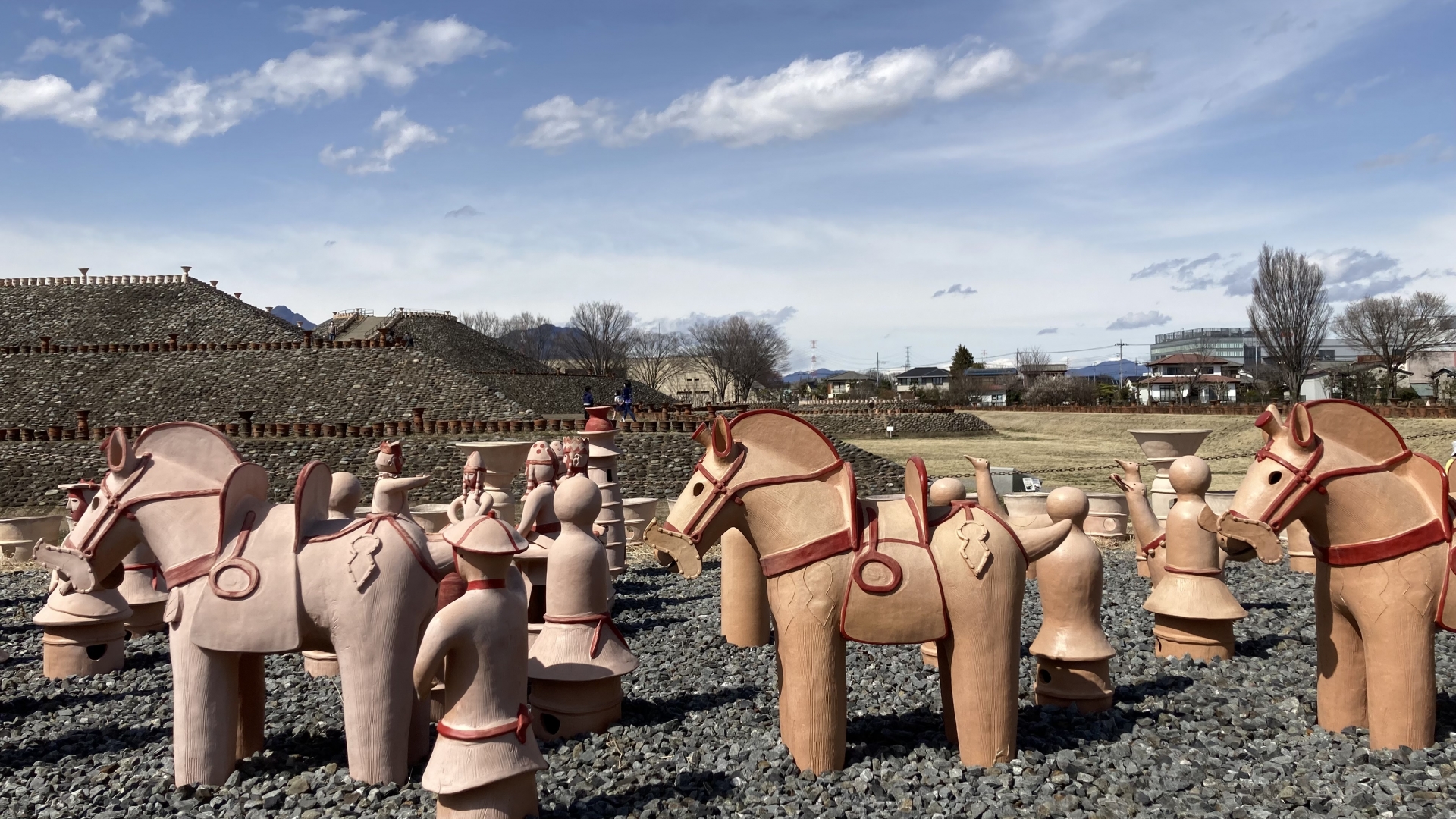
Many people residing in Japan have likely encountered *haniwa* (earthenware funerary objects) through television, textbooks, or museum visits. These artifacts, found lined around ancient tombs, come in various shapes including cylinders, pots, human figures, and animals.
Among these, horse-shaped *haniwa* are particularly renowned. In this article, we explore why these *haniwa* were made and why horse-shaped *haniwa* are so prevalent during the Kofun period.
Why Were *Haniwa* Line Up Around Tombs?
Concerning the era when *haniwa* were crafted, many might remember studying about it in history classes. However, the main figures during that time were the tombs and the powerful figures buried within them, not the *haniwa* themselves. Here, we spotlight *haniwa* and examine the relationship between humans and horses in ancient Japan.
Don’t Confuse Clay Figures and *Haniwa*!
First, let’s clarify the difference between *hollow* clay figures and *haniwa*. Clay figures (*dogu*) from the Jomon period represent humans, often women, symbolizing fertility, prosperity, or protection. They are typically 2 to 50 centimeters tall. In contrast, *haniwa* from the Kofun period are made from unglazed earthenware and come in various forms such as human figures, animals, houses, ships, cylinders, or pots, with sizes ranging from several centimeters to over a meter.
Origins of *Haniwa*
The history of *haniwa*’s origins is documented in the Nihon Shoki (completed in 720). It notes that before, when emperors died, they were buried with living animals and humans—considered inhumane. Therefore, the practice shifted to creating *haniwa* depicting humans and animals to be buried with them. However, archaeologists believe this explanation may not be accurate, and the actual origins lie elsewhere. Let’s explore more about how *haniwa* were created.
*Haniwa* Shapes Reflect Different Periods
The Kofun period spanned from the 3rd to the 7th century, and during this time, *haniwa* evolved significantly. Initially, simple pot-shaped *haniwa* lined tombs, but later, forms like cylinders, house-shaped figures, and weapons like shields appeared. By around 400 CE, animal-shaped *haniwa* emerged, followed by human figures. Their designs serve as markers of their time, helping us understand the ancient Romantic era of Japan.
Why Were *Haniwa* Line Up Around Tombs?
The purpose was believed to be providing protection for the deceased, with the *haniwa* symbolizing objects or beings that would serve them in the afterlife. Larger tombs belonged to more powerful figures, and they had more *haniwa* placed around them—some exceeding a meter in height. Additionally, some suggest *haniwa* had religious or spiritual significance, protecting sacred spaces.
Special Significance of Horse-Shaped *Haniwa*
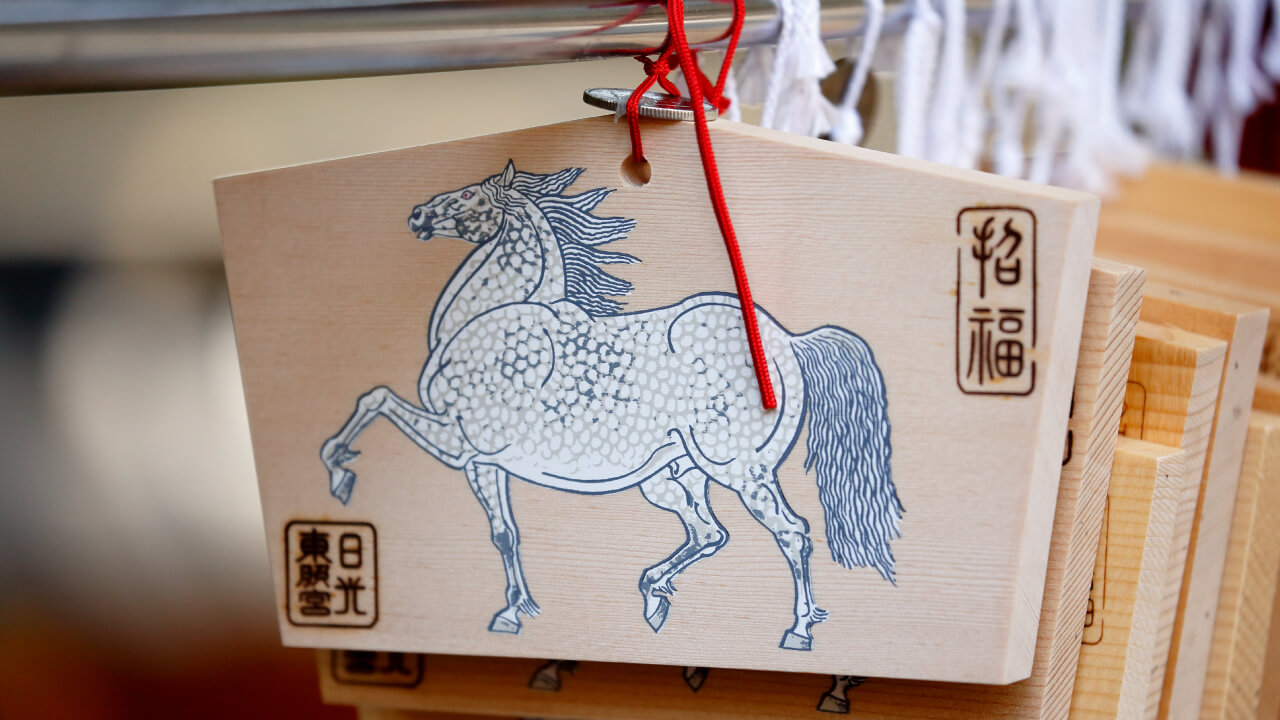
Many know about animal-shaped *haniwa*, with horse-shaped being the most famous. Interestingly, other animals such as dogs, boars, deer, cattle, monkeys, bats, fish, chickens, waterfowl, and hawks were also crafted as *haniwa*. These animals can be categorized into two groups: ones closely tied to humans and those associated with hunting or religious practices.
Animals Carved as *Haniwa*
In ancient Japan, besides *haniwa*, many other animals existed. The connection between animals and *haniwa* may reflect their relationship to the buried individual, with their placement and order carrying meaning.
Animal Classification
Animals depicted as *haniwa* fall into two groups: familiar domestic animals like horses, cattle, and chickens, and wild animals used in hunting or religious rites, such as deer, monkeys, boars, and waterfowl. The latter animals played significant roles in rituals conducted by emperors and aristocrats. Additionally, hunting dogs were also represented as *haniwa*. Birds, including chickens and migrating species, held sacred status, believed to tell time or seasons, while waterfowl were thought to carry souls, adding a spiritual dimension to their representation.
Types of Horse-Shaped *Haniwa*
Horses were not native to Japan initially; they arrived during the mid-Kofun era via Korea, introduced by migrants. Over time, horses became essential for military ceremonies, transportation, and farming. Like human-shaped *haniwa*, horse figures had various forms—ornamental horses, saddled horses, horses with single-handed reins, and裸馬 (bareback horses). Ornamental horses are considered the highest class, with blinged-out armor indicating rank. Some horse-shaped *haniwa* included women’s riding gear, and tombs with such *haniwa* often contained female burials. When viewing horse *haniwa*, careful observation reveals their complex symbolism, craftsmanship, and the ancient significance of horses in Japan.
Where Can You See Horse-Shaped *Haniwa*?
Where are *haniwa*, especially widely distributed horse-shaped ones, stored? Aside from TV programs and textbooks, seeing actual *haniwa* provides a glimpse into the relationship between people and horses in ancient times.
What Happens to Discovered Artifacts?
According to the Cultural Properties Protection Law, any excavated cultural artifacts found on land must be reported to local education boards before construction work. If artifacts are discovered, they are submitted to the relevant authorities, and if ownership isn’t clear, they are forwarded to the police. The education boards then investigate whether they are cultural assets. If confirmed and ownership cannot be identified, the artifacts become property of the prefecture.
Where Can They Be Seen?
Given that cultural properties are regarded as shared national assets, efforts are made to display them publicly. The Agency for Cultural Affairs organizes traveling exhibitions featuring items of interest from around Japan. Many local museums also display excavated artifacts, especially in regions like Gunma Prefecture, where a high percentage of *haniwa*—nearly 90%—are horse-shaped, totaling around 350 specimens. In this region, both horse and human-shaped *haniwa* can be viewed.
Extra: Rarity of Cattle *Haniwa*
Cattle arrived in Japan during the same period as horses from the Korean Peninsula. However, compared to horses, *haniwa* representing cattle are extremely rare—only four specimens have been found in Japan. These also show little variation, unlike the more elaborate horse *haniwa*.
Summary
During the ancient Kofun era, people in Japan lived in ways unimaginable today. Many *haniwa*, including human, animal, and vessel forms, have been excavated. Among these, human figures and horse-shaped *haniwa* are particularly popular. These artifacts demonstrate that horses held a special significance, not just as domesticated animals, but as symbols of power and prestige in ancient Japan.
‘}}]}}