
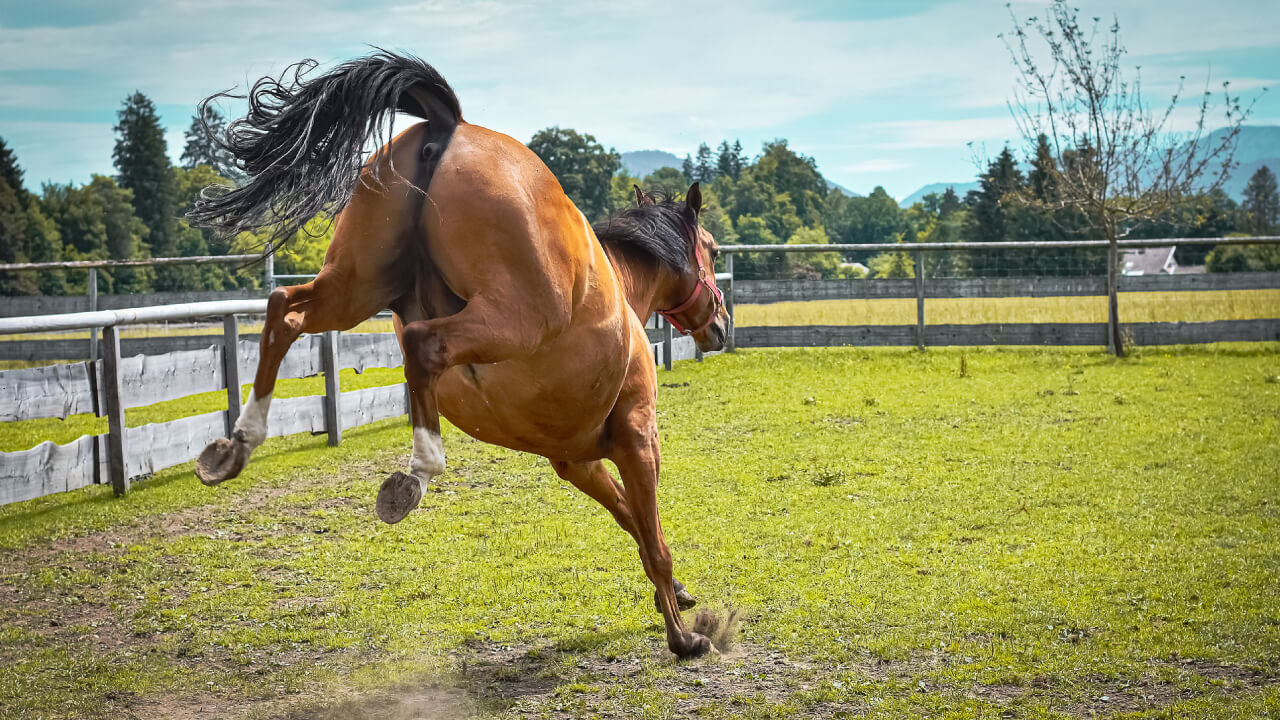
Have you ever experienced a moment where the horse you’re riding or nearby steeds suddenly buck and it scared you? Avoiding falls and injuries makes it important to understand how to handle such situations. In this article, we’ll explore the common causes of horse bucking and effective ways to respond.
Reasons Why Horses Buck

Understanding the reasons behind bucking is essential for developing effective countermeasures. Horses can buck for various reasons, so if your horse bucks, try to reflect on which of the following might be the cause.
Resist being ridden
Horses may buck not only when in a bad mood but also during pasture to express a desire for freedom. However, generally, while riding, horses are aware that a rider is on their back, so they tend not to buck often. Still, if your horse bucks, consider whether it wants the rider to dismount for any of these reasons:
- The rider’s riding style is intolerable
- The horse has had negative experiences with riders before
- The horse is feeling unwell or in pain
By observing your horse’s behavior and comparing it to others or instructors, you can better predict the cause. If you suspect your riding style is a factor, review this article’s later sections for tips on improvement.
High Levels of Restraint
Unlike the initial dislike of being ridden, over-restriction—such as tight aids, complex commands, or strict gait control—can cause stress. For example, in dressage, many maneuvers involve strict commands that can be stressful for the horse. Even beginners may find that pulling the reins excessively while trying to keep pace with energetic horses may lead to bucking.
When a horse experiences excessive restraint or stress, bucking can serve as an outlet. These stresses aren’t always artificially induced; environmental factors or sudden changes can also provoke fear or stress reactions, causing bucking.
Since there are many causes, what practical steps can riders take to prevent bucking? Next, we’ll review key points every rider should check to ensure a smooth ride.
Check Your Balance and Center of Gravity on the Saddle

First, if your horse bucks because it feels that the rider is obstructing its movement, focusing on balance and center of gravity is key. Visualize the ideal stance to avoid disturbing the horse.
Are You Moving with the Horse?
What comes to mind when told to ride without disturbing the horse? Some may think you should do nothing, but actually, it’s important to move in harmony with the horse, known as “partnered movement.”
For example, if a horse starts to move forward, and the rider stiffens unexpectedly, it can feel like being pulled backward. Horses feel this too—they sense being dragged, especially if the rider’s weight and balance aren’t correctly adjusted. Always anticipate the horse’s next move, and adjust your balance and weight distribution accordingly. When the horse extends its neck forward, slightly give with the reins without relaxing too much.
Is Your Weight on the Stirrups?
Another critical aspect is where your weight is centered. Sitting heavily in the saddle, like sitting in a chair, can be problematic. Shifting your weight onto the saddle rather than the stirrups helps maintain flexible balance, reducing the burden on the horse. Concentrating your weight on the stirrups provides better control and balance, especially if the horse jumps or bucks unexpectedly, making it easier to regain stability and reduce fall risk.
How to Communicate Commands to Your Horse

Next, let’s consider how unnecessary stress might be caused by rider aids. As horses may buck due to complex, conflicting, or overly strong signals from the rider, it’s important to reflect on the clarity of your aids. When signals are inconsistent or contradictory, horses can become confused and stressed, leading to bucking or other undesired behaviors.
Particularly when the horse is tense or resistant, avoid giving mixed signals like ‘stop’ and ‘go’ simultaneously. Clear, consistent aids help prevent stress and unwanted reactions.
Monitoring Your Horse’s Mental and Physical State

In the beginning, it’s natural to worry if your horse bucks, thinking you might have done something wrong or upset the horse’s mood. However, as mentioned earlier, sometimes the cause lies on the horse’s side. If your horse is overly energetic, calming techniques can help. Conversely, if the horse buckles because it feels threatened, scared, or unwell, addressing those root causes—such as removing stressors or avoiding strenuous activity—is crucial.
Always monitor your horse’s physical and mental condition, especially if bucking becomes abnormal. Consult with an instructor and observe your horse’s behavior carefully. Sometimes, reducing stimuli—like easing tension on the reins or shifting to a less刺激的 riding style—can help calm the horse.
Summary
For beginners, horse bucking can be frightening. But it may also be a warning sign from the horse. If your horse bucks, reassess your riding technique and the horse’s condition, and implement appropriate measures to ensure safety and comfort.