When it comes to horses, breeds such as Thoroughbreds are more commonly associated, but Japan also has its own native breeds. In this article, we have compiled information on where these Japanese native horses live and their characteristics.
What Are Japanese Native Horses? Ancestry Passed Down Through Generations
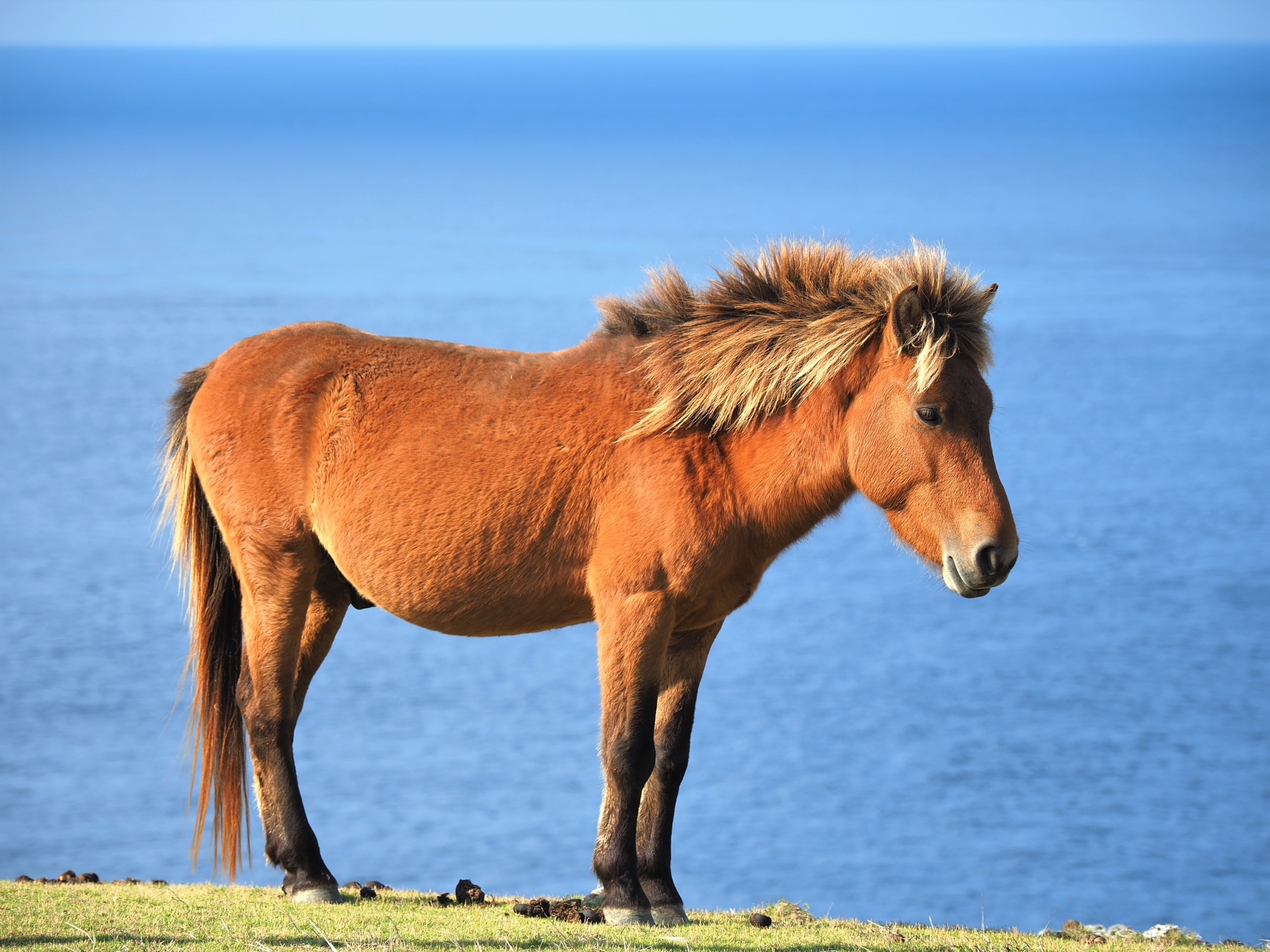
The appearance of horses in Japan is said to have first appeared during the >Kofun period. During this era, Japan actively engaged in diplomacy with the Korean Peninsula, and horses were imported via Mongolia and the Korean Peninsula. Initially, only royal family and military officials owned horses, making them a precious resource.
Later, due to their utility, domestic breeds known as ‘Wasan’ were developed. Horses became widely valued not only by the elite but also among common people, serving as powerful partners to plow fields and carry loads, thanks to their strength and intelligence.
However, from the Meiji era onward, Japan aimed to match Western countries militarily, leading to crossbreeding between native horses and larger imported breeds. As a result, purebred ‘Japonic’ horses significantly declined and were preserved only in certain areas, becoming what we now call ‘Japanese native horses’.
The 8 Remaining Native Japanese Breeds and Their Distribution
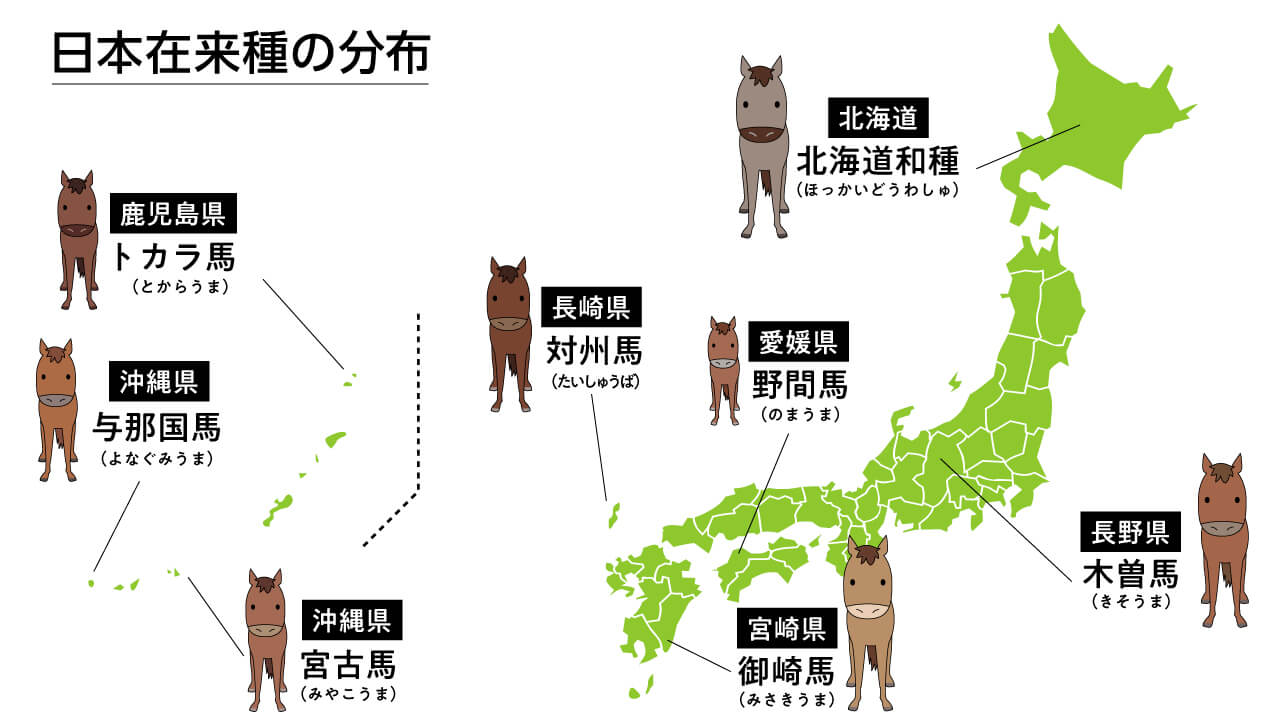
In Japan, there are regions where native horses can still be seen today. Although their appearances sometimes resemble each other, each breed has its own unique traits and history.
Hokkaido Washu (Hokkaido Native Horse)
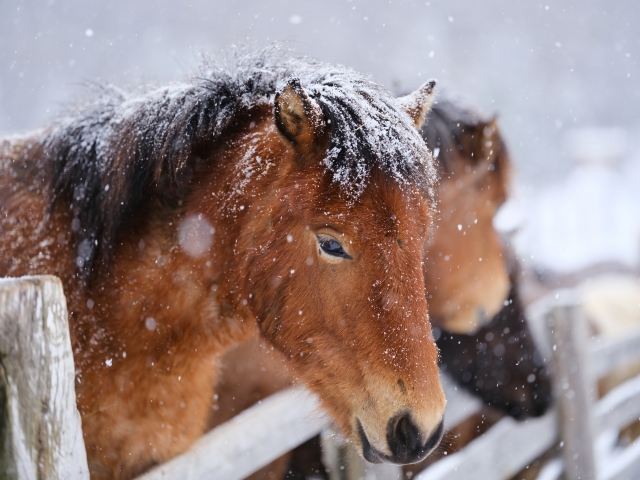
The main region: Hokkaido
Height: 125–135cm
Weight: 350–400kg
Color: River hair, moon hair, bay
Hokkaido Washu is descended from the ‘Southern horse’ produced in the Tohoku region. It is a robust horse adapted to cold and snowy environments. It can carry nearly 200kg of cargo, which is more than half of its body weight.
Many people confuse this breed with the ‘Ban-me’ used in Ban’ei racing, but these are large foreign breeds like Belgian and Breton, known for pulling heavy sleds in racing competitions.
Kiso Horse
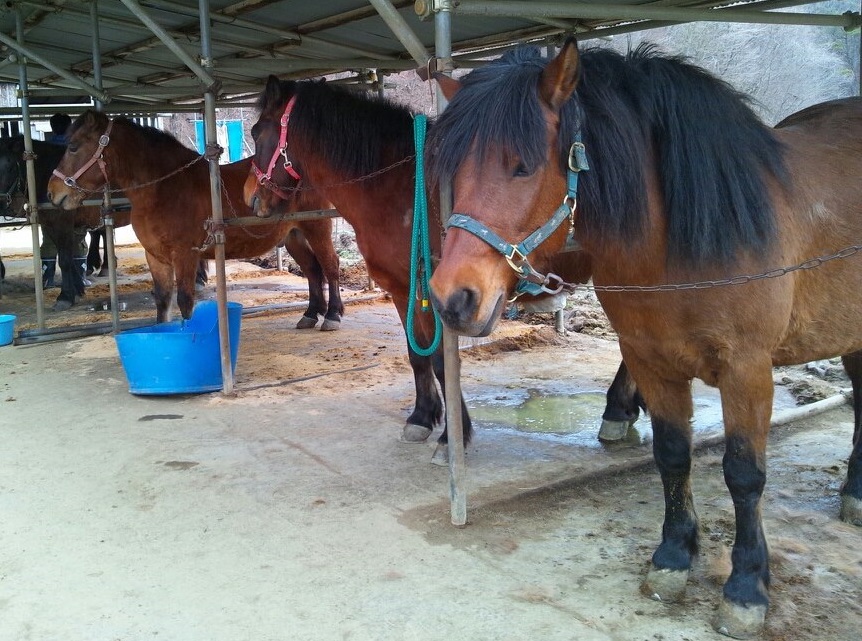
The Kiso Horse is relatively large among native breeds, slightly bigger than the Hokkaido Washu. This is because of crossbreeding with Western breeds in some regions, making it a medium-sized horse today. It has strong legs suited for mountainous terrain and was historically ridden by samurai and used in agriculture in regions like Nagano and Gifu.
Noma Horse
Main region: Ehime Prefecture (Imabari City)
Height: 110–120cm
Weight: 350–420kg
Color: Currently mostly chestnut and bay
The Noma Horse is classified as a pony and is considered Japan’s smallest native breed. Its small size, around 110cm, dates back to the Edo period when farmers were given small horses as a reward for breeding smaller types. Today, about 130 horses are maintained at Noma Highland in Imabari City, which is free for visitors.
Tai-Shu Horse
Main region: Tsushima Island, Nagasaki Prefecture
Height: 107–130cm
Weight: 350–420kg
Color: Bay, black bay, chestnut
The Taiwan Horse was developed in Tsushima Island, a hilly island where the breed is still used for work. Despite its small stature, it can carry around 150kg. In the past, these horses were mainly used by women for farming and transportation, as men often went fishing.
The population declined to around 25 horses in 2005 but has since been revived through conservation efforts, reaching around 40 horses and reviving traditional events such as the ‘Uma Toba」 (a grass race during Hatsuma Festival).
Miyako Horse
Main region: Miyako Island, Okinawa Prefecture
Height: around 130cm
Weight: around 300kg
Color: Bay, black bay, river hair
The Miyako Horse is kept in a semi-wild state through year-round grazing, making it one of the most wild-like native breeds. An event called ‘Miyako Uma Oi’ is held every autumn to inspect and check the health of these horses, which is also a traditional event dating back to the Edo era.
Despite efforts, the breed faced a crisis in 2011 due to infectious anemia, leading to some horses being euthanized. However, the population has since recovered to around 120 horses.
Tokara Horse
Main region: Kagoshima Prefecture (Kikai Island, Tokara Islands)
Height: 100–120cm
Weight: about 300kg
Color: Bay
The Tokara Horse originally migrated from Kikai Island to the Tokara Islands, and after crossbreeding with Western breeds, the purebred line vanished from Kikai. A rebreeding project was started on the island of Takara, and they were designated a natural monument in 1953. Today, they are protected and bred at Kaimondake Mountain Park, where you can see free-ranging horses.
Historically used for sugarcane harvesting and farming, the breed’s population has declined due to industrial changes and mechanization, but conservation efforts continue.
Miyako Horse
Main region: Miyako Island, Okinawa Prefecture
Height: about 120cm
Weight: about 300kg
Color: Bay
The Miyako Horse is kept in a semi-wild state through year-round grazing, making it one of the most wild-like native breeds. An event called ‘Miyako Uma Oi’ is held every autumn to inspect and check the health of these horses, which is also a traditional event dating back to the Edo era.
Despite efforts, the breed faced a crisis in 2011 due to infectious anemia, leading to some horses being euthanized. However, the population has since recovered to around 120 horses.
Tokara Horse
Main region: Kagoshima Prefecture (Kikai Island, Tokara Islands)
Height: 100–120cm
Weight: about 300kg
Color: Bay
The Tokara Horse originally migrated from Kikai Island to the Tokara Islands, and after crossbreeding with Western breeds, the purebred line vanished from Kikai. A rebreeding project was started on the island of Takara, and they were designated a natural monument in 1953. Today, they are protected and bred at Kaimondake Mountain Park, where you can see free-ranging horses.
Historically used for sugarcane harvesting and farming, the breed’s population has declined due to industrial changes and mechanization, but conservation efforts continue.