
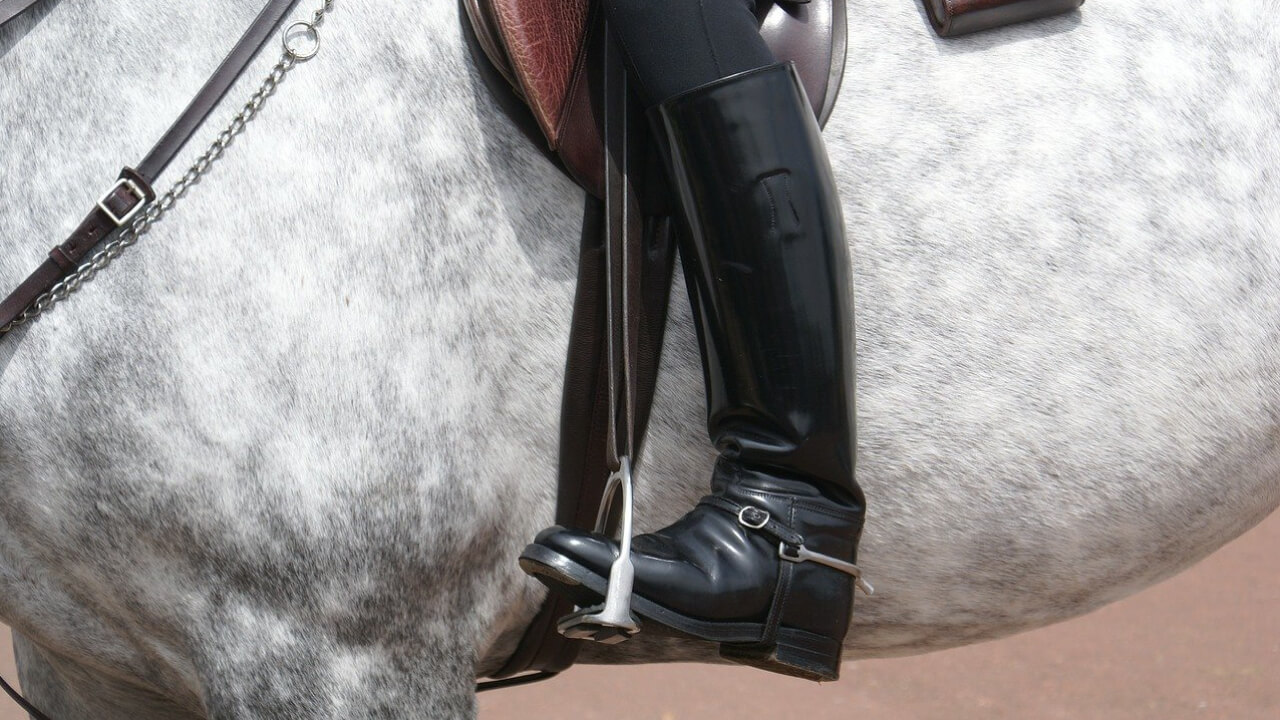
Are you unsure which riding boots to choose when you see those dream-worthy equestrian boots in front of you?
There are surprisingly many options with various price ranges. Here, we introduce the types and materials of riding boots. Knowing the advantages and disadvantages of each, you can select boots that you find truly satisfying.
Are regular boots or sneakers not suitable?
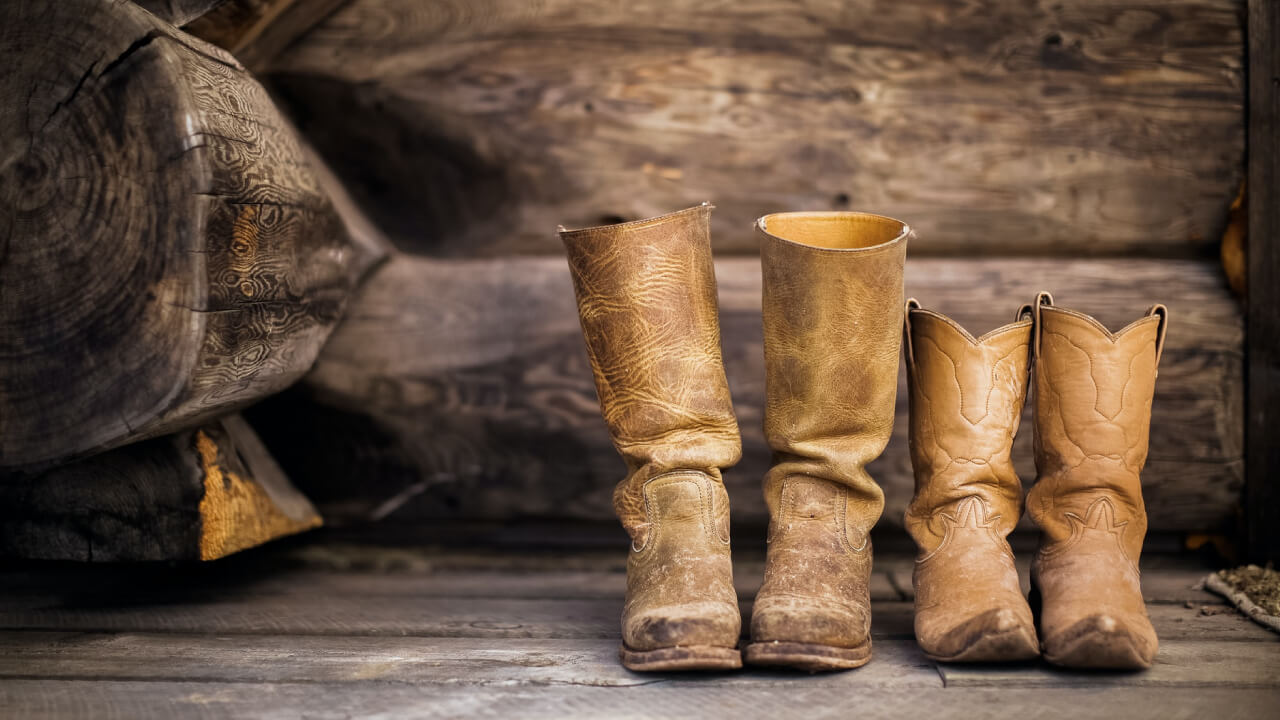
When starting horseback riding, there are several essential items to prepare. But if purchasing everything at once is challenging, you might buy gradually. In such cases, prioritizing items can be confusing.
The riding boots introduced here are considered a high-priority item.
Why are riding boots so important? Can’t we substitute them with regular boots, rain boots, or sneakers?
The answer is “avoid substitutes and prepare properly” because they differ in safety and functionality.
Safety
Riding involves many risky moments—mounting and dismounting, standing or sitting on the iron stirrups—where slipping or falling can occur. Regular boots or sneakers do not account for such accidents.
On the other hand, riding boots are specifically designed for horse riding, offering higher safety.
Functionality
In horseback riding, the legs are used extensively—standing, sitting, signaling the horse. Choosing boots that suit you helps reduce leg strain. Additionally, the legs touch the horse, so comfortable and appropriate riding boots are necessary for stress-free communication and contact with the horse.
Types and Materials of Riding Boots
There are various types and materials of riding boots, which can be confusing when choosing. Here, we explain the different types and materials.
Types
The main categories are long boots and short boots. Each has distinct features, so trying on different styles is recommended.
Long Boots
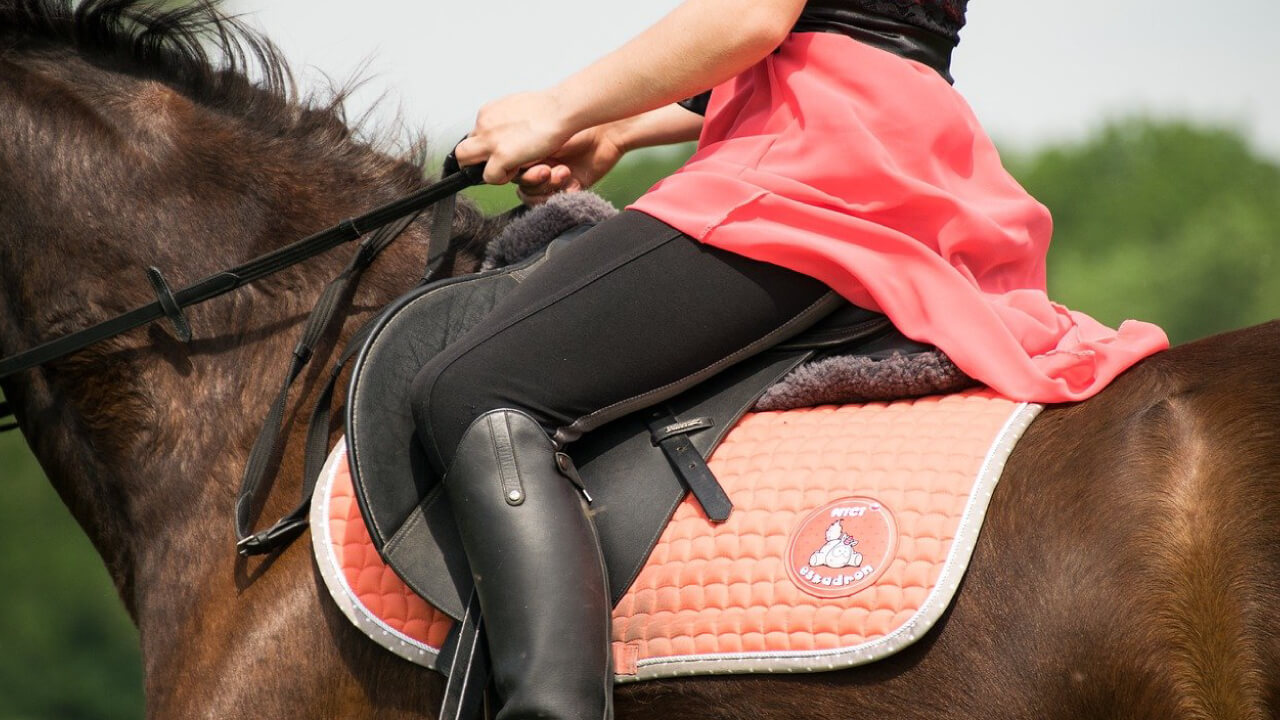
Long boots typically cover the calf and extend down to the knee, also called tall boots or jockey boots. They are often seen in competitions where they are required.
Ensuring a good fit is crucial when choosing long boots—they require attention to foot size, width, arch height, calf circumference, and length. If they are too tight or too loose, it can cause discomfort or affect communication with the horse. If it’s difficult to find a well-fitting pair, custom-made or short boots are recommended.
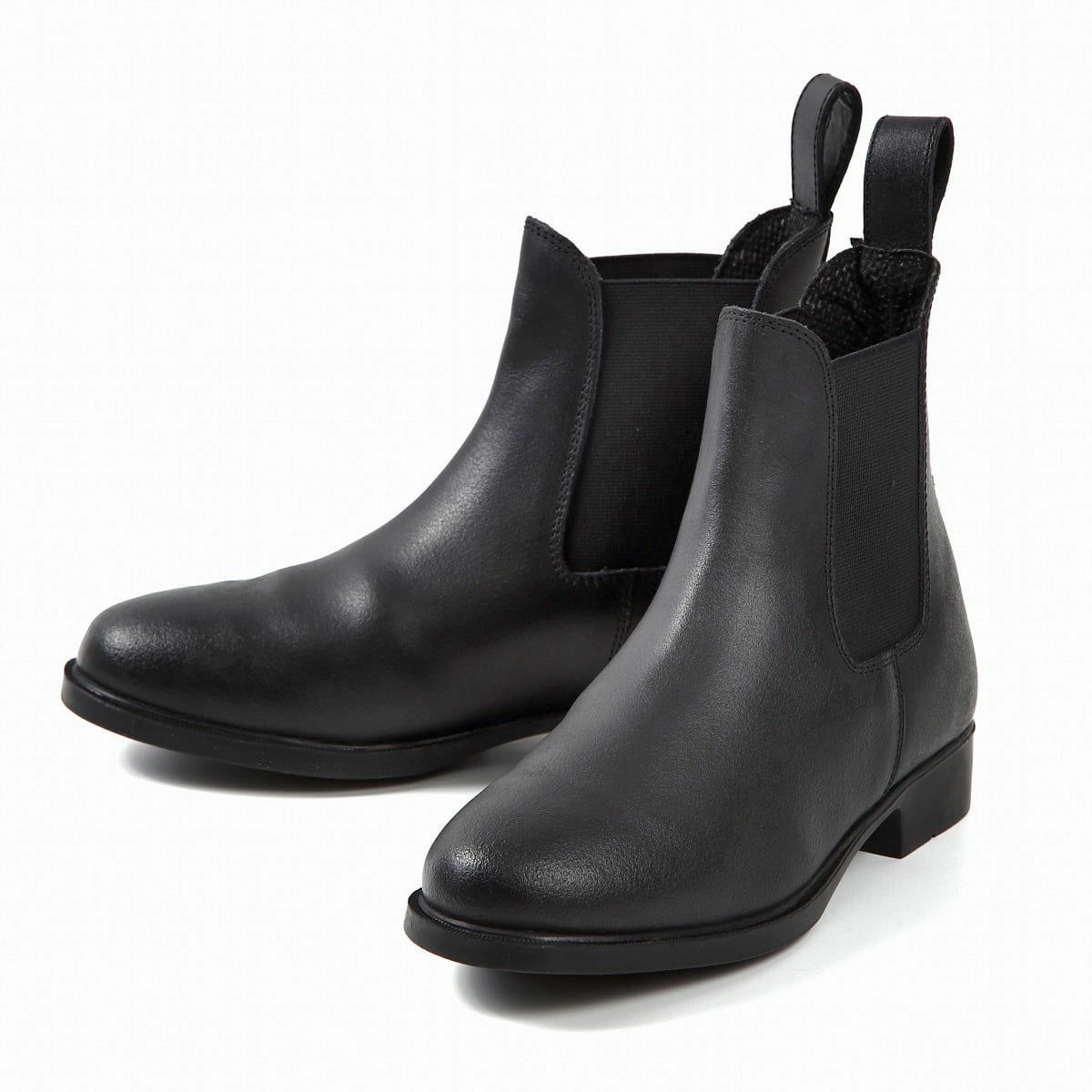
Short Boots
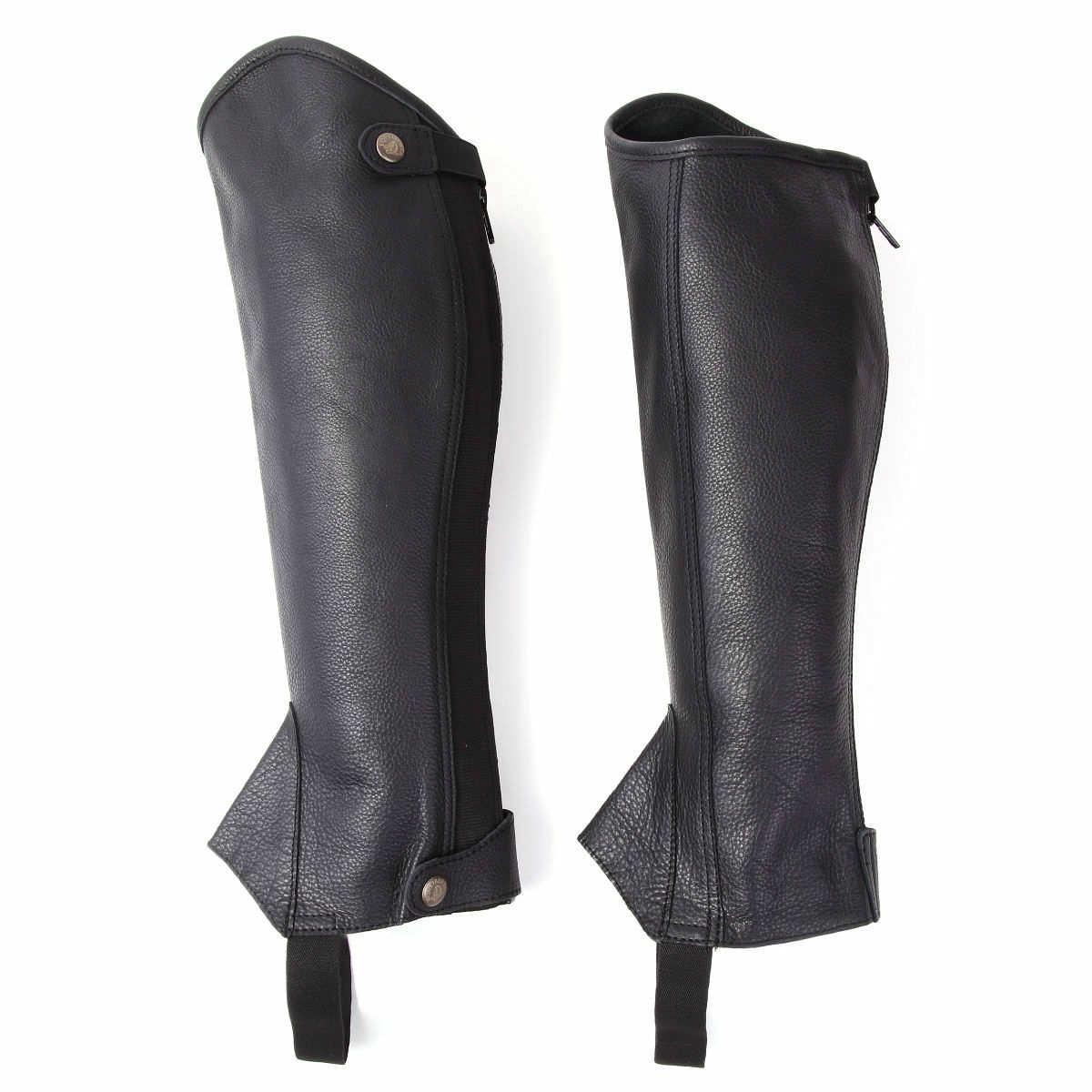
Short boots reach just above the ankle but often require gaiters that cover the calf.
Because they are separate from gaiters, you get the advantage of easier ankle and heel movement, and each piece can be tailored for a better fit.
Materials
Boots are mainly made from leather, synthetic leather, and rubber. Gaiters for short boots come in various materials like suede, nylon, and mesh.
Each material has its merits and downsides, which are explained here.
Advantages and Disadvantages of Materials
Material choices for boots and gaiters influence care and durability. If you’re unsure which to choose, here are the pros and cons of each, including ease of maintenance.
Leather (Real Leather / Cowhide)
Leather boots tend to be more expensive but are highly durable and become more comfortable with use. They provide excellent fit and are good for signaling the horse.
Maintenance involves care to avoid water damage and dirt, and proper storage. With proper care, leather boots can last nearly two decades. Some competitions require genuine leather boots, so they are worth considering if you plan to continue serious riding. Cost ranges from about 50,000 yen for ready-made pairs to over 100,000 yen for custom orders.
Faux Leather (Synthetic Leather)
Faux leather boots look very similar to genuine leather and are more affordable. They fit reasonably well and are easier to clean, as they can be wiped with water.
While less durable than genuine leather, they typically last about 2-3 years.
Rubber
Rubber boots are highly waterproof, perfect for rainy days or washing the hooves. They can be cleaned easily with water and are usually the most affordable option.
However, because they are slip-on without a zipper, the fit on the ankles can be loose, making signaling to the horse more difficult.
Gaiter Materials
Gaiters come in various materials, including suede, nylon, and mesh. Suede offers good grip but requires careful cleaning when dirty, while nylon and mesh are breathable and easy to wash, suitable for hot weather. Prices vary depending on the material.
Choosing Based on Fit
The differences in types and materials lead to distinct advantages and disadvantages. You might wonder what to choose and whether to use different boots for competitions and practice. Some riders use full leather long boots for competitions and synthetic or short boots with gaiters for training.
Ultimately, the most important factor is fit. Try on different pairs if possible, imagining wearing culottes, pants, or socks underneath. Note that riding socks are thicker than regular socks. When buying overseas brands popular for ease of wear, consider differences in foot shape and body type between Japanese and Western riders.
Summary

Horse riding boots vary in types and materials, each with their own merits and demerits. Prices also differ.
When choosing riding boots for the first time, it can be confusing to determine what criteria to prioritize. The most important factor is fit.
If you find it difficult to get a good fit, consider a combination of short boots with gaiters or custom-made genuine leather long boots.