
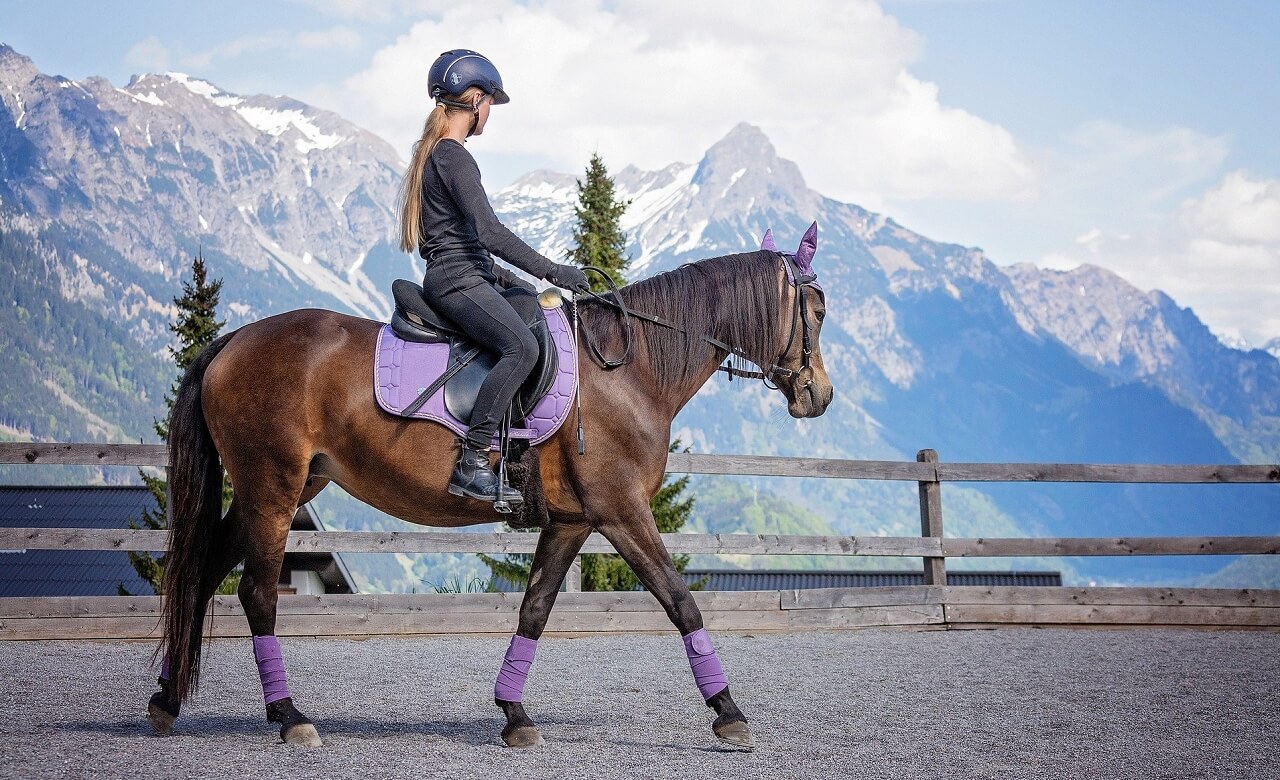
Some riders have been advised to pay attention to their shoulder-in technique. To help beginners and experienced riders alike, practice is essential in developing this skill. Shoulder-in is a fundamental skill required for all riders, from basic walk to advanced show jumping and dressage.
In this article, we introduce what shoulder-in is, and share tips on how to master it effectively.
What is Shoulder-In?

Shoulder-in involves the rider sliding their hips to match the horse’s movement, essentially moving in harmony with the horse. When a rider mounts, maintaining a regular walking gait is not as simple as it seems. In riding, the rider presses their legs against the horse’s sides, and big movements or sways are inevitable when the horse walks or canters.
To prevent falling off, the rider needs to stabilize their body, but excessive rigidity can hinder the horse’s freedom of movement. By practicing shoulder-in, the rider can assist the horse, especially when the horse’s movements are restricted. This technique helps the horse express its power more freely and facilitates smoother transitions.
So, when is shoulder-in primarily used? This technique is essential regardless of the gait, whether walk, trot, or canter, and applies in show jumping and dressage. It’s a continuous practice during riding, and riders are always performing shoulder-in subtly throughout their ride.
Is Striving Too Hard Counterproductive?

Sometimes, riders push their hips forward excessively to help the horse move, visibly exerting effort. This is a sign of awareness of shoulder-in, but overdoing it can lead to incorrect technique.
Shoulder-in fundamentally means following the horse’s movement naturally. It might be more accurate to say “sliding the hips in response to the horse’s movement.” Paying attention to shoulder-in is important, but too much effort can disrupt the horse’s flow, which should be avoided.
The Importance of Developing a Sense

Shoulder-in does not rely on the rider’s timing or strength. It’s a common misconception that tension or effort is needed, but in fact, relaxed and natural hip movement according to the horse’s rhythm is key. Focusing too much on shoulder-in can lead to tension, so practice repeatedly until the sensation feels natural and effortless, ideally matching the horse’s swaying.
Understanding how to perform shoulder-in mentally is a good first step, but intuitive feeling through practice is crucial. Overthinking can cause riders to exert too much effort, disrupting the flow.
The best approach is to practice repeatedly until the feeling becomes natural. The goal is to move with the horse’s swaying motion effortlessly, leading to better comfort and harmony during riding.
After Mastering Shoulder-In…

Mastering shoulder-in significantly changes your riding skills. First, it makes transitions from walk to trot or canter easier. The rider’s effective aid allows the horse to perform better, resulting in smoother responses during gait changes.
Next, posture stability improves, as following the horse’s movement prevents the rider from losing balance and maintains a proper position throughout the ride.
Finally, it helps riders avoid appearing nervous or tense to the horse. Horses are highly observant and can sense rider confidence or anxiety, which influences their performance. Skilled riding that incorporates shoulder-in fosters trust and mutual understanding between rider and horse.
In conclusion, shoulder-in is a vital skill that enhances riding finesse, improves posture, and boosts the rider’s connection with the horse. Regular practice will help you perform it effortlessly and naturally, leading to better riding overall.