Whether you’re just starting out with horseback riding or already jumping hurdles, many riders experience the sudden shock of a stirrup slipping off at some point. In this article, we’ll first explain the main causes of stirrups coming off! In the second half, you’ll find tips for improvement, so please use them as reference.
The Cause Is Simple! It’s Because Your Feet Are Hanging

Many riders face the common issue of stirrups slipping off, but the cause is actually quite simple. The stirrup slips because your feet are hanging. In other words, you are not putting your weight properly on the stirrup.
To illustrate, imagine replacing the stirrup with a swing, or your foot with a person. If you are applying your weight correctly, even when swinging big, you won’t find yourself slipping off unexpectedly.
But what if you jump on the swing and bounce on it? If you don’t land properly on the seat, your feet could slip or you could fall off. Riders who experience stirrup slips are in similar situations. Let’s explore the causes further.
Why Do Feet Hover?

There are many reasons why feet might hover, but here are three of the most common causes:
- The stirrup is too short
- You are applying force toward the horse’s body
- You are influenced by recoil
How do these relate to your own riding? You might think, “That’s right, I get it,” or “What does that mean?” but let’s examine each cause one by one.
Stirrup Is Too Short
The first two causes are common among beginners. The first is that the stirrup is too short. You might wonder, “If my stirrup slips off, isn’t it because it’s too long?”
However, thinking that a shorter stirrup equals better foot contact is a misconception! Because if a beginner shortens the stirrup to feel secure, it will actually ruin your posture, making it easier for the stirrup to slip off.
The upper image compares a very short racing stirrup and a long riding saddle stirrup, demonstrating a correct weight placement in each. Although an extreme example, shortening the stirrup causes the knees to bend significantly, and you need to lean far forward to put your weight directly over the stirrup.
If you sit in the saddle at this length, most of your weight will be on your buttocks, making it difficult to put weight on the stirrup—and your feet will be ahead of your center of gravity, complicating the two-point position.
While obstacle riding saddles don’t typically have such short stirrups, the principle is similar. Also, although some might think “I’ve just stretched the stirrups too long and my feet don’t reach,” remember that making stirrups too short can make it difficult to properly support your weight, so keep this in mind.
Applying Force Toward the Horse’s Body
For stirrups to stay in place, it’s ideal to step straight down onto the stirrup, like when standing on the ground. Many beginners tend to push inward, applying force toward the horse’s body.
Everyone’s reasons differ, but some are taught to constantly pressure the horse with their legs to move it forward, while others unconsciously grip the horse with their legs out of fear of instability.
It’s hard to focus on multiple things at once, but gradually learn to stabilize your riding so you don’t need to grip with your legs all the time. Practice stepping on the stirrups only when necessary, keeping your legs relaxed otherwise.
Recoil Effect
Of course, as the horse moves, you will feel a recoil. You’re not sticking perfectly to the horse’s back; rather, when the horse kicks off the ground, the overall movement causes you to bounce, and when the horse lands, you’re momentarily lifted off the saddle.
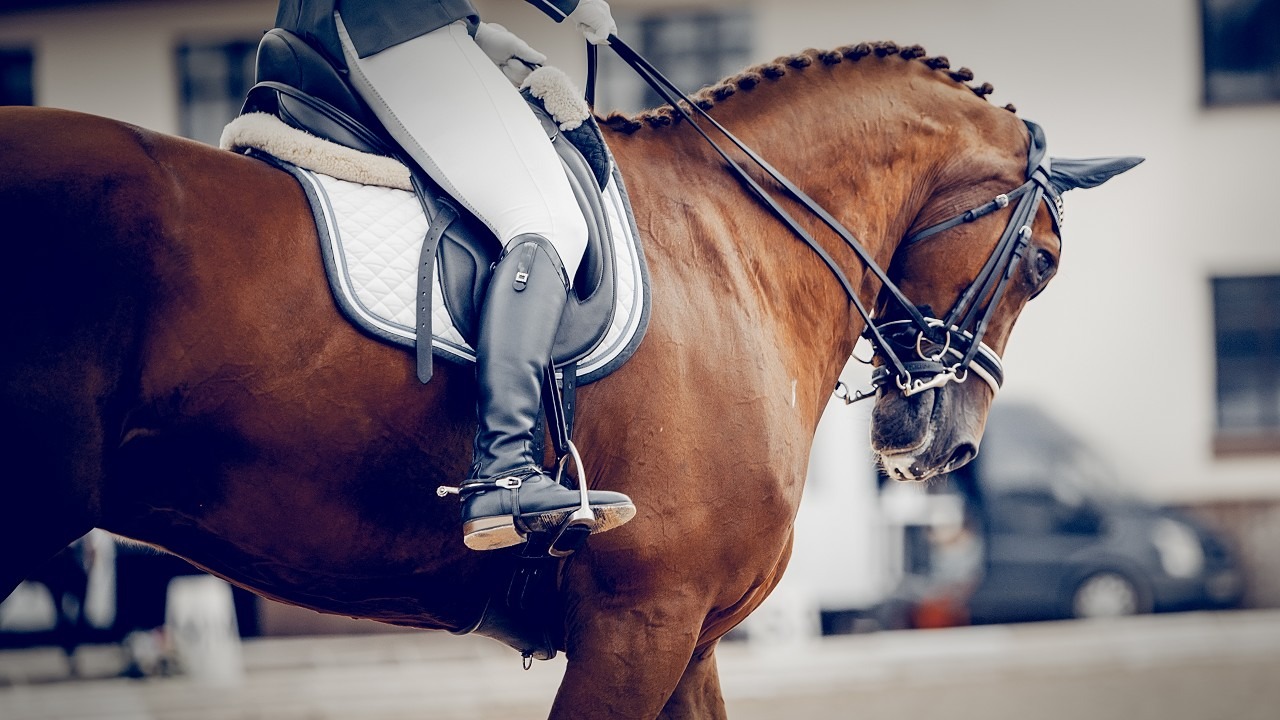
This brief moment of hanging in the air causes your butt to lift off the saddle—and your feet, consequently, come off the stirrups. Because the stirrup isn’t bearing your weight during this time, it swings and your foot can slip out.
Even top riders can’t defy gravity, so this is unavoidable to some extent. However, the key difference between beginners and experts is whether they predict the recoil and stay in sync with it, rather than just trying to resist it.
As you gain experience and understand your horse’s rhythm, you’ll be able to avoid the recoil as much as possible and, if you’re lifted, lightly brace your stirrups accordingly.
Solution 1: How to Step into Stirrups Properly

Now that the causes have been identified, let’s look at specific solutions. To prevent stirrups from slipping off, it’s essential to learn the correct way to step into a stirrup. Remember, trying to step in like climbing a ladder or pedaling a bicycle is a mistake!
To find the correct position, try a little stretching. You’ll likely feel the weight at your base of your toes. That’s where you should place your foot on the stirrup. Did it feel closer to your toes than expected?
Even with boots, it can be hard to feel the foot’s position, but gradually get used to stepping with your feet in the correct place. Once you memorize the correct position, you’ll notice when the stirrup shifts or slips, making it easier to correct before it falls off.
Solution 2: How to Move Your Feet

The correct foot position is surprisingly close to your toes. But why is this position good? Simply put, it allows your heel to be free. When you step onto the stirrup near your toes, the support point is your toes, making it easier to move your heel.
Also, when entering the stirrup and pushing your heel upward onto the horse’s belly, the stirrup tends to come off easily. This is because you’re using your knee as the support point rather than your stirrup or heel. Pulling your heel diagonally upward causes the stirrup to slip off as if you’re intentionally removing it.
Instead, try opening your toes slightly to use the stirrup as a fulcrum. Once you get used to this way of stepping, you’ll be able to put pressure on the horse with your calf while keeping your stirrup secure.
Summary
If you have riding experience, you’ve probably encountered the problem of stirrups coming off. Even if you understand the points, you might still have days where it just slips off.
However, by consistently stepping properly onto the stirrups, the frequency of slipping should gradually decrease. Wearing stirrups in the correct position also helps prevent accidents, so make sure to master this skill!