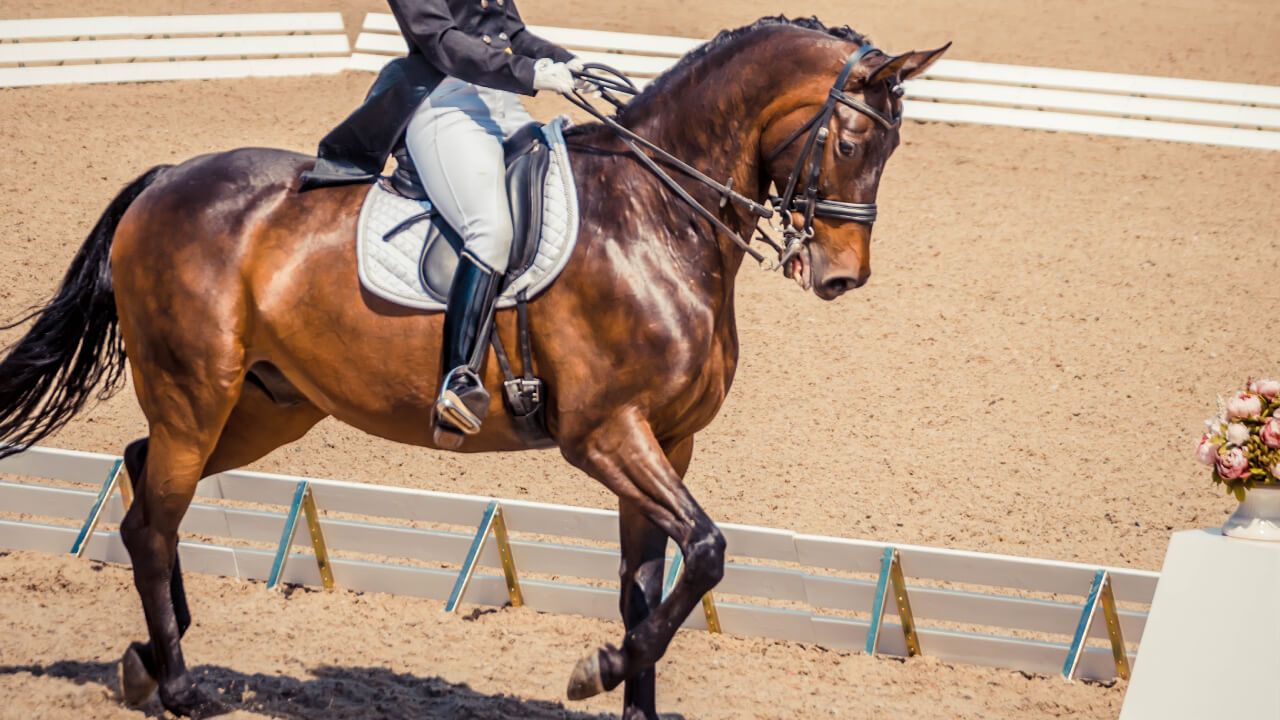
Have you ever been instructed during a lesson to ‘set a tighter pace’ or ‘extend the pace’? Were you able to quickly understand and respond to these commands?
What exactly does pace refer to? And how can you effectively shorten or lengthen it? In this article, we will explain the concept of ‘pace’ in horseback riding.
What Is Pace?

During lessons, even if you are instructed to ‘set a tighter pace’ or ‘extend the pace,’ you cannot follow the command if you do not understand what ‘pace’ refers to. So, what does ‘pace’ actually mean?
‘Pace’ refers to stride length or speed. Even when simply talking about walking, the pace changes depending on how wide your steps are. Similarly, even when walking at the same gait, the speed varies depending on how wide the stride is.
So, what does it mean when instructors tell you to ‘shorten’ or ‘lengthen’ the pace?
‘Shortening the pace’ means narrowing the stride width to make the horse move more precisely. By narrowing the stride, the horse covers less distance with each step, which slows the overall speed. However, it’s important to understand that slowing down does not mean the horse is walking lazily.
‘Lengthening the pace’ involves widening the stride to make the horse move more broadly. Increasing stride length allows the horse to cover more ground with each step, giving the impression of a faster pace, and showcases a lively walk.
Commands like ‘shorten the pace’ and ‘lengthen the pace’ are common instructions in lessons, so understanding their meaning is essential.
Why Is Pace Important?

Adjusting the pace is particularly useful during group lessons with multiple horses. Since the horses vary in size—some large, some small—it’s necessary to keep their speed synchronized to maintain harmony in the lesson.
Just like humans, some walk faster or slower. When walking together, each person naturally adjusts their speed to match others. Similarly, controlling the pace of horses ensures they move in harmony, facilitating smoother lessons.
If you receive a command to walk at a specific pace and find yourself close to the horse ahead, you might switch to a normal gait to keep up. However, this isn’t ideal during speed workouts or can lead to being instructed to return to a different gait. Instead, you should try adjusting the pace.
If the distance to the horse ahead becomes too close, making continued at a faster pace difficult, you can decrease the stride width and keep the normal gait while slowing down. Conversely, if the distance becomes too large, widening the stride allows for a slightly faster pace.
This method lets you to adjust the speed without changing the gait, applicable to walk, trot, or canter. Make sure to actively practice these techniques during lessons.
Key Points for Shortening the Pace

Simply pulling the reins is not the way to shorten the pace; doing so might cause the horse to misunderstand and stop or revert to a normal gait. So, how should you communicate the need to shorten the pace?
To shorten the pace, focus on three main points: applying the bit, reducing or shifting the lateral motion, and maintaining contact above the knees, close to the horse’s body.
‘Applying the bit’ means, holding the reins lightly while shifting your center of gravity backward. This is different from pulling the reins. The goal is to give the horse a slight feeling of pressure on the bit, making the horse aware that some signal may be coming.
‘Reducing or shifting the lateral motion’ involves creating a situation where the horse finds it difficult to move its body freely. As the horse moves its legs, the back swings. By controlling this movement, the rider makes it less comfortable for the horse to move, encouraging a more compact stride. Additionally, shifting the lateral motion signals the horse to gradually close the stride.
‘Maintaining contact above the knees’ means pressing close to the horse’s body above the knees, making it feel the rider’s presence and similar to being held tightly. This creates a situation where the horse feels constrained, gradually shortening the stride. Be careful not to grasp the horse’s head with the legs, which can cause discomfort or miscommunication.
Key Points for Lengthening the Pace

Some riders tend to loosen the reins and increase signals when trying to lengthen the pace, but this alone can cause confusion and lead to undesired changes in gait. Instead, focus on these three points: making larger lateral movements, relaxing the legs, and easing the reins.
‘Making larger lateral movements’ means I am not suggesting overdoing it, but ensuring the horse can move comfortably and the rider is not obstructing. The size of the lateral movement is perceived by the horse, and if it notices a mismatch between its movement and the rider’s, it may feel uncomfortable, prompting it to lengthen its stride.
‘Relax the legs’ involves avoiding unnecessary tension for balance, which can make the horse’s gait unnatural and strained. To lengthen the pace effectively, keep the legs loose and relaxed.
‘Easing the reins’ means releasing the reins to allow the horse to move its head forward easily, creating a more natural and elongated stride. If the reins are held too tightly, the horse may feel restrained and struggle to extend its pace.
Summary
Understanding how horses move is key not only in walk, trot, and canter but also in adjusting the pace within each gait. Changing the pace is different from changing the gait, and the signals involved might be more subtle. By learning and practicing the concepts discussed here, you will be able to better communicate with your horse and modify its pace with confidence.