Have you ever felt that «being afraid of falling off» is unsettling during horse riding, especially as your skills progress from leading and walking to trotting, cantering, and jumping? This article explains key points to help you conquer that fear. Let’s consider the causes of falling from a few perspectives: environment, horse temperament, and rider’s technique.
What Are Common Postures and Situations That Increase Falling Risk?

Obstacles Before and After Jumping
Many falls occur during show jumping or obstacle course training rather than classical dressage. Watching riding club scenes, you’ll see many people falling when horses suddenly stop before obstacles or avoid them.
Even if the horse clears an obstacle, misjudging the takeoff timing or landing shock can cause a fall. It’s important to understand that proper posture and steady riding can help prevent such incidents.
When the Horse Is Spooked
Horses are large animals that can react suddenly if startled, causing riders to get shaken or thrown off. Always be aware of the environment and horse’s movements, especially when riding or standing nearby, as quick reactions to sudden movements can prevent falls.
Particularly when riding leisurely, horses tend to react slower to sudden actions. Keeping alert to surroundings and horse behavior helps mitigate fall risks.
Unbalanced Center of Gravity
Falls are often caused not only by the horse but also by rider imbalance. Shifts in balance—either forward, backward, or sideways—make it more difficult to maintain proper posture and recover from misalignments.
Causes include leaning too far forward due to fear or backward due to over-correcting. Slippery or insecure footing can also lead to imbalance, especially for beginners. Experienced riders may have habitual riding styles that influence balance.
Remember the Basics! Correct Posture Review

Balance Between Front, Back, and Sides
Maintaining a symmetrical posture is key. Adjusting your center of gravity is necessary for directions; however, always be able to return to a balanced stance easily.
For proper posture, keep your back straight. When viewed from the side, ideally, your head, hips, and feet in a three-point position should form a straight line. In two-point position, your feet should align with the middle of your torso-line connecting the head and hips.
Keep Your Gaze Forward
Keep your focus on the horse’s ears and the direction ahead, which helped me when I learned riding. Raising your head allows a clear view of the path and helps anticipate movements. Looking down shifts your center of gravity forward, increasing fall risk. Keep your head aligned above your spine and look forward.
Relax Your Shoulders and Arms
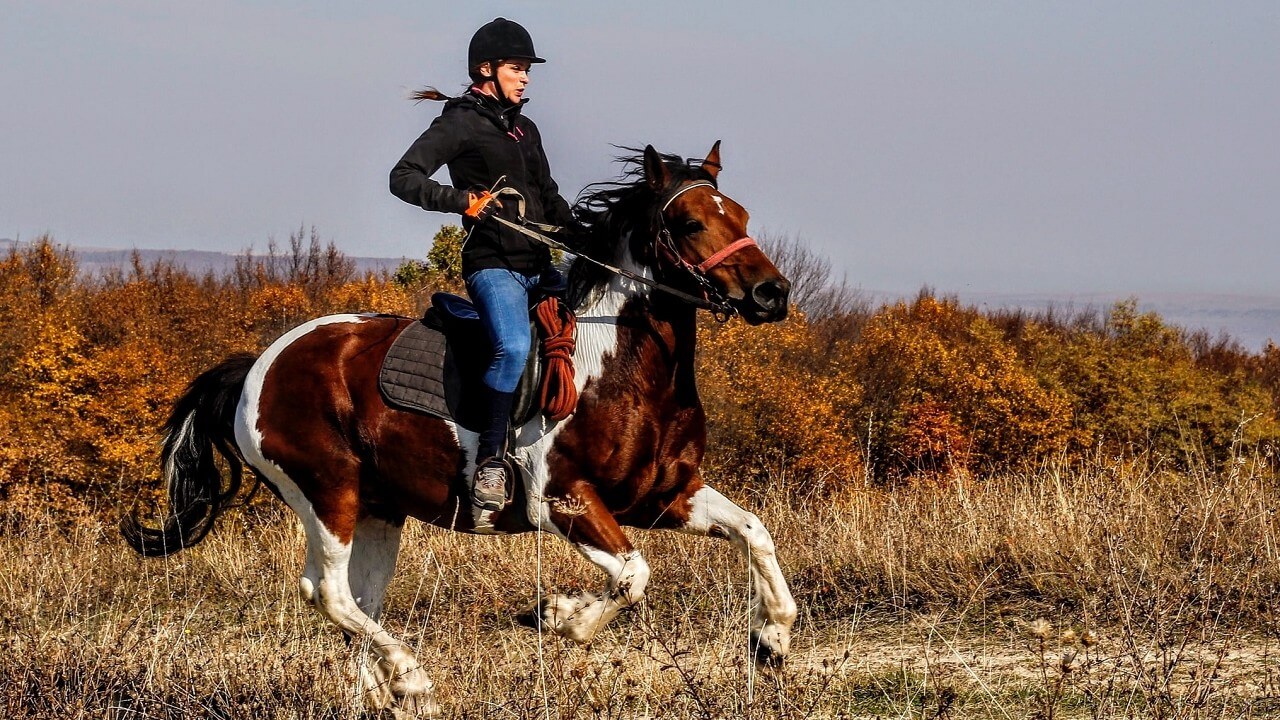
While maintaining good posture during stationary and walk, more challenging when trotting and cantering, since speed can destabilize your balance. Overexertion or tension in your arms and shoulders can make your upper body rigid, making it difficult to adapt to the horse’s movements.
Small mistakes during faster gaits are often caused by the shift of the center of gravity or over-tension, leading to imbalance and instability.
Consider the Horse’s Feelings

So far, we have discussed rider’s posture and technique, but it’s also important to consider the horse’s feelings when it comes to prevent falls.
Strong Vigilance
As mentioned earlier, horses are very alert animals. Their wide field of view can surprise riders when they notice unfamiliar objects. This is rooted in their nature as prey animals that needed to spot predators early and escape.
Sudden movements by the horse can startle riders. While some riders instinctively pull the reins hard, it’s better to calm the horse first to prevent further panic.
Fear of Obstacles
Horses may stop abruptly if they fear unfamiliar or unpleasant obstacle sights or memories. Forcing the horse to proceed despite such fear can cause sudden stops or obstacle avoidance, which can be dangerous.
Check the cause of the fear, and if it’s an obstacle needing gradual desensitization, introduce it gently over time. If the obstacle is unnecessary, removing or hiding it is a good alternative.
It’s also important to reflect on whether the horse’s refusal is due to your aids or if it is stubbornness. Building trust and examining your signals can help prevent unnecessary falls.
Confusing Aids
Sometimes, rider errors or conflicting aids can stress the horse. For example, leaning too much on the reins when trying to regain stability, while simultaneously squeezing with the legs, can send mixed signals.
If the horse reacts correctly but the rider continues to apply the same aids forcefully, it can lead to confusion and stress. This confusion may cause the horse to resist or even rebel, increasing fall risk.
During early training, calmly providing clear and consistent aids and observing the horse’s reactions is key to building confidence and safety.
Protective Gear to Prepare for Risks

Knowing the situations where falls are more likely and understanding horse behavior, combined with correct body posture, can help reduce the risk of falling. However, even with caution, falls can happen unexpectedly at any time.
Wearing safety equipment such as helmets and body protectors, which can absorb shocks, provides peace of mind. Some body protectors made from low-rebound foam or equipped with airbags can cushion impacts on the torso during falls.
Summary
Falling from horseback can stem from environmental factors, horse temperament, and rider’s posture and aids. Reducing the risk involves addressing these causes step by step. Also, always wear protective gear like helmets and body protectors routinely to prepare for unexpected falls.