
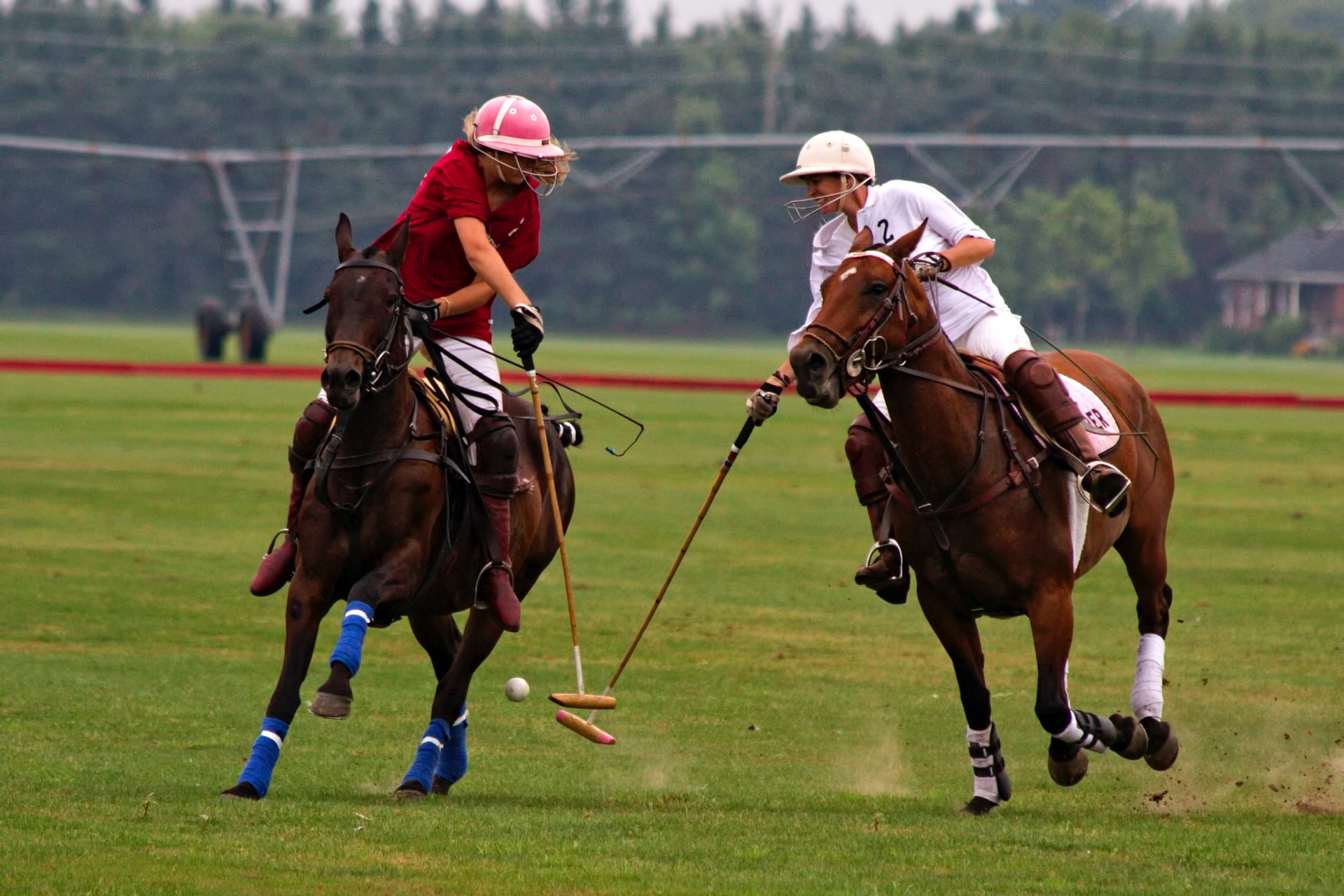
Popular as a logo for clothing brands, ‘Polo’ is a sport that few people in Japan have the chance to watch. In this article, we’ll explore the history of polo, its connection to Japan, the rules of the game, and showcase some thrilling videos!
Polo Originated from Conflict

History of Polo
Watching a polo match firsthand reveals its speed and intensity. You might think, ‘It’s a sport for British gentlemen…’, but surprisingly, polo’s origin isn’t in Britain. Instead, it originated from a traditional Persian event called Buzkashi, which involved teams of horseback riding players fiercely vying to take a goat.
This game evolved as a military training activity and spread from Persia to India and China. Old paintings and pottery depict polo scenes, showing its ancient roots across these regions.
The etymology of the term ‘chaka’ (the period of play) comes from Hindi, while ‘polo’ derives from Tibetan, meaning ‘ball,’ illustrating its cross-cultural history.
Polo as a Sport
In the 19th century, Britain expanded its influence and colonized parts of Asia, encountering polo in Persia-turned-India. British soldiers brought home this game, establishing formal rules in Britain and spreading it across Europe. From there, polo spread to the Americas. Though associated with Britain, now South America often wins World Cups, highlighting its global popularity.
Rules and Viewing Tips for Polo

Basic Rules of Polo
Polo consists of two teams of four players each. They ride horses called ‘polo ponies’ and use mallets to hit a small ball into the goal. The game is divided into six periods called ‘chakas,’ each lasting about seven minutes, making a typical match around 1 hour, including breaks.
Despite the intense running, players cannot stay on the same horse throughout all six chakas. Players usually switch horses at least twice per match, sometimes managing and managing up to four horses with a team of staff, which contributes to polo’s reputation as a sport for the aristocracy due to the considerable expense involved.
The players’ roles include pivots (playmakers), attackers, midfielders, and defenders—each with specific responsibilities. Players are assessed annually via written and practical tests, and handicaps are assigned based on skill, allowing mixed professional and amateur matches. The rules also prohibit dangerous moves like crossing the ball’s path or deliberately hitting opponents or their horses, to ensure safety.
Viewing Tips
When watching polo, understand that the game involves rapid turns and strategies like ‘riding off,’ where players run alongside opponents to block or steal the ball while complying with rules about crossing the ball’s path. Watching these maneuvers unfold amid the fast-paced action, especially the ‘riding off’ process, is thrilling. The game also features intense moments like potential crashes but showcases agile horses and skilled players that captivate spectators. Be aware that after each goal, the game switches sides, so keeping track of the changing play direction is key.
Player Camera Shots and Crashes in Polo
Now, experience polo from the player’s perspective with a camera-worn video, featuring some exciting crashes! Watch how players battle fiercely while controlling their swift horses and wielding mallets.
How was that? Did you enjoy not only the game itself but also the horses relaxing before and after matches? It’s worth noting that ‘polo ponies’ aren’t small ponies like those used for recreational riding. Instead, they refer to a broad category of horses used in polo, known for their calmness and agility, despite the intensity of the game.
In the UK, small ponies were originally used, but various breeds became common as the sport expanded. These horses are well-trained, able to handle collisions and swift movements without panic, and are crucial to the game’s skill and safety.
Polo in Japan: Payload as ‘Dakyu’

Though less known, polo was transmitted to Japan as ‘Dakyu,’ originating from Persia, India, and China. The reason for its low profile is limited viewing opportunities. Currently, it can be seen only during specific Shinto rituals at Chojansan Shrine in Aomori Prefecture and Toyoseki Shrine in Yamagata Prefecture. The Imperial Household Agency also preserves its tradition through a mounted cavalry demonstration, and detailed videos were produced during the Emperor’s and Empress’s 80th birthday celebrations.
During Dakyu, teams compete to score by placing balls into goal zones, with a special rule involving red and white balls representing different teams. The balls are lifted and thrown rather than hit along the ground, with specialized mallets similar to lacrosse sticks called ‘maru-jo.’
Summary
Polo remains a niche sport in Japan with few players and limited viewing opportunities. However, once you see it, you’ll be captivated by the skillful mallet play and agile horses. If you’re looking for something exciting to watch during your leisure time, check out videos of polo—it might just become your new favorite!