
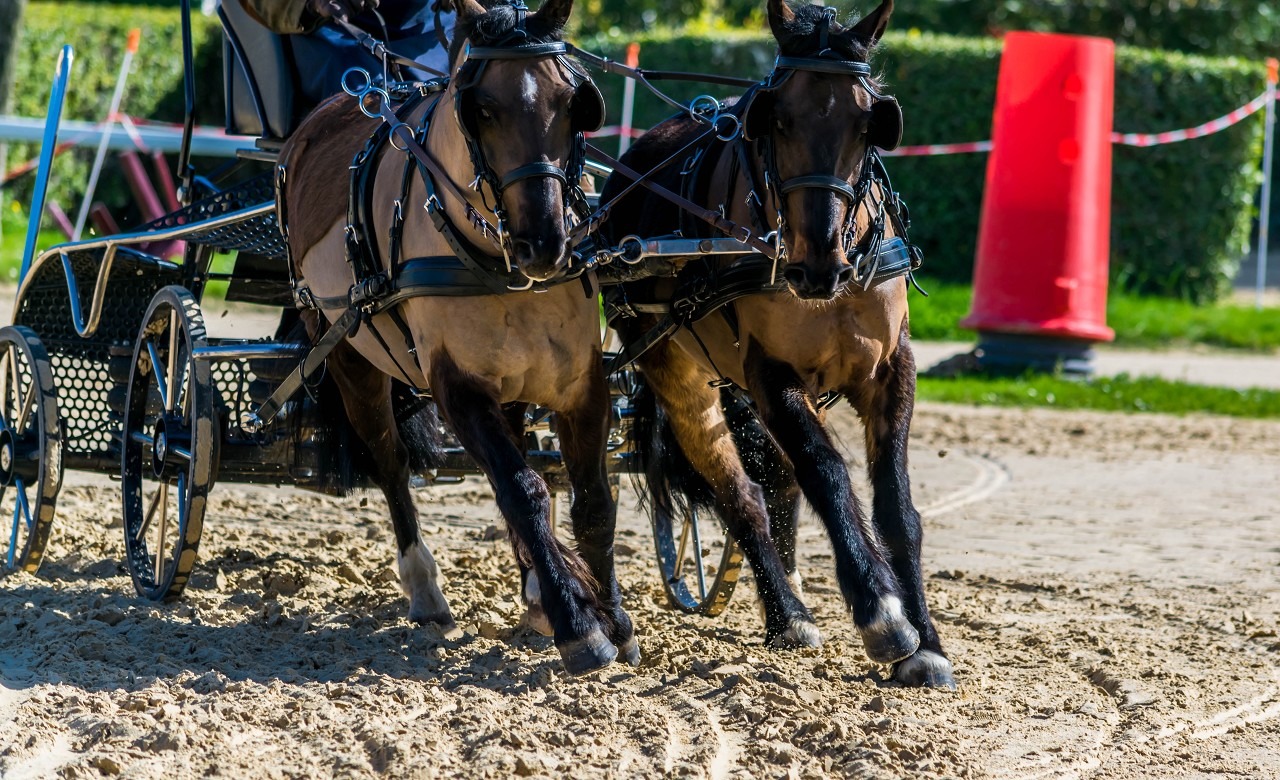
History of Carriages

When did the history of carriages begin? In Europe, carriages were used by aristocrats, while in America, stagecoaches played a vital role during the westward expansion. Did you know about the origins of carriages in Japan? Here, we introduce the relatively unfamiliar history of carriages in Japan.
Overseas Carriage History
Carriages for transporting people and goods date back to ancient times. Archeological digs in Mesopotamia have uncovered clay models of wagons dating from around 2800–2700 BC, which were two-wheeled chariots pulled by two horses. Wheels during that period were simple logs with fixed axles. Although such chariots may be unfamiliar in Japan, they were widely used in the ancient Orient and during the Shang and Zhou dynasties in China.
This evolution continued through Roman times, where chariots became entertainment racing sports. Despite their excitement, these races were dangerous for both drivers and horses, often leading to injuries or fatalities.
By the late 16th century, European courts embraced carriage usage, becoming symbols of aristocratic status and influencing architecture and urban planning. Stagecoaches with fixed fares appeared in London and Paris, serving as precursors to modern taxis and buses.
In the 19th century, wealthy classes in Paris used carriages to showcase social status, while in America, stagecoaches carried settlers during westward expansion. Regional and environmental factors shaped how carriages were used, but with the advent of automobiles, the era of carriages declined globally.
History of Carriages in Japan
When did Japan start using carriages? While horses were used as riding animals, carriages didn’t become widespread, and ox-drawn carts were more common. However, in 1866 (Kaeō 2), the shogunate permitted carriage use in Edo and along the Five Routes for cargo transport. By 1869, passenger transport via horse-drawn coaches began between Tokyo and Yokohama. Subsequently, carriages became popular across Japan for agriculture and material transport, with regular postal and cargo routes established by 1881 between Tokyo and Osaka. Japanese Army vehicles continued to rely on horses for military logistics until the end of WWII.
Why Did Japan Favor Ox Carts Over Horse Carriages?
There are several reasons Japan didn’t adopt horse-drawn carriages on the same scale as ox carts. First, Japan’s horse culture originated via Korea, which did not have a chariot or extensive cavalry tradition, focusing instead on mounted archery. Also, horses were precious animals, symbolizing power—like