
Among those who enjoy horseback riding, some may have thought about turning their passion into a profession. In Japan, careers involving horseback riding include riding instructors at equestrian clubs and jockeys in horse racing, but the mounted police unit also offers a profession that leverages horseback riding skills.
When hearing about mounted police units in Japan, it might be hard to picture what exactly they do. What kind of work does a mounted police officer undertake?
This article will introduce the roles, history, and how to join Japan’s mounted police units.
What is the Tokyo Metropolitan Police Mounted Division?

The Tokyo Metropolitan Police Mounted Division consists of 23 officers and 16 horses, belonging to the Third Traffic Mobile Division of the Metropolitan Police Department. They normally conduct training at the Tokyo Racecourse in Fuchu City.
The main activities include traffic safety education and parade traffic control. Since their appearances are less frequent, one might think their role is limited, but they actually respond to about 400 dispatches annually.
Unlike typical police roles, the mounted division mainly performs ceremonial and parade duties, often for the media.
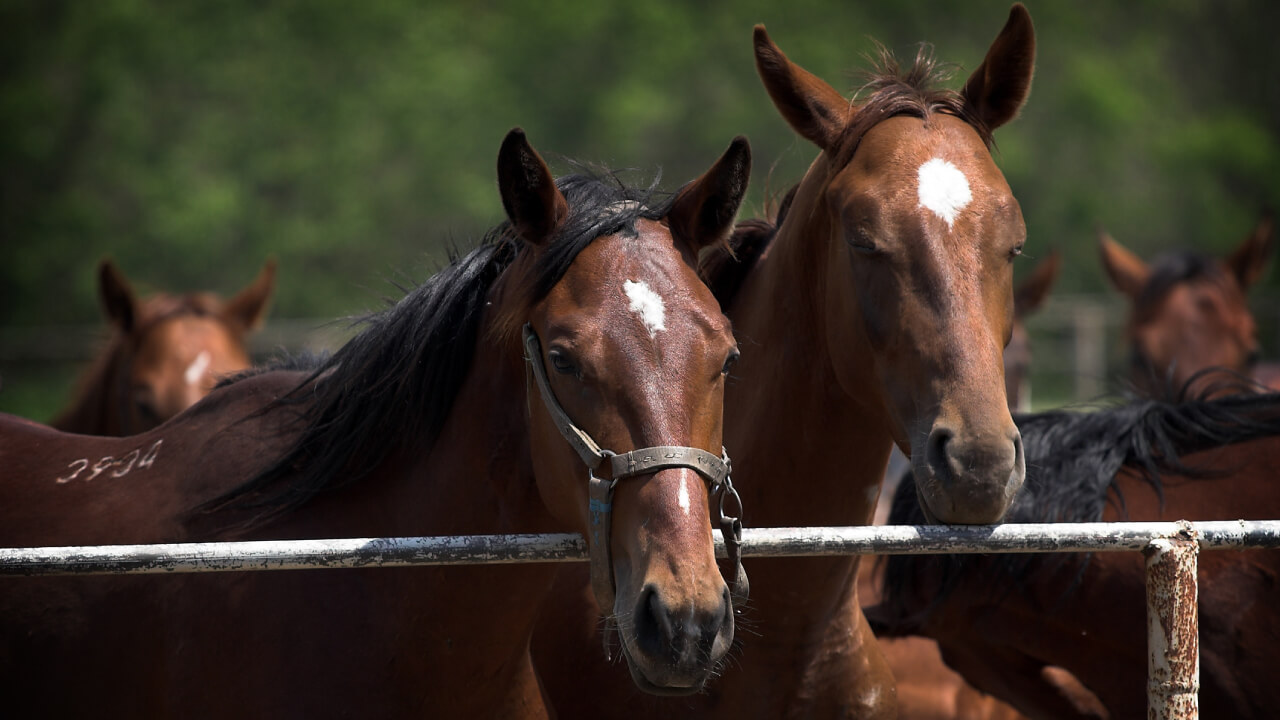
All horses in the Metropolitan Police mounted unit are stallions, most of which are descendants of racehorses. Some have also had successful racing careers.
A Brief History of Japan’s Mounted Police
The origins of mounted police in Japan trace back to documents exchanged between the Metropolitan Police and the Home Ministry, where delivery of messages or documents was conducted on horseback. Operations on horseback began as early as February of the 7th year of the Meiji Era (1874). This indicates a very long history for Japan’s mounted police.
The mounted police officially formed in September of the 36th year of the Meiji Era (1903). They were modeled after European mounted police units. Initially, 15 officers and 15 horses were assigned.
Since their founding, the mounted unit has participated in various significant events, including protecting parks and the Imperial Palace during Emperor Meiji’s funeral, guarding the Emperor’s enthronement ceremonies, and security for visiting Queen Elizabeth II of the UK. They have also been involved in earthquake disaster relief, animal rescue, and public guarding.
In July of Showa 51 (1976), Japan’s first female mounted police officers were appointed.
Roles of the Mounted Police

The mounted police’s roles often include guarding at parades and events, but they also engage in traffic safety education, guiding school children crossing streets, and patrolling around the Imperial Palace. What exactly do they do?
Traffic Safety Education
This is the activity with the highest number of annual dispatches for the mounted police. Mainly targeted at children, this involves visiting kindergartens, nurseries, and elementary schools across Tokyo. They teach children how to cross safely and give riding lessons, making it an unforgettable experience for the kids.
Parades
During traffic safety parades and local festivals in Tokyo, the mounted police play a key role in traffic management and parade entertainment. Their presence adds splendor and attracts cheers from spectators. Many people are surprised to learn that police officers and horses in the parade are part of the mounted unit.
School Traffic Control
They stand at intersections during school commute times to direct traffic. They also interact and supervise children, with a higher vantage point on horseback than patrol cars or motorbikes, allowing them to oversee children’s safety more effectively.
Imperial Palace Patrols
They conduct patrols around the Imperial Palace Park, although this activity is irregular. When they appear, tourists often take photos and enjoy the sight, making it quite popular among visitors.
Escort for Diplomatic Ceremonies
During formal occasions where ambassadors present their credentials to the Emperor, ceremonial carriages are used. The mounted police lead the procession, escorting the ambassador’s carriage from the ceremony venue to the Imperial Palace.
The Metropolitan Police mounted unit and the Imperial Palace mounted unit participate in these events. Many mistakenly think the carriage drivers are part of the mounted unit, but they are actually employees of the Imperial Household Agency.
The carriages travel from the Meiji Life Building in Marunouchi, through Hibiya Street, the Imperial Palace, and Nijubashimae. Officers wear helmets instead of their usual peaked caps—a rare sight.
Becoming a Mount Police Officer Is Difficult

The Japanese mounted police are based in three main locations: Tokyo Metropolitan Police, Kyoto Prefectural Police, and the Imperial Palace Police. They are referred to as the Tokyo Mounted Police, Heian Mounted Police, and Imperial Palace Mounted Police, respectively. Recruitment for mounted officers does not come as a direct application; instead, officers are recruited as regular police and then assigned to the mounted division within the Traffic Department’s Third Mobile Unit.
After being recruited, officers attend police training, which starts in April or October. It lasts six months for college graduates and ten months for others, covering fundamental skills and training necessary for mounted policing.
Following training, officers gain experience working at police boxes before being able to transfer to the mounted police division. However, transfer requests are not guaranteed, just as in any other profession. Not everyone who joins the police can automatically become a mounted officer.
People who become mounted police often do so either through a direct ambition or after joining the police force and developing an interest in riding. Having riding experience is not a strict requirement for application. However, being selected as a mounted officer requires being deemed suitable for the role and passing rigorous assessments. The number of mounted officers is relatively small.
Becoming a mounted police officer requires not only police training but also mastering riding skills. Enthusiasm for horses and good communication to build bonds with the animals are essential. The most important trait is a genuine love for horses.
Summary
The Metropolitan Police mounted unit can be seen in traffic safety education events and parades, but for those living outside Tokyo or Kyoto, their presence might be less familiar.
Learning that joining the mounted police involves first becoming a regular police officer and undergoing police training might surprise some. The role involves significant riding skills and a prominent public presence, often seen as a special or prestigious position. Only those selected after thorough training and assessment can serve in this distinguished role.
The history of Japan’s mounted police is long, dating back to the Meiji era, and they have played active roles for over a century. Even those unaware of their existence or role as police officers might find this information intriguing. We hope this overview sparks more interest in Japan’s mounted police units.