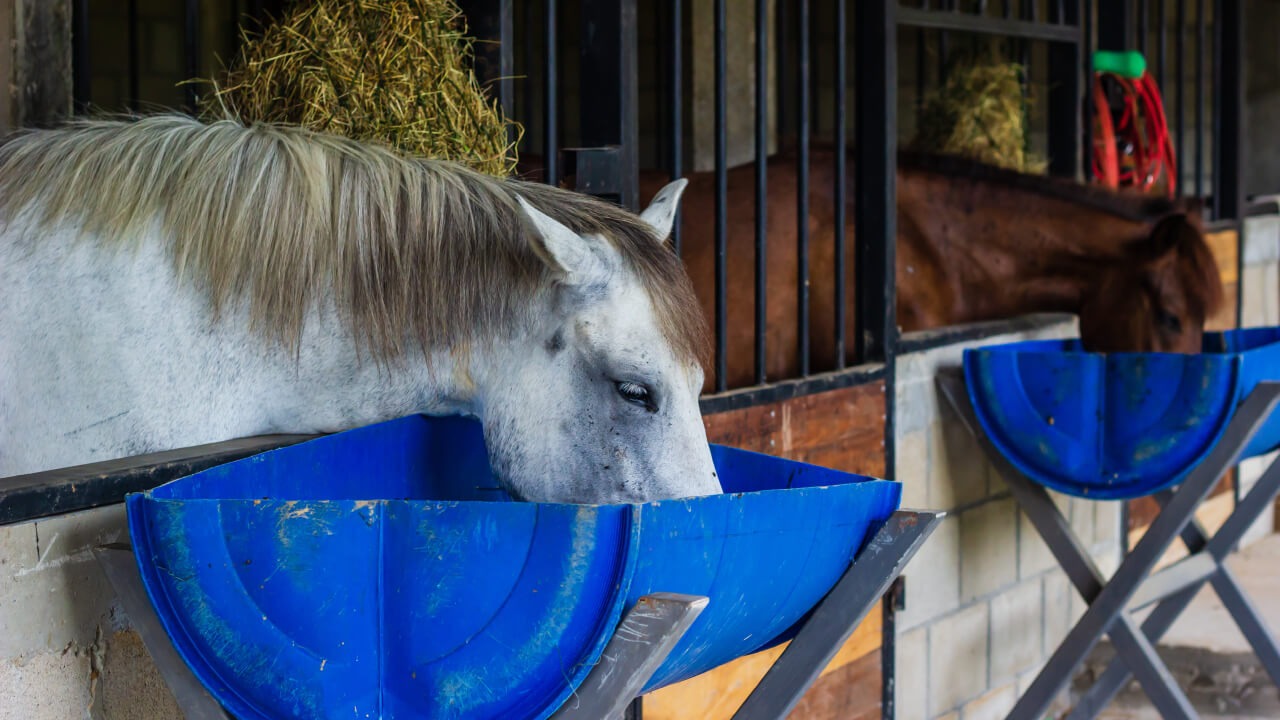
Have you ever seen a horse vigorously drinking from a bucket after riding lessons, training, or breaking? This is especially noticeable during the summer when horses drink water with vigorous energy.
People also need a lot of fluids during hot weather or after exercise. Living organisms rely heavily on water intake for survival, and losing too much water can threaten life itself.
Unlike humans, horses do not feel thirst in the same way, so it’s important for humans to observe their behavior and ensure proper hydration.
But how much water does a horse typically drink in a day? And what strategies can be employed to encourage water intake?
How Many Liters of Water Does a Horse Drink Per Day?

Providing nutrients to a horse’s body is essential. However, water is even more vital for sustaining life than nutrients.
Maintaining a certain level of water allows the body to function properly. Unlike nutrients, excess water cannot be stored easily in the body.
Horses typically drink about 25 liters of water per day. Lactating mares can consume between 34 and 42 liters of water daily. Depending on the level of exercise, their water needs may increase further.
Such large water intake cannot be met by drinking only during meals. While it would be ideal if horses could turn a faucet and drink conveniently, that’s not possible.
Therefore, ensuring that horses have access to fresh, clean water at all times, such as using water cups and offering water after exercise, is crucial for proper hydration.
What Is the Body Water Content of a Horse?

It is well known that human bodies are composed of about 60% water. Losing 3% of internal water can impair bodily functions, and losing over 7% can be life-threatening. Therefore, frequent hydration is necessary to maintain the water balance.
The same applies to horses. Loss of 10% of body water can cause functional decline, and over 20% can be fatal. Water is lost through sweat and excretion during exercise, and a typical 500kg horse contains approximately 300 liters of water. Losing about 60 liters can be dangerous or even fatal.
The reduction of water also leads to constipation, which is a significant concern. Horses excrete water through urine and stool, and a lack of water can cause colic by leading to severe constipation.
Maintaining proper water intake is critical for horses’ health.
Effective Strategies to Encourage Drinking & Salt Blocks

Horses need to drink a lot of water daily, but drinking large amounts at once is not ideal. It can cool the body suddenly and cause fatigue. Therefore, small quantities of water should be offered repeatedly, especially during hot days to prevent heatstroke.
To promote water intake, providing fresh water in water cups and offering water after exercise helps. Frequent, small doses of water are more beneficial.
During hot summer days, hydration is vital for heatstroke prevention. Additionally, salt intake helps boost water consumption. Placing salt blocks near feeding areas encourages horses to consume more salt and water.
Horses will chew on salt blocks and sometimes even eat salt mixed with their feed to increase their salt intake, which in turn promotes greater water consumption.
In summer, horses naturally seek water due to the heat, but in winter, they often drink less because cold water discourages them. To mitigate this, warming the water slightly can encourage more drinking without reducing intake.
Although the risk of heatstroke is lower in winter, dehydration remains a concern if horses do not drink enough water.
Summary
As seen, horses, like humans, need proper hydration, and a lack of water can affect their body functions. The key difference is that humans can regulate their water intake consciously, while horses rely on us to create environments that promote proper hydration. During hot weather, be mindful of heatstroke and salt intake, and in cold weather, adjust water temperature accordingly. Just as we enjoy warm drinks on cold days, horses benefit from adequately warm water in the winter.
After enjoying your riding lessons, don’t forget to ensure both your hydration and your horse’s hydration!