The Tokyo Paralympics are scheduled from August 24 to September 5, 2021, immediately after the Olympic Games.
Did you get a chance to watch the Paralympic equestrian events?
Specialized tack and equipment are used for these competitions. Many spectators likely focused on the gear that Paralympic athletes use.
Though no Japanese athletes won medals this time, their performances were highly competitive. It was especially inspiring to see 63-year-old Mie Miyaji, the oldest member of Japan’s team, achieve 8th place in the freestyle final. Their bravery and hope surely moved many viewers.
The Tokyo 2020 Paralympics feature 22 sports and 539 events during the Games period.
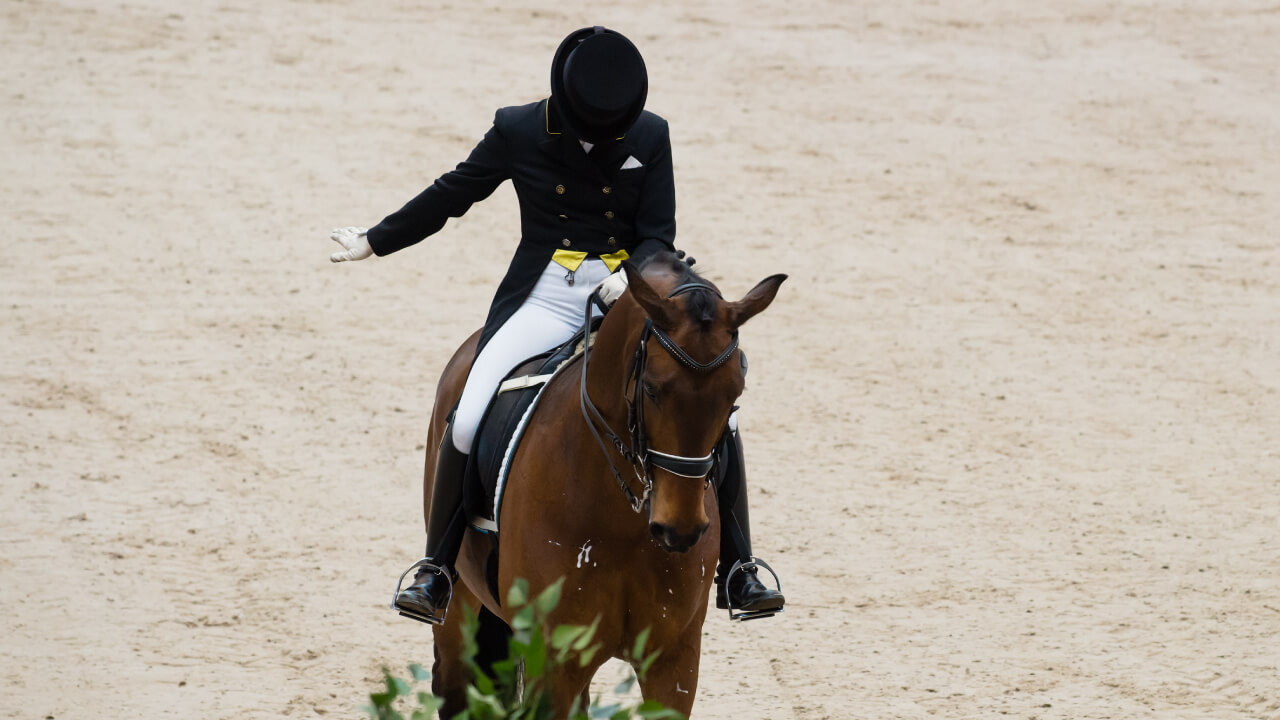
Equestrian is unique in that it is the only Olympic sport performed ‘without regard to gender’ and ‘with animals’. It is a display of harmony between rider and horse, emphasizing precision and artistry in movement.
In this article, we explain the history, event types, Japanese athletes’ past results, and key attractions of equestrian at the Tokyo 2020 Paralympics. Please enjoy this content to enhance your experience of the Paralympic equestrian events!
History of Paralympic Equestrian
Equestrian appeared as an Olympic sport in the 1900 Paris Games. However, the Paralympic Games, originally organized for soldiers with injuries, first took place in 1948 in London with archery. Since then, it was aimed at rehabilitation for injured soldiers. It became part of the Olympic program in the host country from 1960 Rome, and from 1988 Seoul, the Paralympics started immediately after the Olympics. The sport was officially recognized in 1996 at the Atlanta Games.
The term ‘Paralympic’ combines the English words ‘parallel’ and ‘Olympic.’
Current Equestrian Events in the Paralympics
While Olympic equestrian includes dressage, eventing, and jumping, Paralympics features only dressage. Athletes compete individually by grade and can form teams for a musical freestyle with three members regardless of their grade, vying for medals.
There are five grades from I to V, with Grade V representing the least impairment. The competitions are judged by five referees, focusing on gait, step accuracy, and sense of harmony between rider and horse.
What is Dressage?
Dressage involves showcasing the beauty and precision of horse movements. It takes place within a 20m x 60m rectangle, with judges scoring based on the accuracy of movements. There are fixed-routine and free-routine programs, with rules adapting depending on the athlete’s impairment level. All athletes perform on a level playing field with specially designed rules and equipment, ensuring fairness and high standards.
Individual Dressage
Competitors perform prescribed routines, and top scorers advance to the freestyle program set to music of their choosing.
Team Dressage
Teams of three riders, regardless of grades, perform with music accompaniment, competing for medals.
Japanese Athletes’ Past Achievements
Paralympic equestrian is still developing in Japan, with few medals so far. However, this time Japan is a host nation with slots for both individual and team events. Participants include Miyaji Mie (Grade 2), Sora Yoshikoshi (Aspir Riding Club), Masaki Inaba (Shizuoka Riding Club, Grade 3), and Katsuhiro Takashima (Dressage Stable Terei, Grade 4). We look forward to Japan’s first medals in Para-equestrian!
Global Paralympic Equestrian Scene
Europe, especially the UK, is the hub of equestrian sports. The UK has long been a powerhouse in para-equestrian, consistently winning medals at international competitions and favorite to medal at Tokyo 2020.
Austria’s Pepo Pache achieved gold in individual dressage at London 2012 and Rio 2016. A former Olympic rider, he suffered a spinal cord injury after an accident in 2008 and shifted focus to para-equestrian. He is a strong medal contender in Tokyo.
Schedule and Venue
The competition will be held at the Baji Koen (Tokyo Metropolitan and Sports Center) located in Setagaya Ward, Tokyo.
Schedule:
| Date | Time | Event |
|---|---|---|
| August 26 (Thu) | 3:00 PM – 10:35 PM | Individual Grade II, IV, V, with awards ceremony |
| August 27 (Fri) | 3:00 PM – 10:20 PM | Individual Grade I, III, with awards ceremony |
| August 28 (Sat) | 5:00 PM – 10:10 PM | Team Event |
| August 29 (Sun) | 6:00 PM – 8:45 PM | Team & Awards Ceremony |
| August 30 (Mon) | 3:00 PM – 10:15 PM | Freestyle Dressage – Grades IV, V, with awards, Plus Grades I-III |
Highlights of Paralympic Equestrian
Expressive and Unique Routines
Equestrian is the only sport where men and women compete equally, with athletes showcasing their unique disabilities. Participants perform incredible displays of skill, often surpassing Olympic standards, with diverse riding styles, support systems, and equipment, making each performance special.
Supportive Equipment
Equipment modifications according to impairment grade are common. Riders use specially adapted saddles, aids, and tools—operating with hands, feet, or even mouths—demonstrating ingenuity unseen in Olympic competitions. These innovations are a distinct attraction of Paralympic equestrian.
Teamwork Beyond Rider and Horse
Riders are supported by assistants called ‘coachers’ and ‘commanders’ who give vocal commands and cues. This shared effort creates a team dynamic that transcends individual competition, making Paralympic equestrian uniquely about collaboration and trust.
Summary
Equestrian is a demanding sport blending athletic skill with artistry, requiring harmony between horse and rider. The profound trust and silent communication between them are inspiring. Enjoy this elegant celebration of human and animal bonds at the Paralympics—witness the seamless performance where man and horse become one.