Have you ever received feedback from your instructor about your riding posture while riding? Maybe you’ve heard phrases like ‘focus on your core,’ ‘sit tall on your sit bones,’ or ‘maintain your posture.’
In daily life, maintaining the same posture for extended periods is uncommon. During a typical riding lesson that lasts 30 minutes to an hour, riders must sustain proper riding posture on the horse. To do this, awareness of posture and the engagement of seldom-used inner muscles are essential.
It is not possible to naturally strengthen the muscles necessary for riding in everyday life. If you want to improve your strength proactively, targeted training is the most efficient approach.
Here, we introduce the muscles essential for riding and effective training methods.
The Importance of Proper Posture in Riding

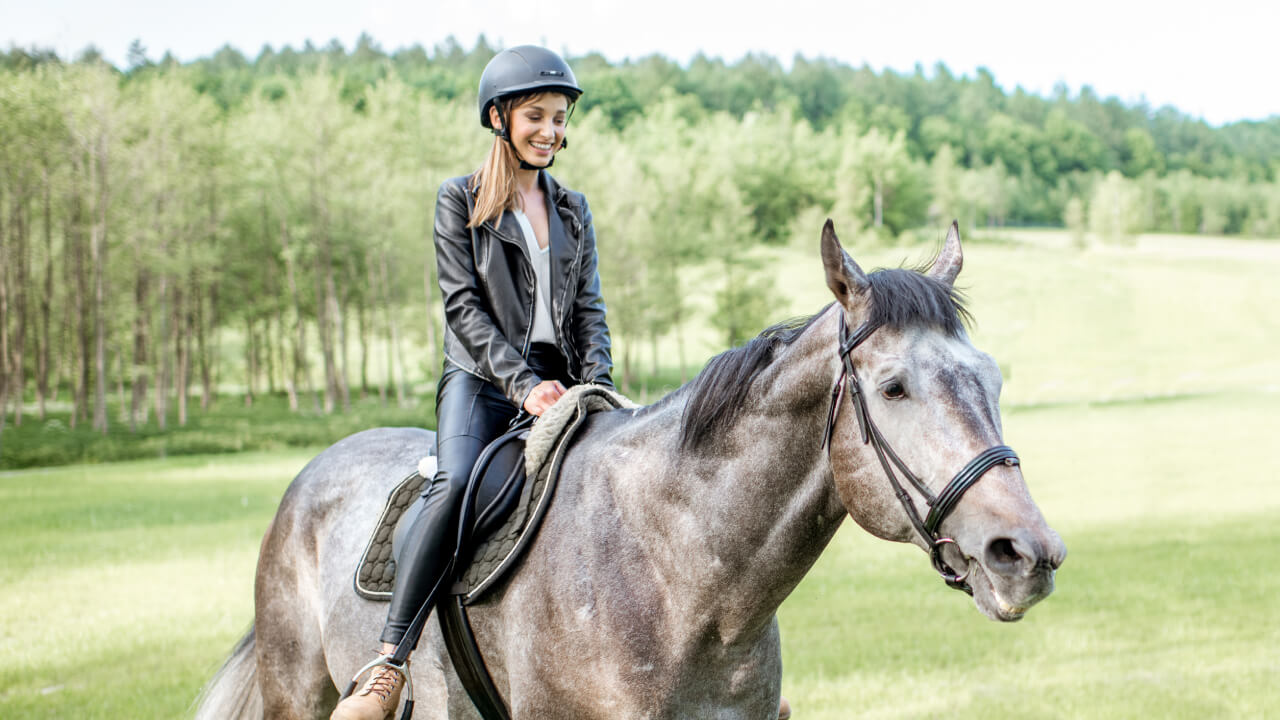
Maintaining correct riding posture, called the ‘riding stance,’ is crucial. When you see someone riding, it might look like they are simply sitting on the horse. However, maintaining your balance against the intense swaying of the horse depends greatly on your ‘riding posture.’
The riding posture significantly impacts the horse’s movement and riding safety. Poor posture can hinder your ability to adapt to the horse’s movements, increasing the risk of falling, and it can also disrupt the horse’s gait, causing awkward riding.
If your posture is incorrect, your foot placement may also shift, preventing proper aids and confusing the horse.
Key Factors for Maintaining Correct Riding Posture

Simply sitting on the horse does not guarantee correct posture. Have you ever seen someone at competitions clinging onto the horse while riding? Usually, everyone maintains an upright and elegant riding posture.
The correct riding posture involves placing your center of gravity in the saddle, keeping your back straight, and sitting on your sit bones. The key points are ensuring even balance from the front view and a straight line from head to heel when viewed from the side. Also, keep your gaze forward with a broad field of vision, open your chest, and relax your shoulders.
The human body is asymmetrical, and so is a horse’s body. Maintaining proper posture can be challenging.
Furthermore, core strength is essential for maintaining riding posture. Those with a well-developed core tend to have more graceful, elegant riding styles.
What is the Core?

The core, in simple terms, refers to the muscles located in the trunk of the human body, specifically the muscles within the torso. It includes the chest, back, abdominal muscles, lower back, hip joints, and buttocks.
Strengthening these muscles helps create a stable core, enabling better balance and posture, improving riding skills, enhancing physical strength, and enabling more efficient use of limbs.
In riding, balancing the large sways caused by the horse’s trot or canter relies on maintaining proper posture, which in turn depends on a well-developed core. If the core muscles are weak, it becomes difficult to sustain the correct posture.
Let’s focus on training the core to improve your horseback riding skills.
Core Exercises You Can Do at Home

Riding naturally strengthens your core muscles over time. However, incorporating targeted core exercises outside of lessons can effectively and efficiently enhance your core strength and improve riding skills.
You might think of gym machines when hearing about training, but many people find it difficult to visit a gym regularly. Even if you cannot go to a gym, core training can be easily done at home.
Here, we introduce some core exercises you can do at home.
Plank
When you hear about core training, you might immediately think of abdominal workouts or vigorous physical activity. However, maintaining a steady posture for a period of time also effectively trains your core.
The plank is a simple exercise that involves maintaining a specific posture and breathing while consciously engaging the targeted muscles. It is a low-impact, quick exercise that can be very effective. Because there are no intense movements involved, you can train at home without worrying about noise or disturbance.
Balance Ball
The balance ball is a large rubber ball. Sitting on the ball causes it to wobble, requiring you to keep your balance to stay seated.
This exercise involves maintaining good posture on the ball to train your core, similar to balancing on a moving horse. You can also perform various poses, such as placing the ball under your stomach and getting on all fours, or doing push-up positions with your feet on the ball, to further engage your core.
Horseback Riding Machine
This is a fitness machine designed for home use, inspired by riding movements that strengthen core muscles and aid in weight loss. Sitting on the riding machine and balancing against its movements can develop your core muscles.
The machine mimics the swaying motion of riding, allowing you to train while imagining the real riding experience. Its seat is similar to a saddle, making it easy to check your riding posture during training.
Conclusion
In summary, maintaining correct riding posture involves more than just balancing on the horse; it requires strengthening the muscles inside your body, especially your core muscles.
The core muscles can be strengthened through regular riding practice, but to improve more quickly, targeted training outside of lessons is recommended. Simple, non-intense exercises can be effectively performed at home—find a training method that suits you and contributes to your riding skill development.