When a horse successfully clears an obstacle or when their breathing is perfectly in sync, you might think, ‘I want to give them a tasty reward.’ But what kind of food should you give? This article explains horses’ favorite foods like carrots, examples of treats they enjoy, what to avoid, and how to give treats properly.
Best Foods and Treats for Horses

Fruits and Vegetables
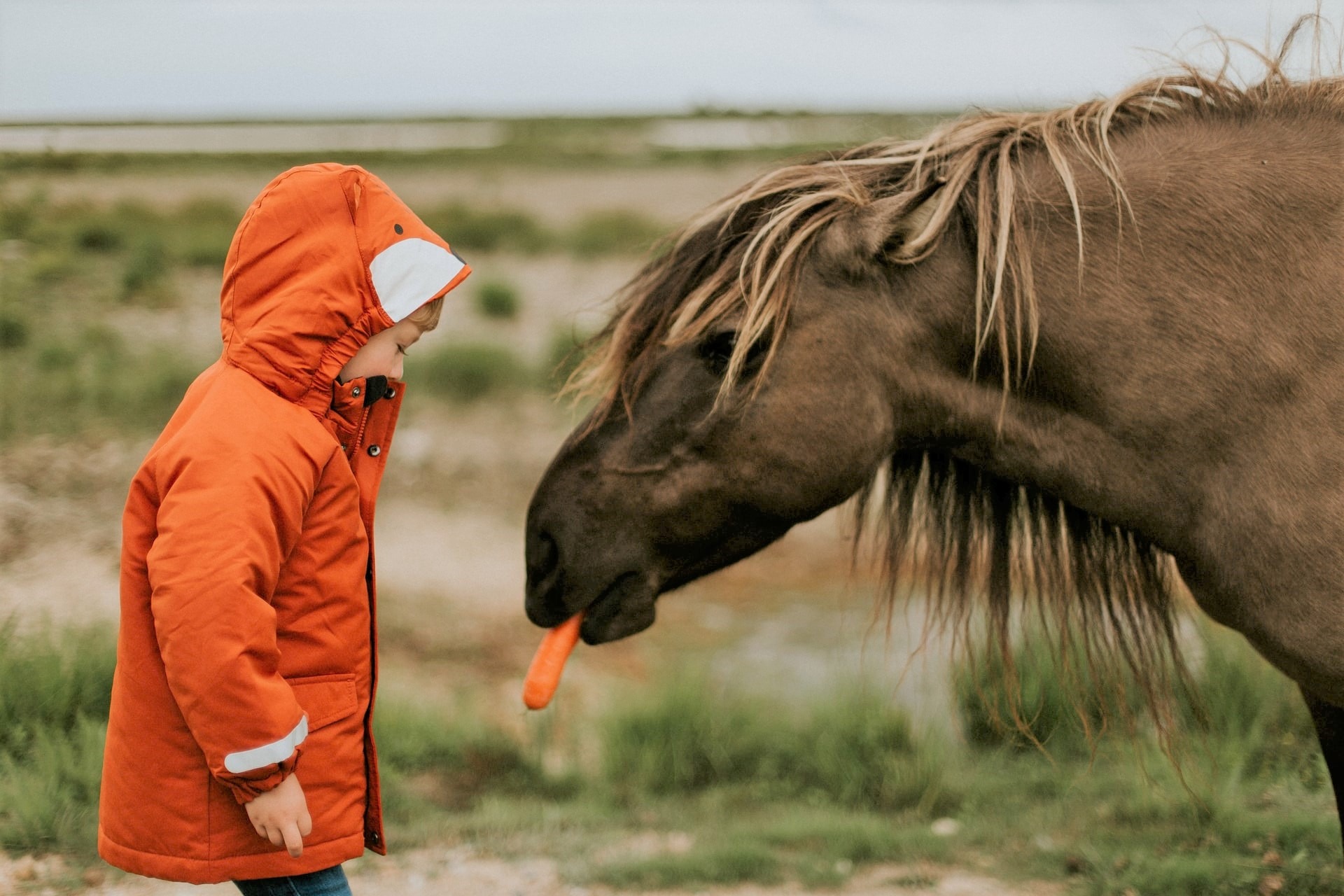
The most common treats for horses are vegetables and fruits. When you think of horses, carrots probably come to mind first. While horses have food preferences, I believe many horses love carrots.
However, horses that have rarely eaten anything other than their regular feed due to strict nutritional management or diet restrictions might be cautious about unfamiliar fruits and vegetables or may not show interest because they don’t know they’re tasty.
Other vegetables and fruits that horses can eat include apples, bananas, and pumpkins. Some horses also enjoy strongly scented vegetables like celery or citrus fruits and pineapples.
When introducing new foods, it’s wise to start with small quantities after confirming that they’re safe, and observe their condition. If they like them, you can give these as treats or rewards.
Sweet treats are favorites of horses!
While some animals may not feel much sweetness, horses and dogs—animals that have coexisted with humans for ages—are believed to sense sweet tastes more readily. It seems horses particularly prefer sweet things. Besides fruits and vegetables, some horses even like sugar or honey, and you might find them skillfully licking small sugar cubes.
However, overfeeding on sugar isn’t good, and some horses with metabolic issues can’t tolerate sweets. Always ask a knowledgeable person like your riding instructor for the right amount before feeding.
Horse Treats
If bringing fresh fruits or honey is inconvenient, pre-made horse treats are a good alternative. Many brands offer pellet-type cookies based on barley or corn with fruit flavors. Some products are low-sugar or include vitamins, so choose according to your horse’s preferences and dietary needs.
- Favorite: Loves sweet foods
- Acceptable foods: Vegetables and fruits such as carrots, apples, bananas, pumpkins
Balance treats with your horse’s health in mind.
Foods Horses Should Avoid
Onion and Garlic Risks
It is often said not to give onions or garlic to dogs and cats because chemicals in these foods can affect red blood cells, causing anemia. Horses are no exception; eating large quantities has been reported to cause anemia, so it’s best to avoid garlic and onions entirely.
However, in some cases, small amounts of garlic might be used to improve health, but such decisions should always be made with advice from a vet or expert, and carefully monitored.
Caution When Giving Vegetables
Horses can eat many fruits and vegetables, but there are precautions. For example, avocado and unripe tomatoes (solanaceous vegetables) are toxic and should be avoided. If unsure, consult with your riding staff before giving anything.
Additionally, eating brassica vegetables can cause gas and colic, so it’s safer to limit these. Always remove stems, skins, leaves, or any harmful parts before feeding.
Furthermore, even edible parts can be contaminated if they include toxic buds, skins, or stems, so always prepare produce carefully to minimize risks.
Are Caffeine and Cacao Safe?
Cacao contains theobromine, which is also in chocolate and other products like cola. Though harmless to humans in small amounts, it can be toxic to some animals, including dogs and horses. Caffeine found in tea and coffee can also cause excitement or over-stimulation, and excessive intake is dangerous.
Since theobromine and caffeine are banned substances in competitions, be especially cautious if your horse is preparing for shows or races. Even if the horse’s health isn’t affected, ingesting these substances might disqualify them from competitions.
Horses are large animals, and accidental ingestion of small treats or drinks rarely causes serious harm, but there’s no benefit in giving human sweets or drinks to horses. For their health, it’s best to avoid these.
- Causes anemia: Onions, garlic
- Toxic foods: Avocado, unripe tomatoes, brassica vegetables
- Prohibited substances: Caffeine, cacao
Stay safe and avoid risky foods!
How to Give Treats to Horses

Feed in manageable pieces
Horses can chew fibrous grasses and crunchy cubes well. However, round fruits like apples or large seeds or hard cores can choke them. To prevent accidents, remove cores and seeds and cut foods into bite-sized pieces.
Consider nutritional balance
Horse treats are primarily made from grains and fruits, which seem healthy to humans. When provided in moderation, they shouldn’t harm health.
But, horse diets are carefully balanced with various feeds tailored to weight, hoof health, and competition needs. Overfeeding treats can disrupt this balance, so be cautious.
Be cautious to prevent biting
Horses’ mouths are soft, and they can pick up small foods with their lips. But impatient horses might rush or nip at treats if they’re too eager. Also, nervous handlers can unintentionally make horses impatient, causing them to come quickly for treats.
To avoid bites, give small or round treats by placing them in your palm or holding vegetables at the bottom, and be gentle, especially when giving treats to children.
Summary
Many foods are favored by horses, especially carrots, but there are also harmful foods like onions, certain vegetables, and human snacks that can cause health issues. Always check safety before offering treats and serve them in appropriate shapes and quantities to keep your horse healthy.