
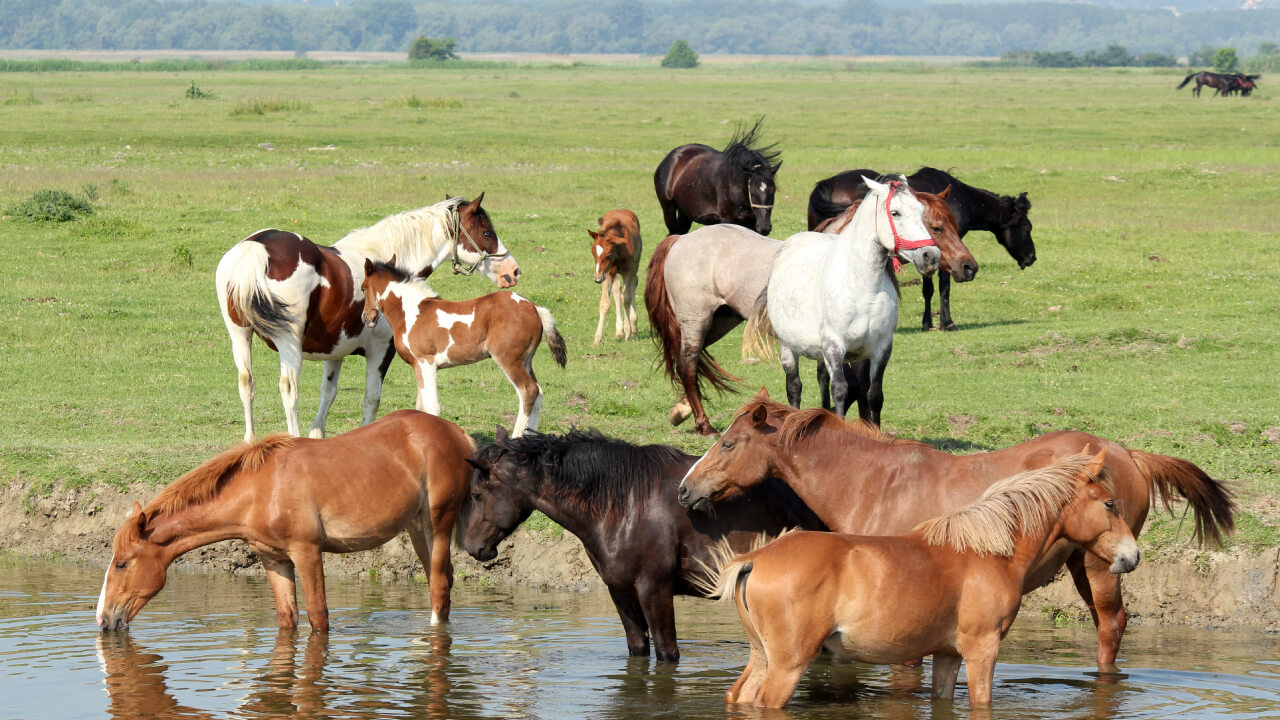
Has anyone ever seen a horse swim? Some animals are naturally good at swimming, while others are not.
You might imagine animals that live in water swimming effortlessly. However, animals that usually stay on land rarely show their swimming skills near water.
In this article, we will explore whether horses can swim and how they do it.
Are Horses Innately Able to Swim?
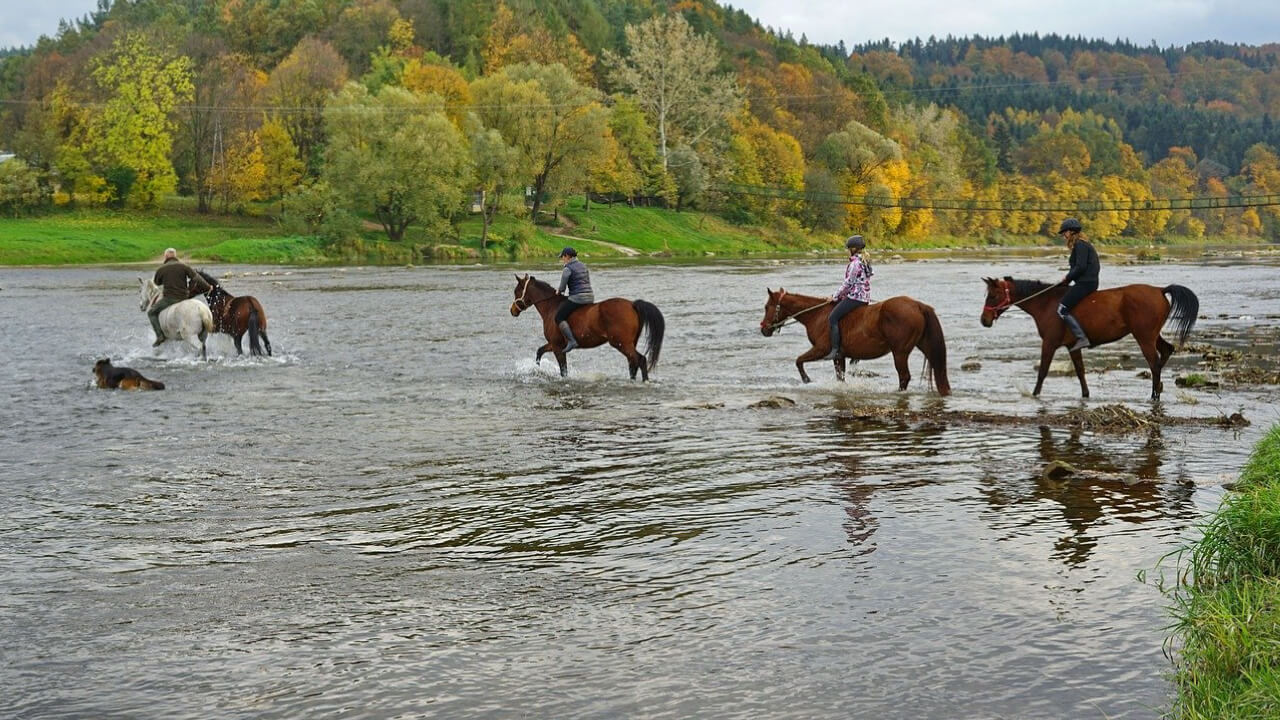
Horses are capable of swimming, and it is said that some have even swum across the ocean to Japan. However, seeing a horse swim is quite rare. This is because large horses are seldom kept near water bodies or pools suitable for swimming, especially in riding clubs, farms, or zoos.
At seaside riding clubs, horseback riding courses that include water crossings are available, making it clear that horses can swim without issue. But how do horses learn to swim? Interestingly, horses do not need special training to learn to swim. While some are better at it than others, horses are born with an innate ability to swim.
Fundamentally, horses naturally float better than water and do not drown. Floating reduces the strain on their bodies, allowing them to exercise or rehabilitate more comfortably.
How Do Horses Swim?
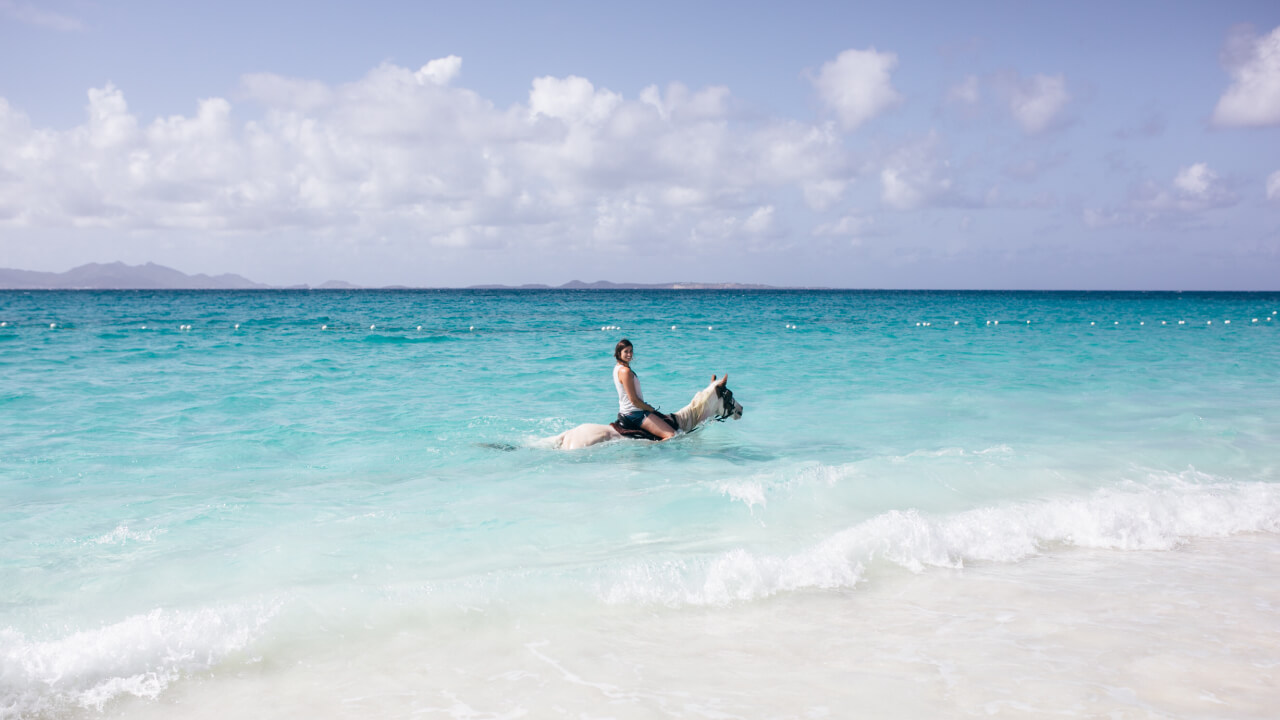
Do you know how horses swim? They paddle with a dog-paddle style, but their limb movements differ from when they walk on land.
Horses usually walk in a diagonal gait called the diagonal gait, where the right front and left hind legs move together, and the left front and right hind legs move together. Cats and giraffes share this gait as well. When swimming, horses switch to a lateral gait, where the right front and right hind legs move together, and the left front and left hind legs do so. Animals like cats and giraffes also use this gait in walking.
This ability to switch limb movements when swimming versus walking is quite rare and highlights the horse’s agility.
There Are Swimming Pools for Racehorses!
Did you know there are pools designed specifically for training racehorses? Just like humans use pools for fitness and rehabilitation, racehorses also train and recover in pools.
Let’s explore what happens in these pools and where such facilities are located.
What Do Horses Do in the Pool?
In racehorse pools, training, rehabilitation, and injury recovery are all conducted. The water reduces the load on the limbs, preventing injuries from worsening while training or exercising. Swimming can enhance cardiovascular health, improve body balance, and build trust between horse and rider. Because of the lower impact, horses can recover quickly.
Where Are Racehorse Pools Located?
Locations with dedicated pools include the ‘Racehorse Rehabilitation Center,’ ‘Miho Training Center,’ and ‘Ritto Training Center.’ Here are details about each facility.
Racehorse Rehabilitation Center
Located in Iwaki City, Fukushima Prefecture, operated by JRA, this center specializes in rehabilitation for racehorses. It is the only facility in Japan solely dedicated to horse rehabilitation.
The facility includes a 400m dirt track, a water treadmill with a conveyor belt, a 40m swimming pool, a water walking machine for cooling legs, and hot springs for muscle recovery and relaxation.
Visitors can tour the facility and observe horses during rehabilitation or relaxing in the hot springs.
Miho Training Center
Located in Misato Village, Ibaraki Prefecture, this center is operated by JRA. Established in April of Showa 53, it covers an area equivalent to 48 Tokyo Domes and hosts over 2000 horses undergoing training.
The center features various courses: an oval track with a slope, 1370m dirt track, 1600m dirt track, 1800m turf course, 1800m new polymer track, 2000m woodchips track, 1370m hurdles course, a forest horse trail, and swimming pools, including both straight and circular designs.
Visitors can see horses running and swimming during guided tours, with schedules available on the website.
Ritto Training Center
Located in Ritto, Shiga Prefecture, this JRA-managed training facility covers an area equivalent to 40 Koshien stadiums and houses about 2000 horses. It includes multiple training courses, an MRI-equipped clinic, and offers tours and family experience programs.
The center features a 1450m turf course, 1600m dirt course, 1800m woodchip course, 1950m turf course, 2038m polymer track, 2200m dirt course, an 1085m hill course with woodchips, a circular 50m swimming pool for racehorses, stables, and a veterinary clinic.
If you are interested, plan a visit to explore these facilities firsthand.
Conclusion
While you may have seen horses run confidently, few have seen them swim. After reading this article, you might be curious to witness a horse swimming. Horses are born knowing how to swim, and their ability to switch limb movements between walking and swimming demonstrates their remarkable agility.
There are only a few facilities with pools for horses. These facilities often hold tours, so if you want to see horses swimming and training in action, consider attending a tour and observing horses paddle and swim. You might discover a new appreciation for these incredible animals.