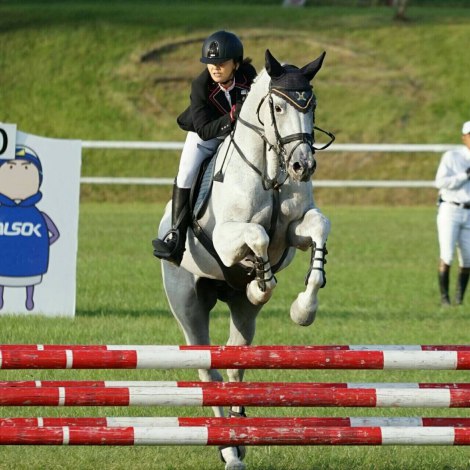
Before a jump, riders often feel nervous, wondering, ‘Will I remember the course?’ or ‘Can I make the jumps properly?’ So, who actually designs these challenging courses, and how do they do it? In this article, we introduce the魅力 of show jumping and the role of course designers!
What Makes Show Jumping Exciting?
Dynamic Movements
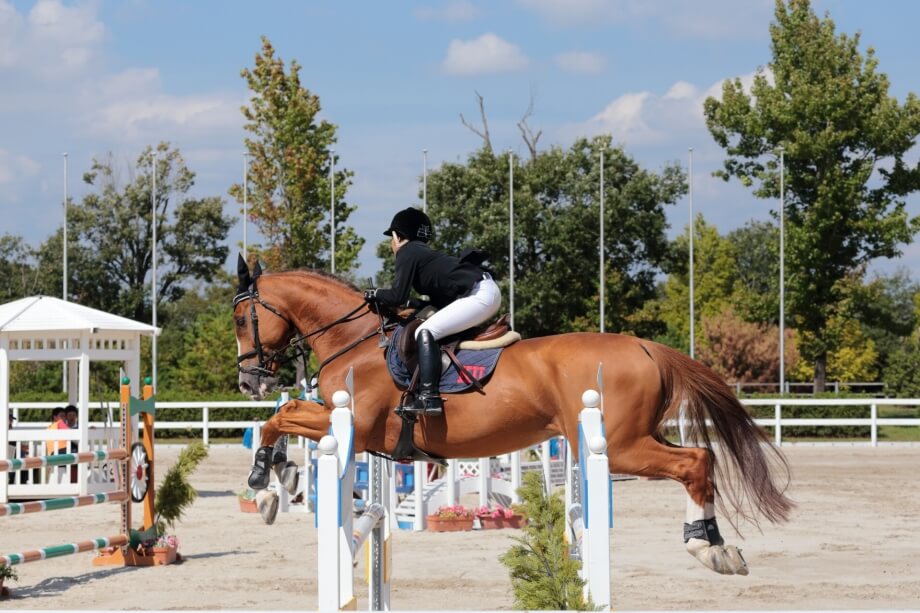
For beginners in riding, watching show jumping is especially enjoyable compared to dressage! The movement of horses jumping over obstacles is dynamic and captivating, even if you don’t understand the technical difficulty.
While it may look like horses are jumping effortlessly, in high-level competitions such as the Olympics, obstacles can reach a height of 2 meters. Since riding horses average about 1.5 meters tall, these jumps are higher than the horse’s shoulder level.
The Art of Horse and Rider Coordination
Many people who try riding find that, initially, it’s a bit scary, but once they manage to jump, they say, ‘The thrill makes me love show jumping!‘ The moment they complete the jump with perfect timing is especially exhilarating.
The harmony between horse and rider, called “horse-rider unity”, is a key aspect of show jumping. Skilled riders seem to jump with ease, but it involves careful control of aids, balance shifts, and speed towards obstacles, requiring many considerations.
About Show Jumping Course Designers
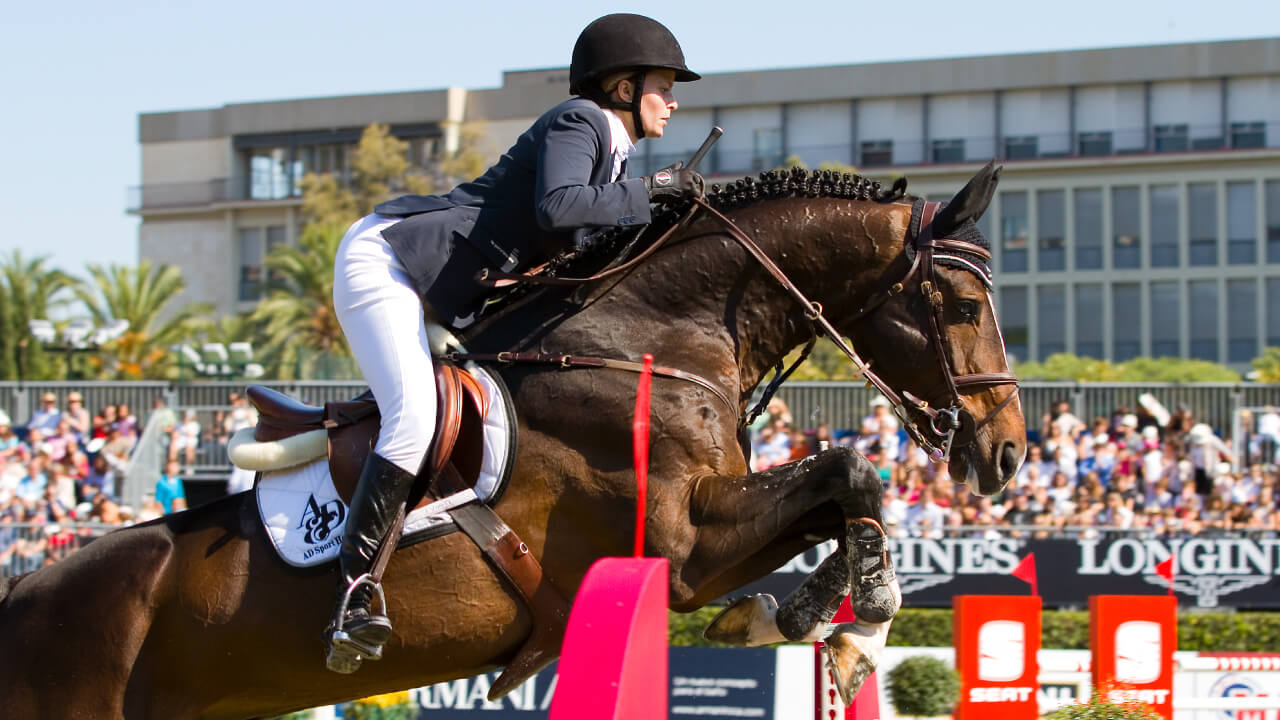
So, how are show jumping courses created? Here, we will introduce the role of course designers and the rules they follow when designing courses.
Qualifications Needed
In Japan, at official competitions and national championships sponsored by the Japan Equestrian Federation, a show jumping course designer recognized by the federation designs the courses. Their rank is divided into three levels: 2nd dan, 1st dan, and S-class. The requirements are as follows:
2nd dan
Certified as a judge by the Japan Equestrian Federation
Attend training courses and pass the exam
1st dan
Hold the 2nd dan certification
Have practical experience or training at official or sanctioned competitions
Attend training courses and pass the exam
S-class
Hold the 1st dan certification
Have practical experience at official or sanctioned competitions
Be recognized by the Equestrian Federation’s headquarters and qualification committee
Design Rules and Guidelines
While course designers need various skills, the actual course creation process is not entirely at their discretion. The Japan Equestrian Federation has “competition regulations”, which specify limits on obstacle height, width, and number for show jumping. Creating a course within these regulations is a true display of the designer’s skill.
Challenging Heights and Widths in course obstacles
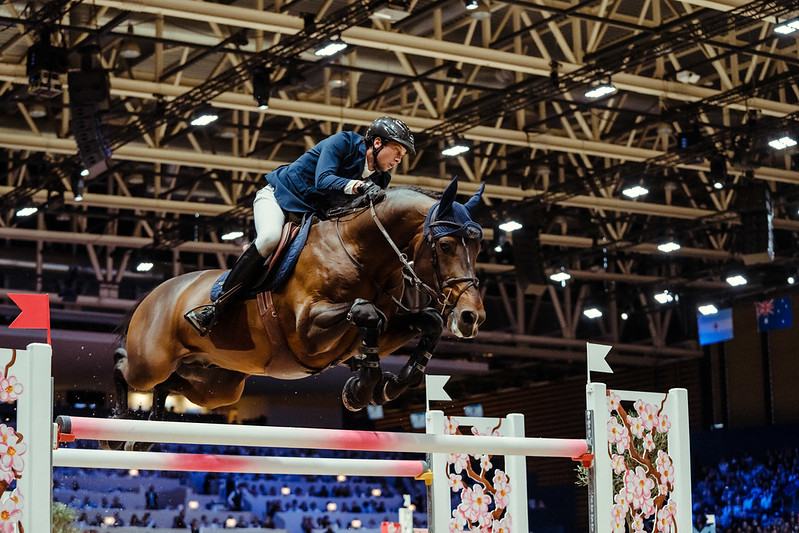
What kinds of obstacles are used in actual competitions? Let’s look at the types and required skills of different obstacles!
Vertical Obstacles
Vertical obstacles involve placing a bar horizontally on the ground. They primarily require high jumping techniques. However, jumping higher than necessary can result in time penalties.
Jumping high also means more stress on the horse’s back and greater impact on landing. Riders need to quickly adopt a forward-leaning or two-point position and regain their posture immediately after the jump.
Width Obstacles
Width obstacles involve crossing a wider space. Competitions often feature combined obstacles like Oxer jumps or boxes. In higher-grade events, the width of obstacles can reach 180cm, demanding significant jumping ability.
Along with height, width increases difficulty, making these hurdles more challenging than vertical ones of the same height. Approaching at speed is ideal, but since they are wider, the takeoff point should be closer than for vertical jumps.
Though daunting at first glance, regulations from the FEI specify safety measures such as safety cups that detach upon strong force, ensuring safety for obstacles like Oxer jumps.
Water Obstacles
Many imagine cross-country water pools when hearing “water obstacle,” but show jumping also features Liverpool obstacles with water trays beneath the jump.
The depth is limited to 2 meters, roughly comparable to width, and just the presence of water can scare horses. To ease their fear, trainers often practice with water under obstacles by laying down plastic sheets. Trust between horse and rider, built through such training, is vital for success.
Overcoming obstacles involves more than just jumping skills; trust and familiarity are essential for clearing every obstacle.
Creating a Flow in Course Design
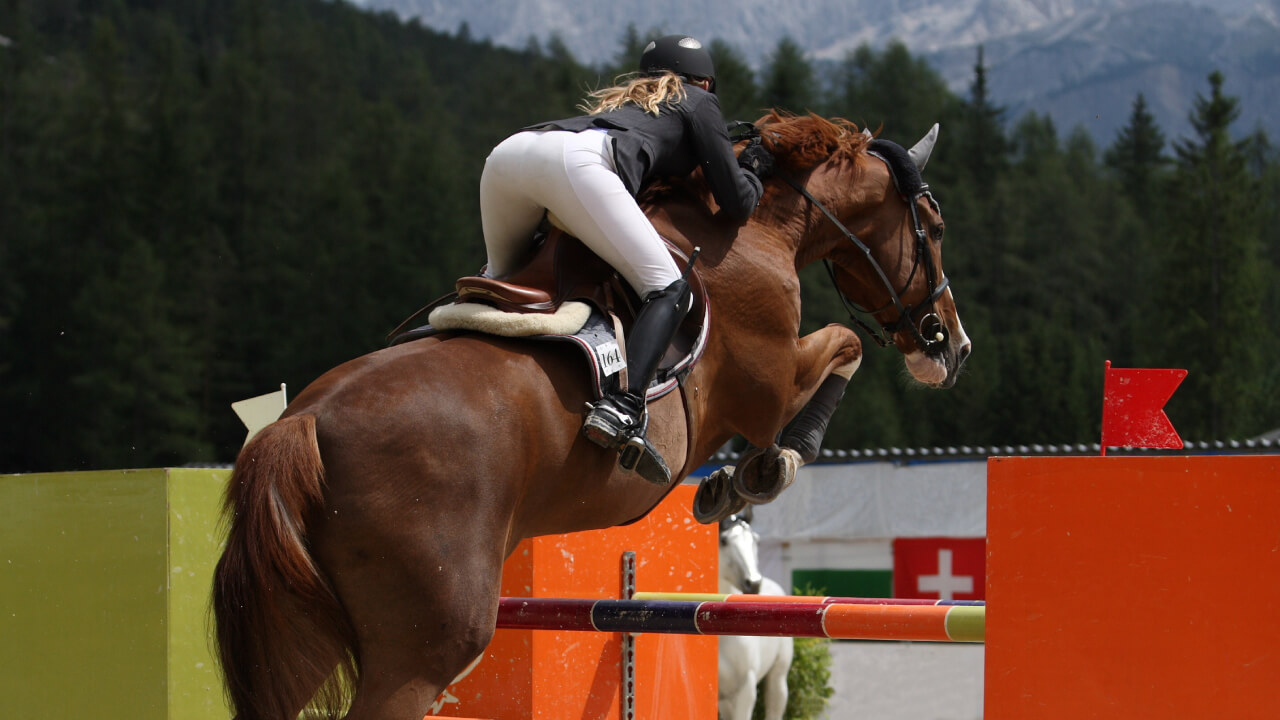
Obstacles’ Sequencing
Once the obstacle overview is understood, let’s consider the importance of the “course flow” during the competition. If it were just about height and width, a single jump like in high jump would suffice. But, if it’s just about clearing 100cm obstacles in practice, would you find it challenging enough?
People with less experience might think, ‘I don’t get it yet,’ but imagine a combination obstacle where you plan your approach considering multiple jumps and stride adjustments in advance. From the start to the finish, designing the course as a “series of connected movements” rather than individual jumps shows true skill.
What Happens Between Obstacles?
This emphasizes that not only during jumps but also in the “between obstacles” phase, planning is important. If you lose your balance at the first obstacle, or your stride varies significantly, this impacts the next jump’s success.
Similarly, course designers limit the number and height of obstacles, and use variations in layout and approach to add interest. Once riders become comfortable with jumping individual obstacles, noticing and responding to these subtle changes becomes vital.
Show jumping is not just about conquering large obstacles; it’s about answering an ongoing question: “What will we do before the next obstacle?” Together with your horse, you react to that challenge.
Summary
In conclusion, show jumping course designs are created by course designers authorized by the Japan Equestrian Federation, in accordance with competition rules. While jumping ability is important, paying attention to the overall course strategy is essential. Riders’ role is to execute precise aids while considering obstacles, routes, and the horse’s condition, aiming for a harmonious performance.