
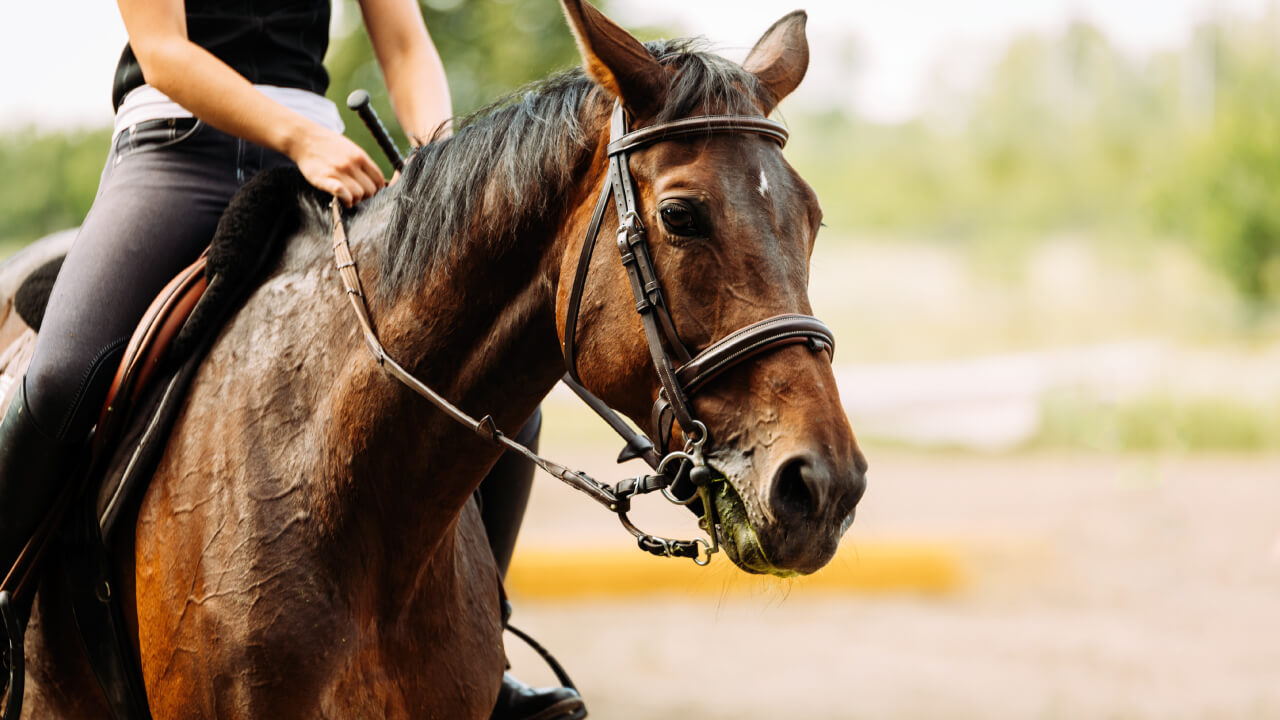
Have you heard the term ‘bit acceptance’? Many people taking lessons at riding clubs have probably come across this term at least once.
Just hearing the phrase ‘bit acceptance’ may not give a clear idea of what it truly entails or what actions to take. In this article, we introduce what ‘bit acceptance’ means and why it is important. Please use it as a reference.
Do you know what a bit is?

When starting horseback riding, instructors often tell students to ‘be mindful of bit acceptance’ or ‘feel the bit.’ Without understanding what ‘bit’ refers to, it’s impossible to be aware of or feel ‘bit acceptance.’ So, what exactly is a ‘bit’?
What is a bit?
A ‘bit’ is a type of horse gear, specifically a metal bar that’s placed in a horse’s mouth. It is connected to the reins, allowing the rider to communicate with the horse by tightening or loosening the reins, transmitting signals through the bit.
Some worry that placing a bit might cause pain to the horse, but between the horse’s front and back teeth, there is a gap called the alveolar margin where no teeth grow, so the bit doesn’t cause pain when placed there. However, there are various types and sizes of bits. Naturally, a horse’s mouth size varies, so selecting the right size is crucial. Using an ill-fitting bit can cause injuries, so care should be taken.
Types of bits
Bits vary in shape, materials, and the type of bit rings. Examples include ‘water snaffle,’ ‘curb bit,’ and ‘Pelham.’ Ring shapes also differ, such as ‘loose ring,’ ‘egg butts,’ and ‘D rings.’ Materials include ‘stainless steel,’ ‘copper,’ ‘oregano,’ ‘rubber,’ and ‘leather.’
The most common and widely used type of bit is the ‘water snaffle,’ characterized by a joint in the middle. The ring shape, such as a round loose ring, provides a gentle touch on the horse’s mouth and is suitable for beginners.
Among materials, stainless steel is frequently used as it’s considered to be flavorless and odorless. In contrast, oregano-bit materials are believed to have a sweet-smelling scent that horses find appealing.
Given the variety of bits available, it’s important to select and use a bit that fits the horse well.
What is a bit acceptance state?

Bit acceptance simply refers to the horse’s readiness to accept commands through the reins. If the horse resists or shakes its head when you try to give commands, it has not yet achieved proper bit acceptance.
In addition, when the reins are loose and hanging, no matter how much you try to give commands such as stop or turn, the horse will not respond effectively. When the horse has proper bit acceptance, it will lower its head, become more forward, and you will feel some tension through the reins.
Key points for improving bit acceptance
When working on bit acceptance, adjusting the reins isn’t the only important factor. Simply pulling on the reins to position the bit correctly does not lead to proper acceptance.
Since bit acceptance means the horse is prepared to understand and respond to rider commands, pulling the reins excessively can be counterproductive. What other methods can be used to communicate with the horse besides the reins?
Most riders think of leg cues here. A key aspect of proper bit acceptance is actually encouraging the horse’s forward movement through leg signals.
The combined force of the horse’s natural forward drive and the rider’s tension through the reins creates the proper bit acceptance. To maintain gentle contact, riders should keep their elbows close, open their shoulders, and adopt a basic riding posture that supports stability.
Bit acceptance as a vital tool for safety and trust

Why is bit acceptance necessary? Horseback riding is often described as a harmonious activity between rider and horse. To achieve this harmony, clear communication and mutual trust are essential.
Riders give commands such as change of direction, stop, or start. If the horse does not trust the rider, it will not accept instructions. Conversely, the rider cannot attempt new challenges without trusting the horse. Both must believe in each other and work with shared awareness.
In riding, neither horse nor rider should move freely without regard for the partner. Ignoring your partner’s safety can lead to serious injuries. It’s important to consider your partner’s feelings and maintain mutual respect and care.
One way to demonstrate that you and your horse have a good relationship and are working in harmony is through proper ‘bit acceptance.’ When the horse trusts the rider and is responsive, it’s said to have proper bit acceptance. Likewise, the rider will feel that the horse is focused and responsive to commands.
Bit acceptance is also a method to confirm mutual trust, which enhances safety during riding.
Summary
How was that? The term ‘bit acceptance’ is often heard early in riding lessons.
However, mastering and sensing proper bit acceptance can take time. Many find it a challenging concept to grasp.
Achieving good bit acceptance not only improves riding skills but also enhances safety for both rider and horse. It’s important to consciously work towards it in lessons.