
Have you ever seen a horse baby? Many riding clubs do not breed their own horses, so even if you’re into horseback riding, you may be surprised to learn about foal development. This article explains the weight of newborn foals, weaning periods, and why pasture turnout is essential for foals.
What Is the Birth Weight?

Most foals are conceived from spring to early summer and are born in the following spring to early summer. This timing is ideal for both domesticated and wild environments, protecting newborn foals from harsh heat or cold. The pregnancy lasts about 330-340 days, slightly longer than humans.
Popular breeds like Thoroughbreds and Anglo-Arabs typically weigh about 50-60kg at birth. They are smaller than adult horses but already have a body weight comparable to mature humans.
For instance, Percherons seen in draft horse racing or sightseeing carriages weigh about 65kg at birth, ponies about 30kg, and miniature horses around 15kg — similar to a medium-sized dog like a Shiba Inu, indicating their small stature.
Many know this, but horses can stand and walk just a few hours after birth. This ability to move early is crucial for survival in the wild to escape predators.
Weaning Age Guidelines

Foals grow rapidly and eventually reach the weaning stage. Let’s explore when and how foals are weaned during their growth.
Physical Conditions
The first condition for weaning is that the foal can obtain sufficient nutrients without relying solely on mother’s milk. How long does it take to reach this stage?
Initially, mother’s milk is the sole nutrition source. However, around 10 days to 2 months after birth, they start eating solid feed and pasture grasses. Gradually, they eat more of these feeds, reducing their milk intake accordingly.
The target feed intake for weaning is about 1-1.5kg. Once they can consume this amount, they can get enough nutrition without maternal milk. It takes approximately 4-6 months to reach this stage.
Additionally, weight is a key indicator for weaning. The appropriate weight to start weaning is over 220kg. In less than half a year, foals can grow almost four times their initial weight, showcasing their rapid growth.
Parental Separation Is Also Important for Weaning
When foals are ready to wean, their mothers will be separated once they determine that the foal no longer depends on milk nutritionally. Even if physically ready, if the foal is mentally attached and stressed, it may fail to wean properly and lose weight due to stress.
How long does it take for foals to become mentally independent? Within about three weeks, foals tend to stay within a radius of about 5 meters from their mothers. After that, they gradually expand their range and distance from the mother.
By around three and a half to four months, foals usually act almost entirely independently and are considered to be mentally weaned. During weaning, it’s common to let foals born in the same year stay together in groups to reduce stress.
The Importance of Pasture Turnout

Foals start pasture turnout even before weaning. While running freely in a spacious pasture looks enjoyable, what are the benefits for foals from early turnout?
Ensuring Exercise
Even adult horses are inactive if kept in stalls, so pasture turnout helps prevent lack of exercise. On days when riding clubs have fewer students, instructors may ride horses to keep them active.
Similarly, foals, although small, need more movement than just living indoors. During pre-training, it is difficult to direct foals to exercise on command, so pasture turnout is ideal for their health.
Moreover, when foals run and play freely with others in the pasture, they use their muscles and joints more than under human guidance. Horses raised in pastures from a young age tend to develop stronger bones and tendons than those kept confined.
By developing basic stamina and strengthening their bones and joints early on, we can reduce physical stress and injury risks during training later.
Learning Social Skills
On farms with many foals, young horses are grouped together during turnout, providing them with a chance to live in a herd—like a natural social environment. This helps foals develop social skills naturally.
Even if they are usually kept in individual stalls, fostering social interactions is vital for their overall development.
Relieving Stress
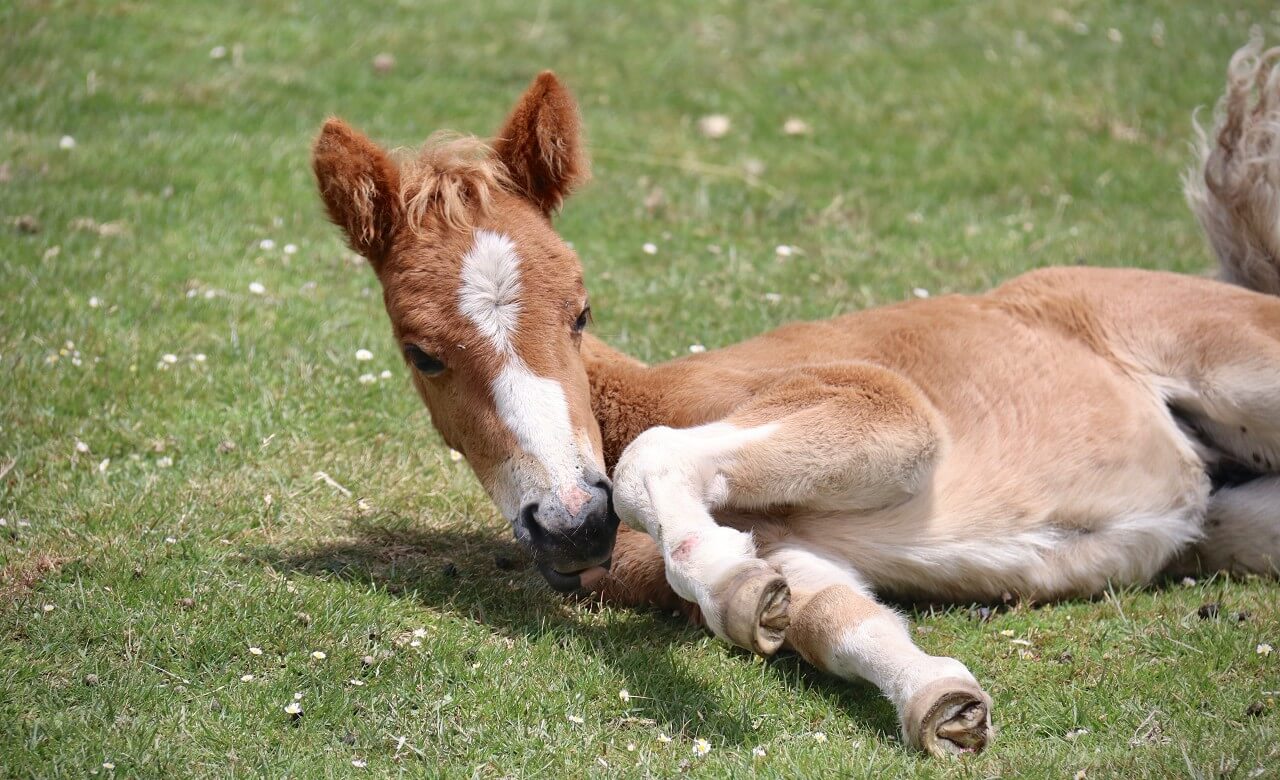
Though it might sound like advanced training, pasture turnout also helps reduce the foals’ stress. Observing foals relaxing or napping in the grass demonstrates that free movement and resting are both important. Foals sleeping on fresh grass look incredibly relaxed and adorable, which can be calming for observers too.
Sunbathing not only feels good but also enables the synthesis of vitamin D and other nutrients in their bodies. While nutritious feed options are available today, outdoor sun exposure remains a beneficial practice.
Summary
Horses are usually born from spring to early summer and are weaned around four months old after spending time with their mothers. During this period, foals develop physical strength and social skills through interactions with their mothers and peers. While many riding clubs may have limited opportunities to engage with foals, understanding their growth stages highlights the importance of relationships between horses and both humans and other horses.