
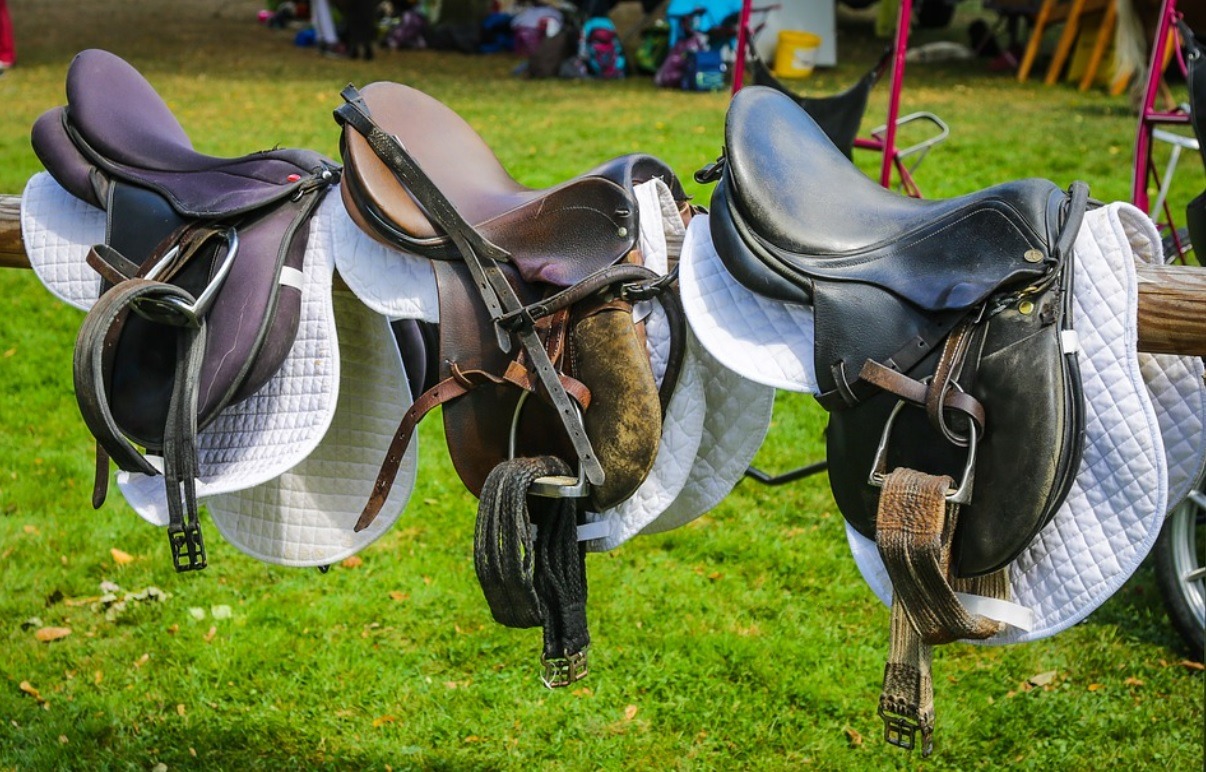
What kind of saddle do you imagine when you hear the term ‘saddle’? Perhaps different shapes and scenes come to mind depending on the person. In the first half of this article, we will explore the types and features of saddles in detail! In the latter half, we will introduce proper maintenance methods.
Western Saddle

When you hear ‘Western saddle,’ you might picture the type used for children riding ponies. You may wonder why Western saddles are preferred for sightseeing horseback riding.
The name suggests it, but Western saddles are used by cowboys. Cowboys spend long hours riding horses and sometimes need to start or stop rapidly to cattle.
Therefore, stability is key for Western saddles. They feature a deep, wide seat that allows for comfortable long rides. Also notable is the ‘horn’ at the front of the saddle, which serves as a handle.
The horn offers a grasp point for sudden moves or for tying ropes used in work. These features make Western saddles very reassuring and comfortable, even for children inexperienced in riding.
Though less practical, Western saddles are highly decorative and stylish! For those who own horse gear, it’s easy to relate—the gear is both functional and a fashion statement, emphasizing style alongside utility.
British Saddle

More familiar to many riders is the ‘British saddle.’ Compared to Western saddles, it has fewer decorations and a similar design. Broadly, there are two main types: jumping saddles and dressage saddles.
Jumping Saddle
Jumping and dressage saddles have almost identical parts and structure. However, their shapes and thicknesses are subtly different to suit each discipline.
When jumping over obstacles, riders tend to shorten the stirrups—resulting in slightly bent knees. Accordingly, the jumping saddle has a shorter, protruding ‘thigh strap’ to match this position.
The knee roll of jumping saddles is larger than that of dressage saddles, providing better support for feet and knees.
Meanwhile, the cantle (rear part of the seat) is shallower than on dressage saddles. This allows riders to maintain a more active, two-point position, aiding balance during jumps.
Dressage Saddle
During dressage, the stirrups are lengthened compared to jumping. The ‘thigh strap’ extends straight downward, and the girth is designed to not interfere with contact with the horse, with a longer ‘gullet’ to accommodate the belly strap.
The cantle on dressage saddles is deeper than on jumping saddles, providing stability when seated deeply, especially during movements like piaffe or collected trot.
Beginners may start with rental saddles, choosing visually appealing ones. But when owning a saddle, consider the discipline you plan to pursue. There is also a versatile all-round saddle that combines features of both jumping and dressage saddles.
Saddle Maintenance

Leather can last a long time if properly maintained, but since it is made of natural materials, it can develop mold or develop cracks. Even if you purchase your own saddle, proper maintenance is essential to prevent damage.
Keeping it Clean
When caring for your saddle, start by removing dirt. Use a brush to sweep away dust before wiping its surface with a damp cloth that’s well wrung out. Be careful not to use a cloth too wet, which could soak the saddle.
It is especially important to clean areas frequently touched by people or horses, such as the seat and stirrups, which tend to be sweaty or dirty with horse sweat, turning white. Focus on wiping these parts thoroughly.
This basic maintenance after riding, ideally with every use, helps prevent mold and keeps the saddle in good condition.
Cleaning with Saddle Soap
For a deeper clean, use saddle soap. Foam it up with a sponge, then clean in circular motions. Pay special attention to concave parts and stitches, which can trap dirt, but be gentle to avoid damage.
After cleaning, wipe off the foam with a dried cloth. You might feel a satisfying cleanliness, but the process isn’t finished yet—there’s more to do!
Conditioning Leather with Leather Balm
After removing foam, let the saddle dry in a well-ventilated shady spot until it feels moist but not wet. Then apply a leather conditioner. This prevents the leather from drying out and keeps it soft and elastic. It also enhances water resistance.
Too much oil, especially in areas like the armor leather supporting the rider’s weight, might make the leather too flexible and stretch it out. Keep oily treatments on parts like belts to a minimum, and avoid over-oiling other areas to prevent deformation.
Liquid oils are less recommended; instead, use leather cream for better control and absorption. Regular maintenance, about once every 1–2 months, will keep your saddle in top shape.
Summary
Saddles are among the most prominent horse riding gear. They facilitate communication between horse and rider and serve as both a cushion and a symbolic item.
Using this guide, take time to care for your saddle properly. You’ll discover that different disciplines require specific saddle types and maintenance practices, which you can learn through regular inspection and care.