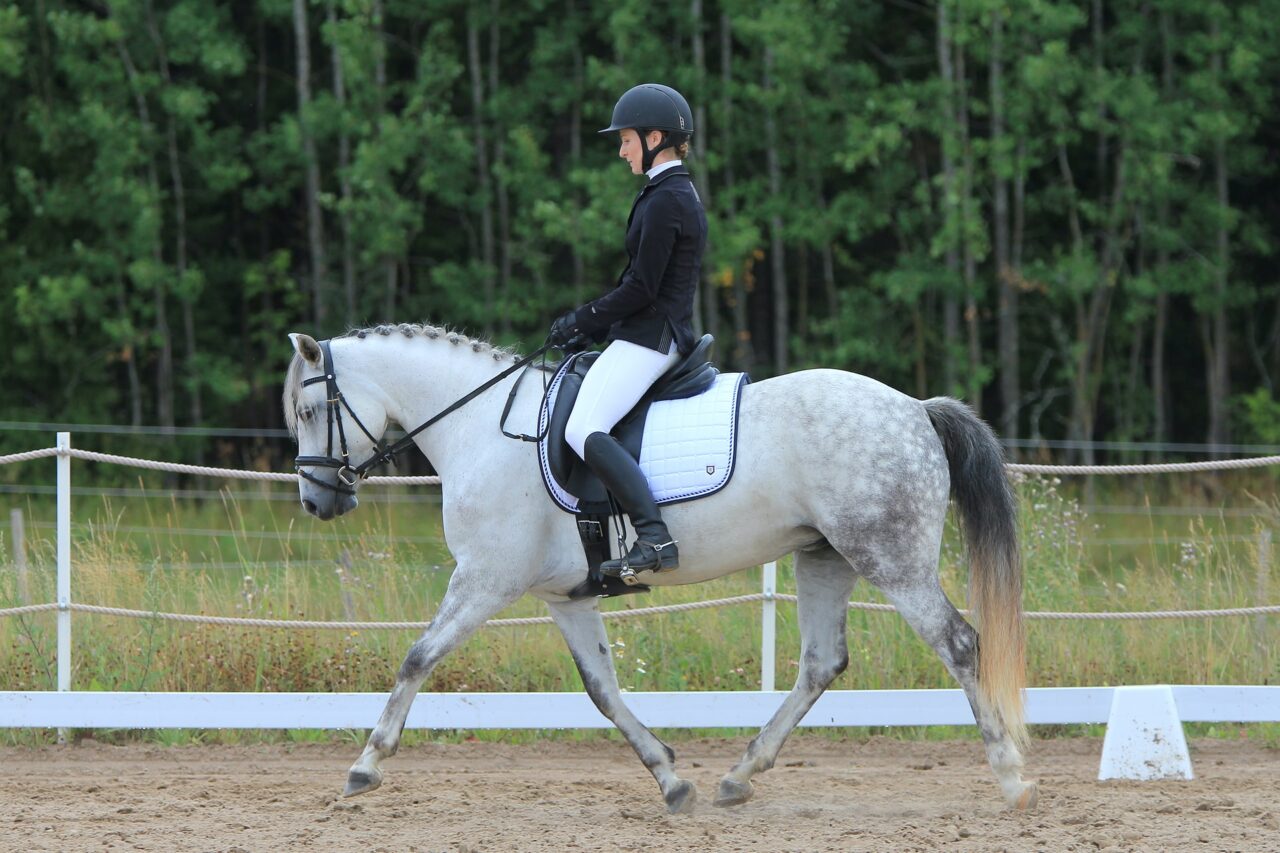
To change the pace of a horse, two key elements are important: gait and stride length. In this article, we will explain in detail about ‘stride length’. Mastering stride length might help you overcome fear of riding in a group!
What is ‘Stride Length’ and How Does It Affect Horse Speed?

When starting horseback riding, you learn three types of gait: walk, trot, and canter. It’s common to think that changing speed means changing gait. However, there is a way to change speed without changing gait.
If you think about running in humans, running a 50-meter dash and jogging are significantly different in speed. This difference comes from the stride length, which changes even when the movement remains the same as ‘running’.
Simply put, this is what we call ‘stride’. If you can control the horse’s stride length, you can change the speed without changing the gait.
Why is this beneficial? For example, many riders find group riding difficult because they tend to catch up with the horse in front. By adjusting stride length, you can maintain the same gait while controlling the distance to the horse ahead according to instructor’s commands!
In riding terminology, increasing stride length is called “stretching the stride”, while shortening it is called “shortening the stride”. These words are often used in riding commands, so it’s good to remember them.
How to Lengthen the Stride

Let’s start with how to lengthen the stride. Broadly speaking, it’s important not to interfere with the horse’s movement. But what具体的には何をすればよいのでしょうか?
Relax the reins slightly
Even though a horse is a large animal, the bit (reins) is quite a noticeable foreign object for it. Think of it as holding a pencil or toothbrush in your mouth, which has a significant presence for the horse.
If you pull the reins tightly from behind, it will be difficult for the horse to move forward. To lengthen the stride, gently release the reins so the horse can naturally extend its neck. The horse’s neck and legs will move forward, and its posture will become slightly lower.
However, fully extending the reins is not recommended. Fully stretched reins will signal no command, rather than ‘move forward’ from the horse’s perspective. It’s best to keep the reins just slight enough to follow the horse’s head movements, moving your fist slightly forward in sync.
Make your movements larger and more connected
In addition to moving your fists in harmony with the horse, shifting your body weight to match the horse’s movement, called “follow movement”, is also crucial. When lengthening the stride, this follow movement should be made larger.
At first, you might wonder if sitting on the saddle means you’re “moving with the horse”. It’s similar to being pulled from behind when a vehicle starts moving. Strictly speaking, the horse moves first, then the rider moves in response.
This subtle gap is felt by the horse as a slight backward pull on its back when it moves forward, even if you are not pulling the reins tightly. To eliminate this feeling, you need to anticipate the horse’s movement and follow along accordingly.
Imagine shifting your weight forward as if you’re moving the seat of a chair. Push the saddle forward with your hips, but be careful not to overdo it as it might disturb the horse’s balance.
- Don’t interfere with the horse’s movement
- Relinquish the reins moderately
- Avoid fully stretching the reins
- Follow with your hips to push the saddle forward
How to Shorten the Stride

Shortening the stride can be more difficult than lengthening it. The reason is that before learning about stride length, slowing down=walking normally or stopping. So, what is the difference between the aids for shortening the stride and those for stopping or walking normally?
Pull the reins and shift your weight backwards
This might look like the aids for stopping, but upon closer inspection, there are subtle differences. If you pull the reins strongly, the horse will stop immediately.
To shorten the stride, a gentle tension in the reins is enough. When shortening the stride, the horse does not slow down because the reins are pulled tightly; rather, it perceives that there’s a command to move less.
Maintaining tight reins after this causes confusion—does this mean stop? But your legs suggest otherwise. Once the horse’s neck is correctly aligned to receive the bit, avoid pulling the reins further. Just hold them lightly, enough that they don’t slacken.
Also, if your weight is leaning forward, the horse may tend to take longer strides without shortening. To prevent this, keep your center of gravity slightly back. Imagine putting your weight on the horse’s hind legs.
Make sure the horse keeps moving forward
So far, we talked about reins and your center of gravity, but at first, you may find that your attempts result in walking at a normal pace or stopping. When that happens, try to ride more actively.
It’s like gently giving the horse a “go forward” signal with your legs while softly holding the reins to control the speed. You don’t need to kick strongly, just tighten your knees slightly and push the horse forward, using your calves if necessary.
More than just slowing down, think of it as pushing the horse from both front and back with your reins and legs. If you successfully shorten the stride, the horse’s speed will slow down naturally, but it should still maintain a rhythmic, high-stepping gait, rather than a sluggish walk, similar to a march.
- Think of gently compressing the horse from front and back
- Maintain tightening the reins to keep the horse’s neck upright
- Keep your center of gravity slightly back
- Don’t forget to use your legs to move the horse forward
What to Do If Your Horse Doesn’t Respond to Your Aids?

When giving signals to a horse, if you don’t get the expected response, continue to give the same signals repeatedly, which can frustrate the horse.
If the horse doesn’t respond, reflect on why your signals weren’t understood. To get the horse’s attention, first draw its attention by doing something like touching the horse’s body or gently pulling the reins. Once the horse notices you, give the appropriate aid. If there is no response, don’t change your aid blindly; instead, reassess and try again from the previous gait after calming the horse.
Summary
Controlling stride length is a skill used even by experienced riders. Whether at obstacles or in the arena, the ability to adjust stride length effectively is key to improving performance. Don’t be discouraged if it doesn’t go perfectly at first; consult with your instructor and keep practicing to master this technique.