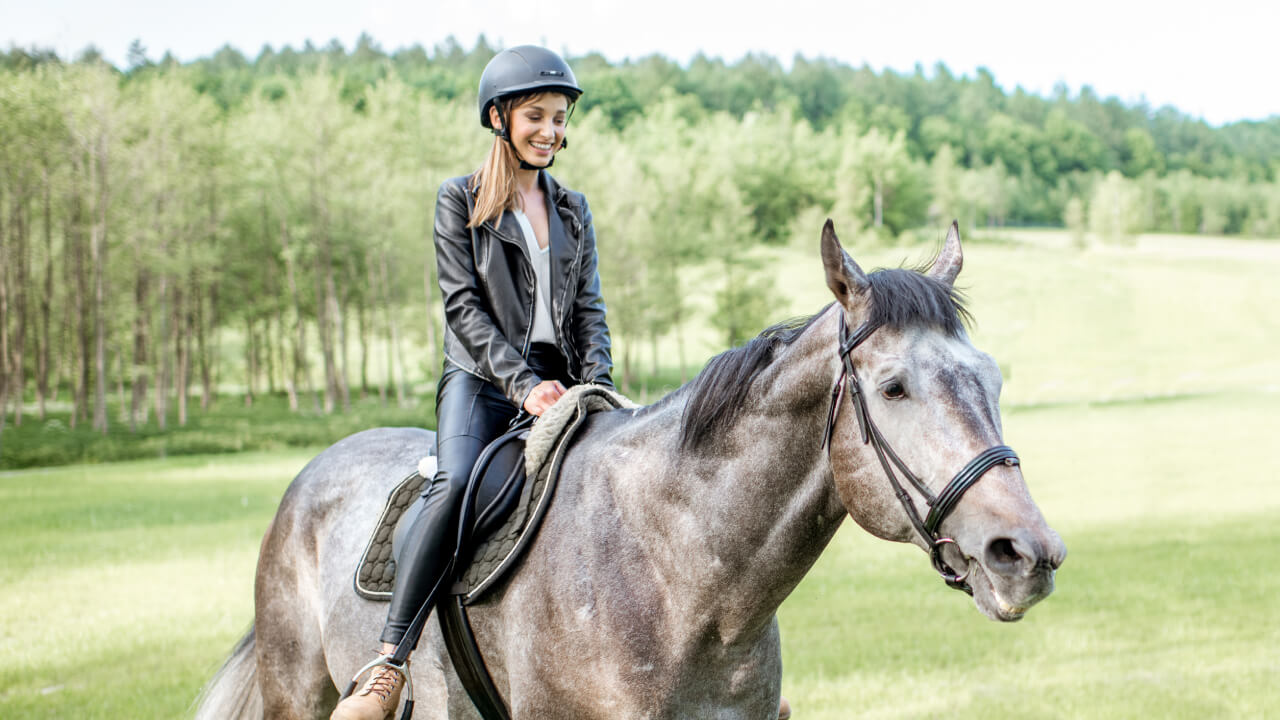
Have you ever experienced fear while enjoying horseback riding? This fear is not limited to beginners; it can happen regardless of experience.
Whether it’s a sudden jolt due to your posture or difficulty communicating with the horse, small triggers can cause your fear to grow. Some people might find themselves giving up on riding altogether if they can’t overcome this fear.
However, did you know that this fear isn’t necessarily a bad thing? In this article, we’ll explore why fear appears in horseback riding and how to turn that fear into a tool for improving your skills.
It’s a waste to give up riding just because of fear. Use this guide to enjoy horseback riding to the fullest.
Feeling scared of horses is natural
![[When you Feel Fear of Horses, It’s a Chance!] Fear Can Signal Growth Potential](https://i0.wp.com/jmelma.com/wp-content/uploads/2021/07/equia-image443.jpg?resize=1024%2C576&ssl=1)
In riding lessons, students are usually in groups with similar skill levels. Not only do you concentrate on your riding technique and the horse you’re working with, but you also become aware of others around you.
You might suddenly feel, “Everyone’s more experienced than me,” or “They seem so relaxed—I wish I could be like that.” During such moments, especially when you’re already feeling anxious, it’s easy to think everyone else is enjoying riding effortlessly.
Feeling afraid of the horse might make you think you’re the only one, but you’re not. Many riders secretly share this fear, even if it’s not visible on their face.
Horses are gentle and obedient animals. But they aren’t always calm; they can spook, react suddenly, or behave unexpectedly. If you give clear commands, most horses will listen, but there are times when they won’t.
Equestrian sports require harmony between rider and horse. Miscommunication or a fall from a large horse can occur if the connection breaks down. Experiencing a fall from a big horse or an unexpected movement can trigger fear in anyone.
The instinctive reasons behind fear
![[When you Feel Fear of Horses, It’s a Chance!] Fear Can Signal Growth Potential](https://i0.wp.com/jmelma.com/wp-content/uploads/2021/07/4.jpg?resize=1024%2C682&ssl=1)
Many beginners are drawn to horses because of their cuteness, their touch, or the desire to ride. When you see a horse up close, did you feel how large it is? It might have been scary to imagine riding and walking on that big creature—that’s an instinctive fear response.
In addition, situations like looking down from the horse’s back or experiencing the speed during a canter can naturally cause fear that’s hard to dismiss. These feelings may persist even after repeated exposure, making some riders forever afraid.
While we said earlier that familiarity can help, it’s not enough to just repeatedly experience these situations. Gradual exposure and skill development are recommended for overcoming fear.
The rational reasons behind fear
![[When you Feel Fear of Horses, It’s a Chance!] Fear Can Signal Growth Potential](https://i0.wp.com/jmelma.com/wp-content/uploads/2021/06/equia-image273.jpg?resize=1024%2C576&ssl=1)
The logical reason for fear is that the horse may perform actions that you consider dangerous when you try to influence it. Unlike instinctive fear, this rational fear is based on understanding the cause and can often be resolved by changing your approach.
For example, fears about the horse bucking when whipped, or running away without command, or biting when trying to put on a girth, are common. These are relatable situations that many riders might imagine.
If you think about these behaviors objectively, you’ll see that they are reactions to specific causes: a dislike of the whip, fear of certain commands, or surprise at sudden movements. For instance, a horse might buck because it dislikes the whip or because it was hit in a bad spot. It might run because it was startled or misinterpreted a non-verbal cue. It could bite because it was scared by sudden tightening of the girth.
By understanding the horse’s perspective and adjusting your approach, you can eliminate logical fears and improve your riding experience.
Getting to know horses to improve your skills
![[When you Feel Fear of Horses, It’s a Chance!] Fear Can Signal Growth Potential](https://i0.wp.com/jmelma.com/wp-content/uploads/2022/04/philippe-oursel-U6Mr3wF8JOk-unsplash.jpg?resize=1024%2C683&ssl=1)
Riding isn’t just about giving precise commands; it’s about understanding and syncing with the horse. To do this, you need to learn what horses think, like, and dislike.
Understanding horses makes it less likely to encounter fear-inducing situations. It also allows you to identify the causes of fear and address them quickly, improving your riding skills.
Summary
Horseback riding involves interacting with horses, so it’s natural to feel fear sometimes. But rather than viewing fear negatively, consider how you can overcome it to enhance your riding skills. Actions taken to dispel fear lead to better riding techniques.
When you feel fear, it’s common to think you’re not suited for riding or that you’re weaker than others. Remember, you’re not alone in feeling this way. The steady process of facing and overcoming fear is the first step toward leveling up.