
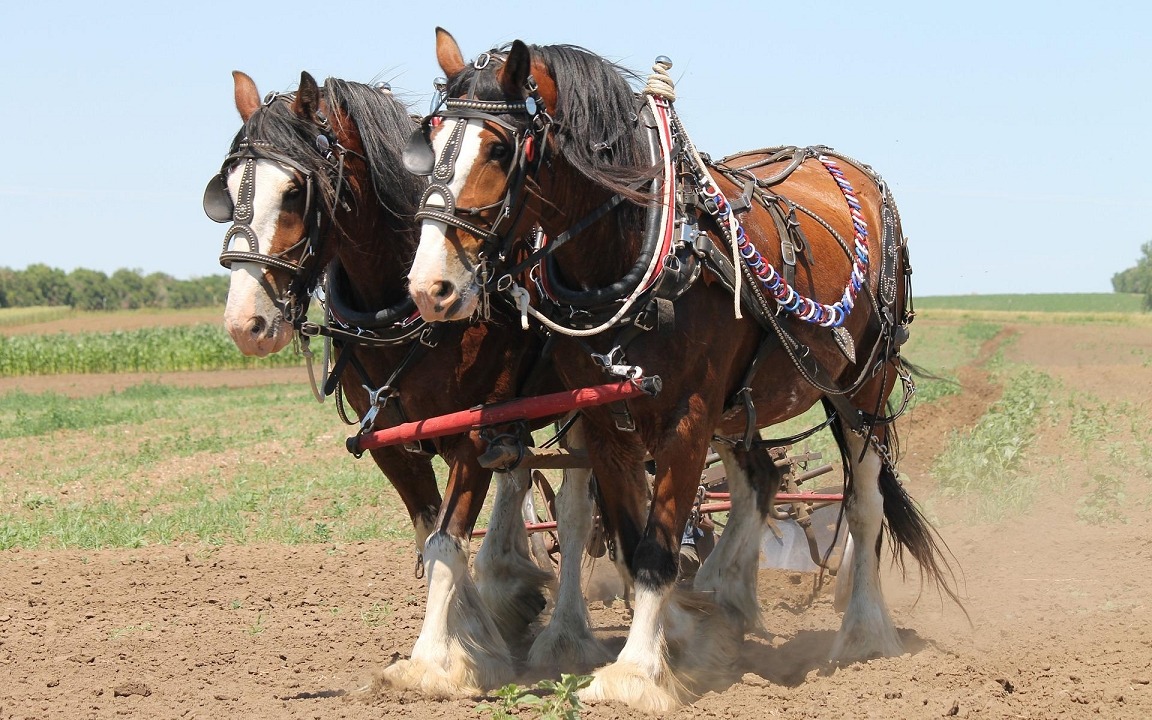
Are you familiar with the Clydesdale horse, classified as a heavy breed? True to its classification, it is a large horse both in height and weight. The white markings on its face, the white patches on its four legs, and the abundant feathering around the hocks give it an air of stability and elegance.
Interestingly, Clydesdales weren’t always so large. So, how did they grow to their impressive size? Here, we introduce their history and how they are used today.
Where exactly is a horse’s height measured from?

Just like human body sizes vary by race, horses also come in different sizes depending on the breed. Among the easiest ways to compare size is by height and weight. In horses, height is called ‘stature,’ but do you know exactly where it is measured from?
The horse’s “stature” is measured from the ground to the withers, the base of the neck. Compared to humans, you might wonder why the head and ears are not included—it’s because measuring to the highest point of a larger horse can be difficult.
The units used to measure height include centimeters, inches, and hands. An inch is a length measurement used in the United States, where 1 inch equals 2.54 cm. A hand, historically the width of a human hand, was later standardized to 4 inches (10.16 cm).
Comparing Clydesdales with other horse breeds

When people think of horses, many imagine racehorses. However, horses are used for various purposes including agriculture, transport, and military work, which has led to different breeds with different sizes and temperaments.
Here, we compare the size of Clydesdales, often seen in parades, with other breeds.
Clydesdale’s Size
The Clydesdale breed originated in 19th-century Scotland. Initially a smaller breed, it became larger over time for show and parade purposes. Today, their height ranges from 163 to 183 cm with a weight of 820 to 910 kg, classified as a heavy breed.
The large forehead, prominent nostrils, muscular back, and abundant feathering give a sense of stability. They come in various coat colors like bay, blue roan, chestnut, and gray, often with white facial markings and sock-like white leg markings.
Other Breeds’ Sizes

Let’s compare Clydesdales to other horses. First, we look at other heavy breeds like Percherons from 8th-century France, which have a height of 160-170 cm and are characterized by their sturdy build and short legs.
Another large heavy breed is the Shire, with heights exceeding 180 cm and weights over a ton, making it comparable to Clydesdales in size but much heavier.
Thoroughbreds
Thoroughbreds, commonly seen as racehorses or riding horses, are classified as light breeds. Their average height is 160-170 cm, with a typical weight of 450-500 kg. Perfected for speed, they have small heads, long legs, and sleek bodies with well-developed muscles in the chest and hips. They are often considered works of art, combining beauty and performance.
However, Thoroughbreds can be prone to injury and are sensitive to sound, reflecting their delicate physical and mental nature.
Ponies
Ponies are not a single breed but a general term for horses with a height of 147 cm or less. For example, the Falabella, about the size of a large dog, and the Connemara, standing 130-140 cm, are both considered ponies.
Personality and Work of the Clydesdale

The large size of the Clydesdale provides stability, and their gentle nature and obedient temperament make them easy to train. We explore their personality and how they perform in their roles.
What is their personality?
While many horses are considered delicate and shy, traits can vary by breed. For example, Thoroughbreds are known for their spirited and nervous disposition, with sensitive hearing and agility. On the other hand, heavy breeds like Clydesdales are known for their docile and gentle nature, making them easier to train and often powerful despite slower speed.
Overall, Clydesdales are large, strong, and known for their calm and friendly personality, making them reliable companions.
How do they work?
Originating from Scotland, Clydesdales were traditionally used in agriculture and for hauling coal and heavy loads. Today, they are also used for farm work, logging, and as carriage horses, admired for their appearance and stability, often seen in parades and events.
They are also trainable for riding and work well as riding horses. In the UK, Clydesdales over 173 cm tall are used to carry royal parade drummers, and during ceremonies, it’s possible to see them in official roles.
The connection between Clydesdales and Budweiser

Did you know that there is a beer mascot featuring Clydesdales? The famous Budweiser often uses horses called Budweiser Clydesdales in its commercials as the main characters.
The origin of Budweiser Clydesdales
Budweiser is produced by Anheuser-Busch, a major American beer company. Founded in 1852, they started producing Budweiser in 1876. Initially, beer was transported via horse-drawn wagons. During Prohibition (1920–1933), when alcohol production and sales were banned, the company adopted the Clydesdales as symbols of their brand. The Budweiser Clydesdales were born as symbols for both the brand and their history.
How to become a Budweiser Clydesdale
Anheuser-Busch, located in St. Louis, Missouri, owns the Clydesdales, most of which are raised at Grentz Farm nearby, where about 35 Clydesdales are kept and around 15 foals are born each year. The company also owns approximately 250 Clydesdales across the US, but not all born at Grentz Farm qualify for commercials or events.
They must meet specific criteria beyond age and height, including coat color, mane and tail color, white markings on the face, and symmetrical white markings on all four legs, to participate in promotional activities.
Summary
The Clydesdale was born in mid-18th century Scotland. Originally a smaller breed used in farming and cargo transport, it has grown larger over time for parades and shows. Today, they are used not only in agriculture and hauling but also in parades. They are also iconic symbols for Budweiser beer, showcasing their friendly personality, strength, and calm demeanor. The future of Clydesdales continues to be bright as their roles expand.