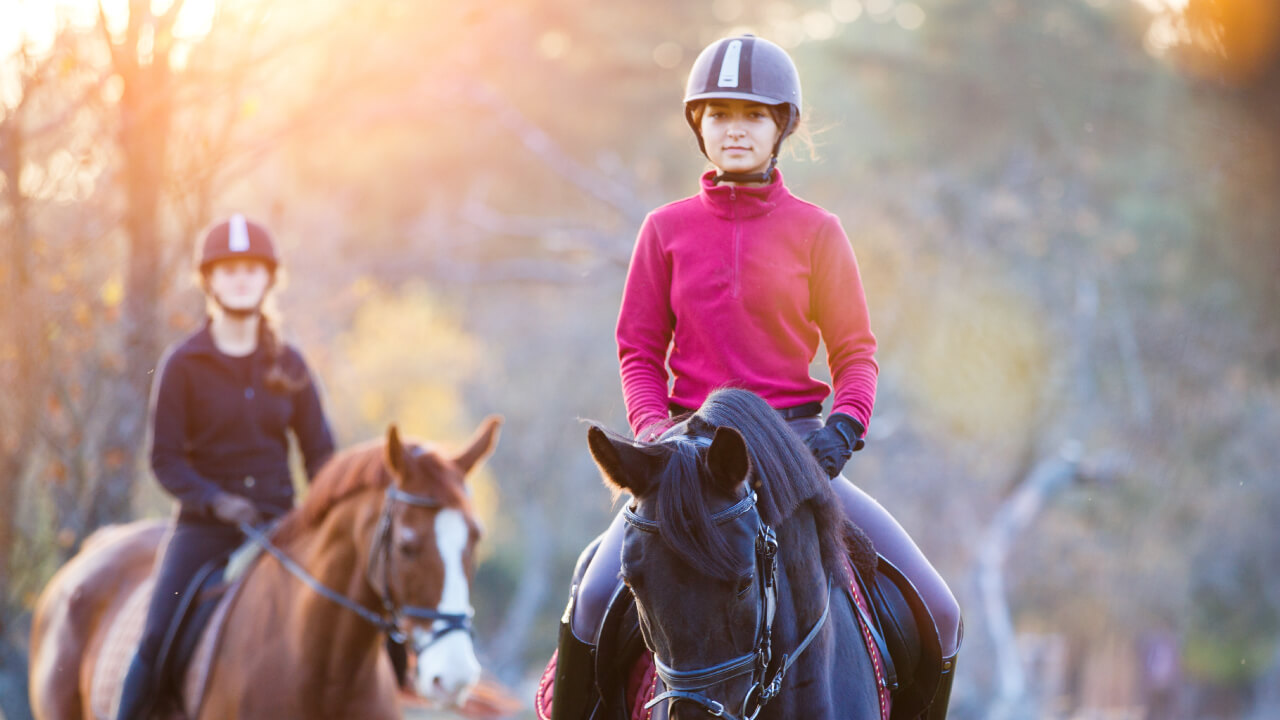
Enjoying scenic views from above while riding a charming horse is said to be the essence of horseback riding. But first, you need to learn how to mount the horse to experience this joy.
And of course, after enjoying riding, you need to dismount. For beginners, getting on and off the horse can be a tense moment, requiring careful attention and caution.
In this article, we introduce essential tips on how to mount and dismount safely, along with important warnings to keep in mind. Use this as a guide to improve your equestrian skills.
Understanding Tack: Bridle and Saddle

To ride, you need to equip the horse with necessary gear, a process called ‘tacking.’ Among these, the bridle and saddle are essential items.
The bridle is a strap device that fits over the horse’s head and face, connected to the bit and reins, allowing you to control and give instructions to the horse.
The saddle is a chair-like device placed on the horse’s back for the rider. It helps you maintain balance and ensures safety for both horse and rider during riding.
How to Mount and Ride

Sitting on the horse involves mounting, which follows these steps:
- Gently pat and cuddle the horse’s neck
- Stand on the horse’s left side
- Hold the mane and reins with your left hand
- Place your left foot in the stirrup, then kick off with your right foot to lift yourself up
- Hold the rear of the saddle with your right hand and lift your body
- Move your right hand from the rear to the front of the saddle and straddle
- Sit slowly into the saddle and place your right foot in the stirrup
- Pat and cuddle the horse’s neck again
Note that procedures may vary slightly by riding club. Follow your riding club’s instructions for safe riding.
How to Dismount

Dismounting is getting off the horse from a seated position. The process includes:
- Pat and cuddle the horse’s neck
- Remove your right foot from the stirrup
- Hold the reins and mane with your left hand, and the front of the saddle with your right hand
- Cross your right leg over to the left side of the horse, aligning your legs
- Hold the rear of the saddle with your right hand
- Place your body on the saddle
- Remove your left foot from the stirrup
- Slide your body down from the saddle to the ground
- Hold the reins firmly
- Pat and cuddle the horse’s neck again
Precautions for Horseback Riding

When riding, it is crucial to pay attention to safety. Being aware of your surroundings and understanding the horse’s mood can prevent accidents.
It’s important to check the gear before riding, especially the stirrups and girth. Ensure they are correctly secured to prevent slipping or accidents. Also, observe the horse’s facial expressions and body language, as these signals can indicate their mood and willingness to cooperate.
Always avoid riding when the horse shows signs of irritability or distress, such as pinned ears or restlessness, as forcing the ride could lead to injury. Wait until the horse calms down before proceeding.
Precautions When Dismounting

Many accidents during dismounting happen when riders are careless. It’s often tricky until you get used to it. Focus on these safety points:
Ensure the horse is stopped
Always verify that the horse is fully stopped before dismounting. Riding off while the horse is still moving can cause imbalance and falls.
Make sure to hold the reins and give the command to stop before dismounting, to avoid being underneath the horse’s legs or risking injury.
Check that the stirrups are off
Some riders forget to unclip their left stirrup and only realize it when they land. This can lead to awkward leg positions and potential injuries.
Removing the left stirrup properly is essential to avoid excessive leg opening, injury, or imbalance that could cause falls or injuries to the rider or horse.
Be gentle and deliberate with your landing
Remember that riding height can make the ground seem closer than it actually is. When dismounting, slide down slowly and carefully to avoid twisting your ankle or falling.
Rushing could startle the horse and cause agitation. Perform the dismount gently and smoothly.
Choose your landing spot carefully
The ideal point to dismount is directly beneath the horse’s body. Avoid dismounting awkwardly or losing balance, which can cause you to land in unsafe spots such as under the horse or near its legs. Horses are heavy, and stepping on them can cause serious injuries.
Summary
This guide outlined the proper methods and precautions for beginners to mount and dismount safely, emphasizing the importance of timing and observation of both rider and horse. Always follow your riding instructor’s directives and pay close attention to the horse’s signals for a safe and enjoyable riding experience.
Remember, horse riding is a sport that requires careful safety awareness. Never let your guard down, as a moment of distraction can lead to serious injury.