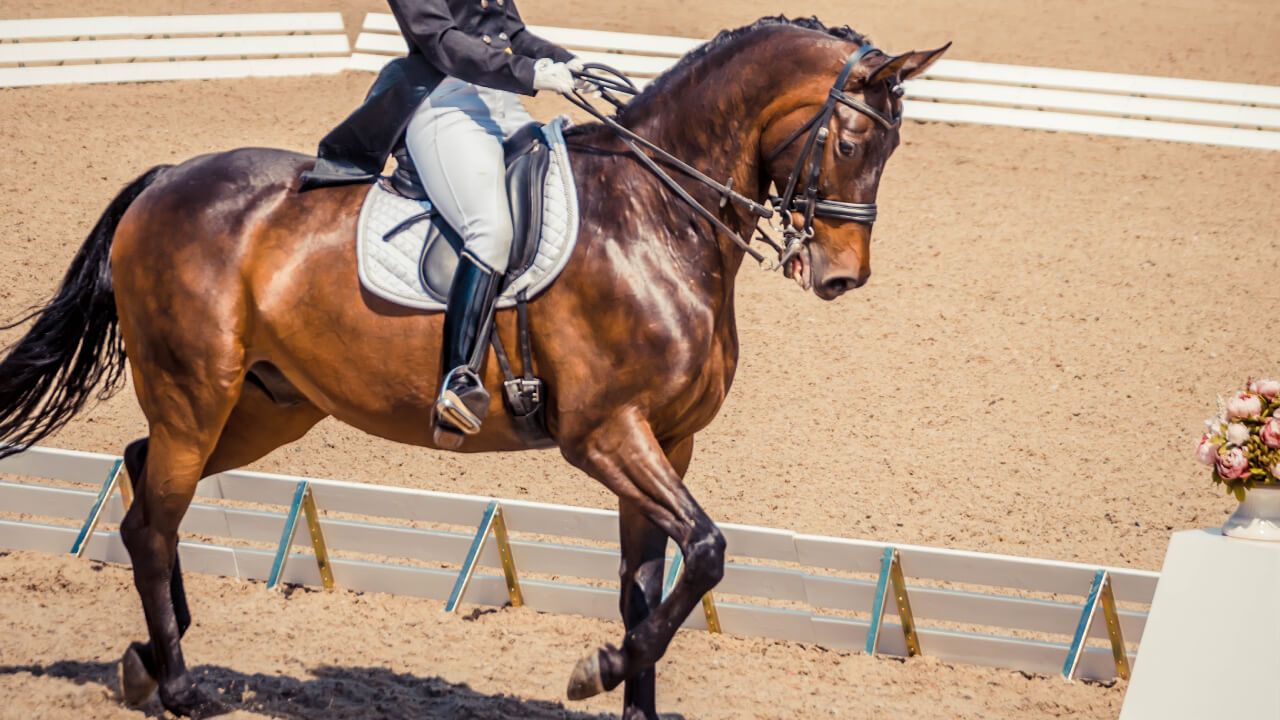
While riding the same horse, there are horseback riding activities enjoyed at riding clubs and outdoor rides, and equestrian sports where participants compete in competitions. Both involve a relationship of trust with the horse, which greatly influences the skill.
Various organizations promote equestrian sports and horseback riding, and there are certification programs aimed at improving riding techniques. Many enthusiasts work hard to earn these qualifications each day.
In this article, we will explain the differences between equestrian sports and horseback riding, as well as the organizations involved and the qualifications available for each.
What is Equestrian Sports?

Equestrian sports involve riding a horse, with the rider and horse performing as a team in competitive events. The accuracy and beauty of the movements are judged in competitions. The types of competitions include ‘Dressage,’ ‘Show Jumping,’ ‘Eventing,’ ‘Endurance,’ ‘Plain Racing,’ ‘Carriage,’ and ‘Light Riding.’ Among these, the three Olympic disciplines are ‘Dressage,’ ‘Show Jumping,’ and ‘Eventing.’
These three are the most well-known and popular disciplines even among beginners. Here, we will detail ‘Dressage,’ ‘Show Jumping,’ and ‘Eventing.’
Dressage
Dressage involves illustrating basic gaits such as walk, trot, and canter as geometric shapes within a rectangular arena. The horses’ movements are evaluated based on their precision and elegance, often with music accompaniment for freestyle performances. There are freestyle routines set to music and compulsory routines according to a fixed pattern.
Dressage is sometimes compared to figure skating because of its focus on grace and accuracy. Clear, small signals are given to the horse without whips or harsh aids.
Show Jumping
This discipline involves jumping over obstacles set within an arena, competing for the fastest time. Precision in approaching and clearing obstacles, as well as speed, are essential. Judging focuses on the rider’s ability to judge and give accurate instructions to the horse.
Scoring penalties are applied for knocking down obstacles in the ‘standard competition,’ while in ‘speed and handicaps,’ additional time is added for each knocked obstacle.
Eventing
Eventing combines three phases: dressage, cross-country, and show jumping, judged as a single competition. Participants must compete with the same horse over three days.
Day 1 is dressage, day 2 is cross-country, and day 3 is show jumping. Cross-country is the main event.
The course includes natural elements like logs, ponds, and bamboo fences set in a scenic environment. Before participating in show jumping, the horse and rider must pass a vet and judge’s health check. Only qualified pairs are permitted to proceed.
This competition requires both riding skill and endurance, as well as attention to horse and rider health management.
What is Horseback Riding?

Horseback riding involves enjoying non-regular activities like riding in the riding arena, forest, or sea while relaxing and bonding with gentle animals. It is a sport accessible to all ages and genders.
While the image of formal competitions often includes tailsuits and hats, horseback riding originally developed as a method for long-distance travel and hunting, a part of daily life for early humans.
In Japan, British-style riding dominates, especially in major events like the Olympics, where formal attire such as tailsuits and hats are standard. Western style is also common, but the British tradition remains influential.
Organizations Related to Equestrian Sports

Organizations involved with equestrian sports include ‘Japan Equestrian Federation,’ ‘All Japan Student Equestrian Federation,’ ‘Japan Social Equestrian Federation,’ and ‘All Japan High School Equestrian Federation.’ The Japan Equestrian Federation serves as the umbrella organization.
Main activities involve hosting competitions, certifying events, and dispatching participants to international competitions. The federation also establishes competition rules.
Organizations related to horseback riding include the ‘Japan Equestrian Promotion Association.’ Their main activities encompass certification of riding skills, organizing riding competitions, instructing instructors, and promoting the sport. They also support public relations and provide subsidies for vaccines and events.
Qualifications related to equestrian sports are certified by the Japan Equestrian Federation, including “Rider Qualifications,” “Instructor Qualifications,” and “Judge Qualifications.”