
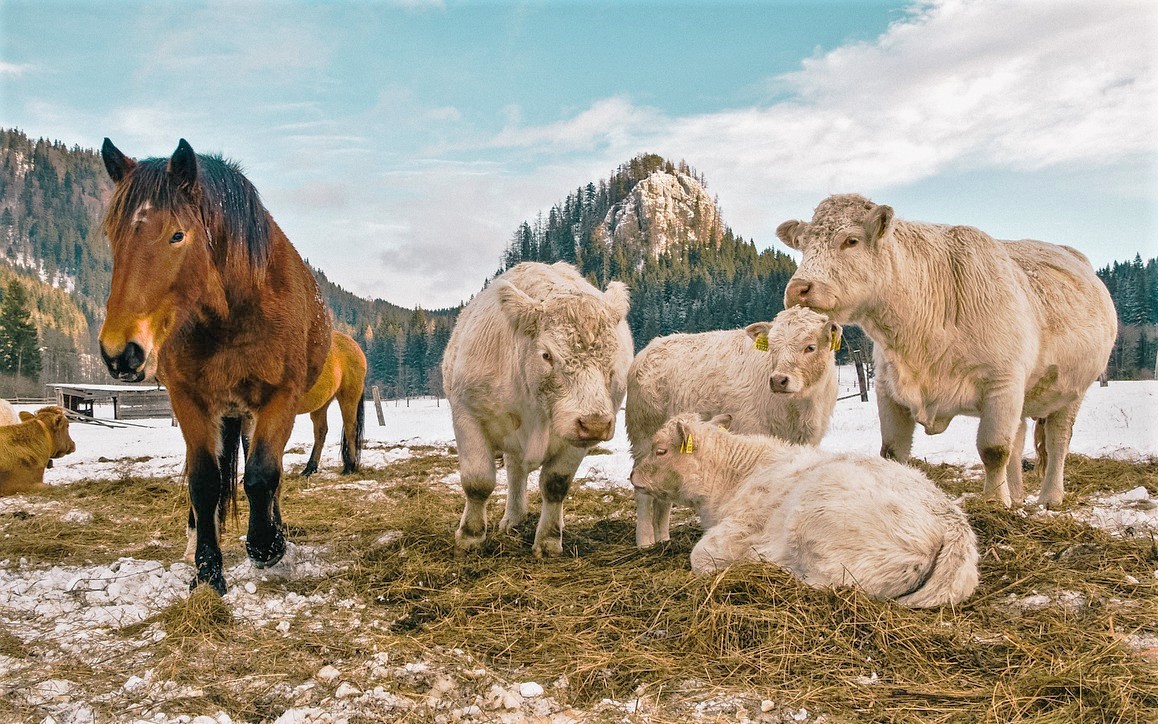
Many animals with hooves, like cows and pigs, share a similar trait with horses. While they are classified into ‘even-toed’ and ‘odd-toed’ groups based on the number of hooves, what are the structural differences between these two categories? In this article, we focus on hoofed animals and explain the distinctions between ‘even-toed’ and ‘odd-toed’ ungulates.
Differences and Meaning of the Terms ‘Even-Toed’ and ‘Odd-Toed’
Animals with hooves are broadly divided into two groups: Even-toed (Giraffidae) and Odd-toed (Perissodactyla). The main difference lies in the number of hooves—each group has a characteristic hoof count. In this article, we explore which animals belong to each group and how to distinguish them from each other.
Examples of Even-Toed Ungulates
Within the group of even-toed ungulates, there are three main subgroups: Cetartiodactyla (whales and ruminants), Perissodactyla (pigs), and Camelidae (camels, llamas). Interestingly, whales, which were once thought to be fish, are now classified as part of the even-toed ungulates.
Representative animals of the ruminant subgroup include cattle, deer, giraffes, and hippopotamuses. Pigs and boars are part of the pig subgroup, while camels and llamas live in dry regions.
Examples of Odd-Toed Ungulates
Odd-toed ungulates are fewer in number compared to even-toed and include horses, rhinoceroses, and tapirs. Horses, along with donkeys and zebras, are members of the horse family. Historically, many more species existed, but currently, only about 10-20% of hoofed animals belong to the odd-toed group.
Are Horses Odd-Toed or Even-Toed?
As mentioned earlier, horses are odd-toed. Each horse foot has a single hoof—think of it as a hard covering formed by the middle finger’s claw. The hoof’s thickness surpasses human nails because it supports the animal’s weight. Most of the underside is called hoof sole, made of hard keratin similar to human toenails, while the central triangular part, the frog, feels softer upon touch.
How to Distinguish Between Even-Toed and Odd-Toed Ungulates
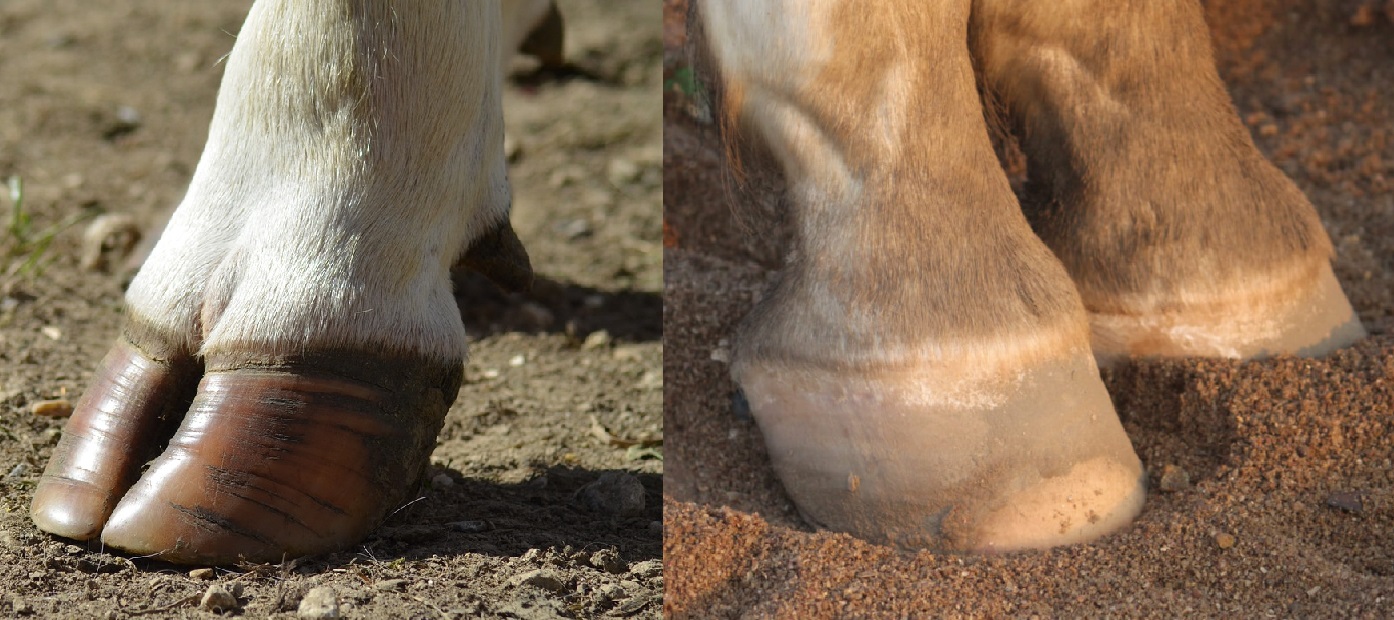
Now that you have a mental image of which animals are in each group, let’s compare their body parts to understand how to tell them apart.
Number of Hooves
Think of animals like pigs and cows, which are familiar members of the even-toed group—they each have two hooves. However, pigs and boars also have two additional toes behind the hooves. This shows that these animals originally had five toes, gradually reducing to two hoofed toes over evolution.
For example, similar animals like goats, which live in rocky environments, have broader-spaced hooves adapted to uneven terrain. Conversely, animals like horses, the typical odd-toed ungulates, have a single hoof, although some like rhinoceroses have three toes due to partial remnants of additional digits.
Teeth Development
Next, let’s look at how their teeth develop. First, a quick overview of the types of teeth: incisors for cutting, and molars for grinding. They are quite similar to humans’ dental structure.
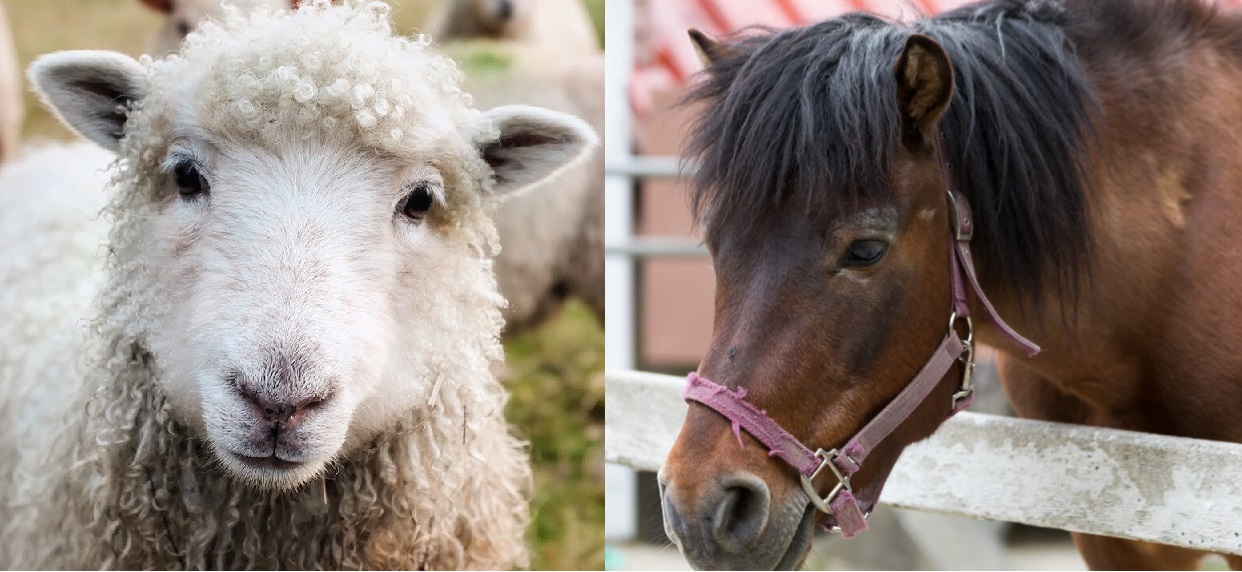
One distinguishing feature is that “even-toed ungulates generally lack upper incisors”, especially evident in ruminants like cows, sheep, and goats. In contrast, horses and tapirs, which are odd-toed, have prominent incisors. Instead of incisors, ruminants have a hard dental pad on the upper jaw, made of thickened gum tissue.
The major difference between the ruminants and other odd-toed animals is their ability to ruminate. Ruminants have multiple stomach chambers and chew their cud multiple times to maximize nutrient absorption, whereas horses cannot ruminate. This means ruminants can extract more nutrients from the same amount of grass.
Differences in Ear Orientation
While not definitive, there is a tendency that even-toed ungulates have ears positioned horizontally (parallel to the ground), whereas odd-toed animals have ears oriented vertically. The reason may be related to the ear placement—typically at eye level and on the side of the face for even-toed animals, whereas odd-toed animals tend to have ears placed closer to the top of their heads, like goats and horses.
Evolution of Odd-Toed Ungulates
Ancestors of Horses
So, what led to these differences? It is closely linked to the evolution of horse ancestors, which are part of the odd-toed group.
Odd-toed ungulates first appeared about 60 million years ago during the Paleocene epoch. Around 52 million years ago, the ancestor of modern horses, known as Hiracotherium, also emerged. This animal was about the size of a fox and had five toes on each leg.
Climate Changes and Adaptation
The transition to a high-legged form with a single hoof was driven by environmental changes. About 30 million years ago, during the Miocene, the Earth’s climate became cooler and drier.
This shift reduced dense jungles, expanding grasslands, and habitat for the ancestors of horses, which had to adapt by becoming larger and developing longer legs with fewer toes to spot predators early and escape quickly.
Extinction and Human Influence
While these hoofed animals continued to evolve, more species of even-toed ungulates survived, possibly because their ruminant digestion gave them an advantage in nutrient absorption, aiding survival. The advent of bipedalism in humans around 4.4 million years ago enhanced their hunting capabilities. Some researchers believe overhunting and environmental changes led to near extinction of wild horses, but fossils suggest horses were domesticated roughly 6,000 years ago, and their numbers increased as work animals and companions, similar to dogs, transforming from prey to partners.
Summary
Horses are often admired for their elegance and speed. But, as seen here, their appearance has evolved as part of their survival strategy. Although similar to cattle and pigs, horses differ in digestion and hoof structure. By comparing different animals, we can better understand their body functions and mechanisms. Let’s explore more about these fascinating creatures!