If you’re a parent raising children, you’ve likely considered extracurricular activities for your kids. Nowadays, attending extracurricular activities is considered standard. More children are starting lessons before entering school, and some are involved in multiple activities.
When you hear ‘extracurricular activity’ for children, what comes to mind? What do you look for in these activities?
One highly recommended activity for children is horseback riding. There are many benefits to kids learning to ride horses. In this article, we’ll explore the advantages of horseback riding for children and how to choose the right riding club.
Advantages of Choosing Horseback Riding as an Activity

When people think of horseback riding as an extracurricular activity, it’s often viewed as an activity for the wealthy. Many do not consider it a typical choice for children.
Parents often choose activities based on what their children want to do, but also consider factors like ‘easy to start,’ ‘near home,’ and ‘friends are doing it.’ Horseback riding is less likely to fit these criteria.
So why do we recommend it? It’s because horseback riding can be enjoyed regardless of age or gender, helps develop good posture, allows interaction with animals, and broadens employment opportunities. Let’s examine each of these benefits.
Enjoyable for All Ages and Genders
Horseback riding is not difficult for children nor physically demanding for girls. It’s a sport that anyone, young or old, male or female, can enjoy together.
Parents can learn alongside their children, and even three generations of families can share horseback riding as a hobby. Having shared hobbies increases family conversations and bonding.
Improves Posture
Horseback riding requires maintaining balance on a horse, making it a highly effective sport for strengthening core muscles. Improving core strength benefits other sports as well.
Additionally, strengthening your core can naturally improve your posture. If you want to correct a stooped posture, horseback riding is a good choice. Poor posture not only affects appearance but can lead to concentration issues, decreased physical ability, and neck or head pain.
Interaction with Animals
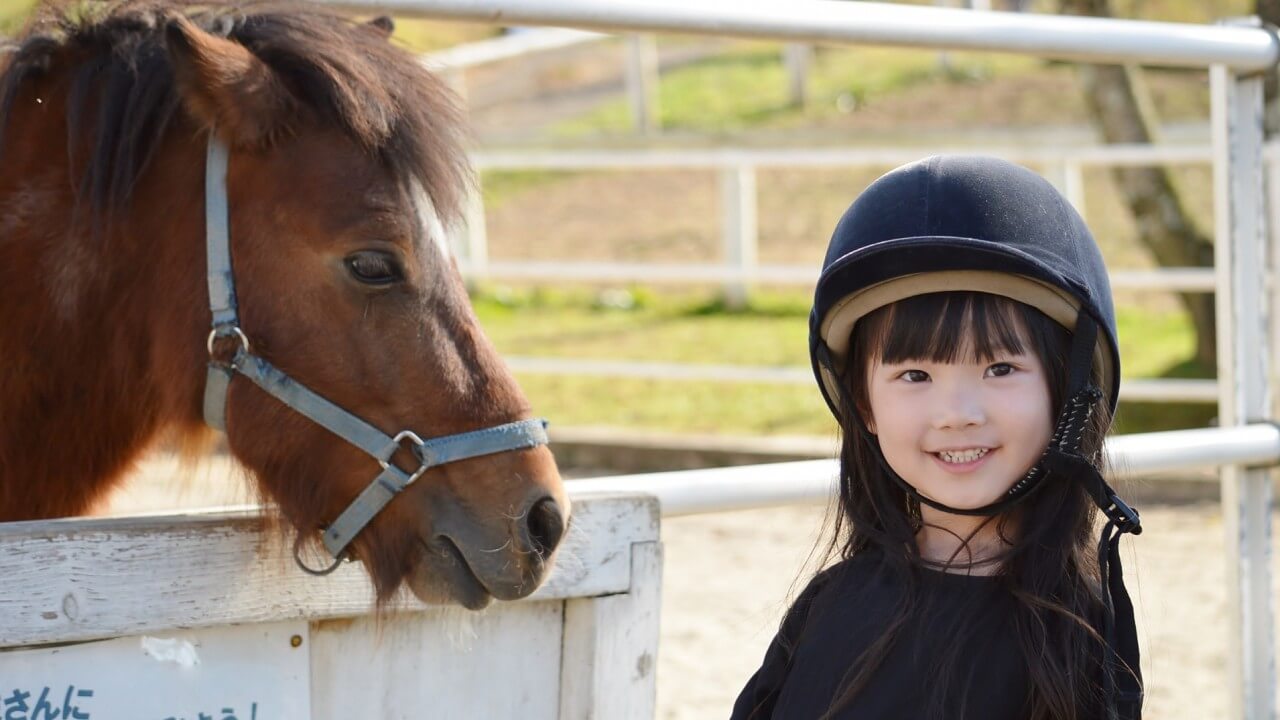
Horseback riding is a sport enjoyed together with horses. It requires thoughtful interaction and care towards the animal, fostering compassion and responsibility. Kids learn patience and how to adapt, which can lead to learning about the importance of life and connections with living beings through lessons and caring for the horses.
Moreover, it is considered animal therapy, associated with mental well-being. For sensitive children, interaction with horses can bring emotional stability and relaxation. It can be a stress-relief activity for children experiencing school or family stress.
Expanding Career Opportunities
Careers involving horses include riding instructors, trainers, stable hands, staff at riding clubs, and jockeys. Kids may become aware of these professions through lessons and might aspire to pursue them. Trying new activities broadens children’s horizons and possibilities.
Precautions When Learning Horseback Riding

Like any activity, horseback riding comes with precautions, especially since it involves physical movement, which may pose injury risks.
Before starting, it’s important to understand these considerations and ensure informed participation. Here are some points to keep in mind.
Possibility of Injury
Any sport has a risk of injury. The key difference with horseback riding is that it’s a sport involving animals.
Horses are gentle animals but can be timid and surprised by loud noises, which might lead to injuries. Falling from a horse can cause serious injuries such as broken bones, especially if the fall is from a tall horse and lands badly.
No Guarantee of Nearby Clubs
Unlike swimming or piano lessons, horse riding clubs are not typically located nearby. They often require large spaces, such as farms or quiet rural areas, making proximity to home less common. Parents should check if a suitable club is accessible within their area, as transportation will be necessary.
Higher Cost
Horseback riding can be more expensive than other extracurriculars, especially for children. Equipment and riding attire are also required. It’s advisable to carefully review costs for lessons, equipment, and membership before enrolling.
How to Choose the Right Horseback Riding Club for Your Child

If you’re unsure how to select a horseback riding club, here are some tips to help you choose the best one for your child.
Check the Atmosphere
It’s important for your child to visit and observe the club’s atmosphere. Staff and instructors’ attitudes and the overall environment vary across clubs.
The age and type of other participants also matter. Kids are sensitive to the atmosphere, and if they feel uncomfortable, they may not want to continue.
Age Restrictions
Different clubs have different age limits. Make sure your child qualifies for the targeted age group.
Also, verify what level of lessons are offered at your child’s age. If the lessons are too advanced, it could discourage or stress them out unnecessarily.
Cost
Keep in mind that ongoing costs include lessons and membership fees. Payment structures vary; some charge monthly, others per lesson. Consider what fits your budget and schedule when choosing a club.
Availability of Riding Licenses
If your child is interested in earning a riding license, check whether the club offers license courses, which can motivate and encourage them.
Summary
Learning horseback riding helps develop not only physical strength but also teaches about animals and the importance of life. Horses are gentle and affectionate animals that respond well to kind treatment, fostering mutual trust and healing.
Children can sometimes feel stressed or overwhelmed in daily life and school. Interacting with horses provides a calming, mentally stabilizing experience. It’s an activity that can bring joy, relaxation, and emotional stability to your child.