
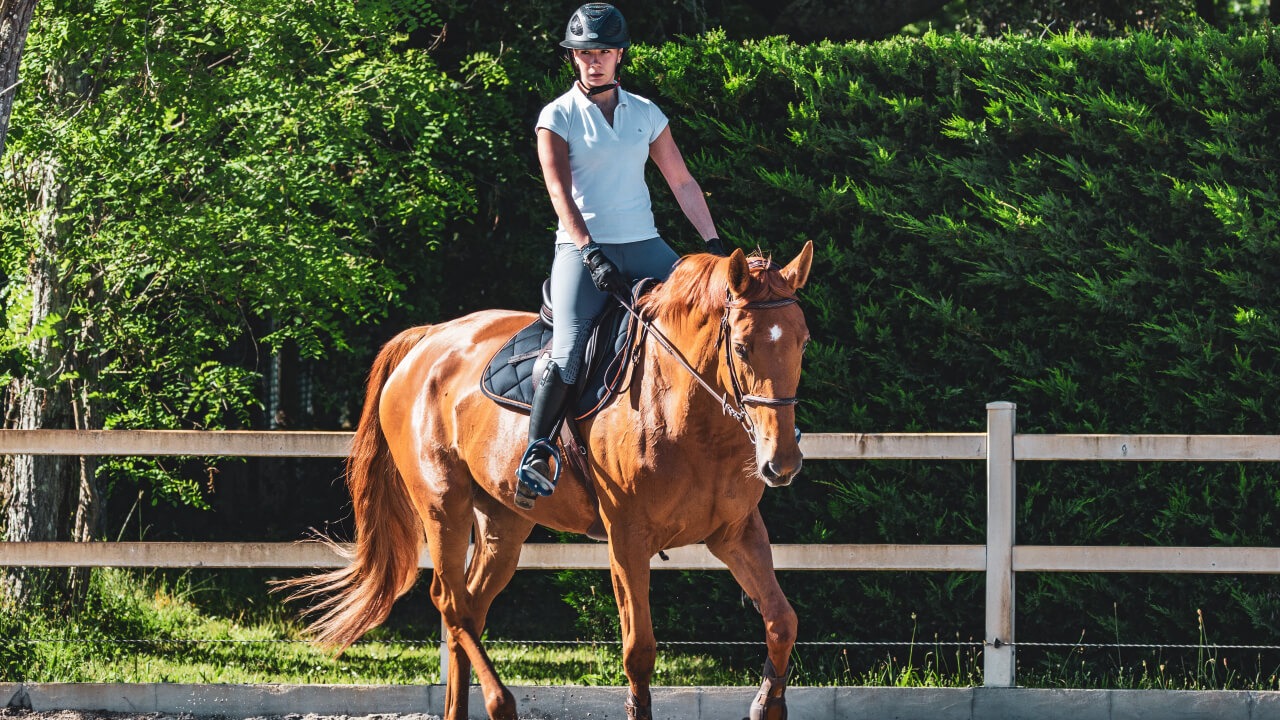
From the moment you first mount a horse to when you transition to trot, the progress is surprisingly quick. As a result, many beginners may still be unaware of proper aids and posture, leading to confusion about why they can’t master trot. This article focuses on key points to help improve your trotting skills!
Incorrect Weight Distribution on the Stirrup
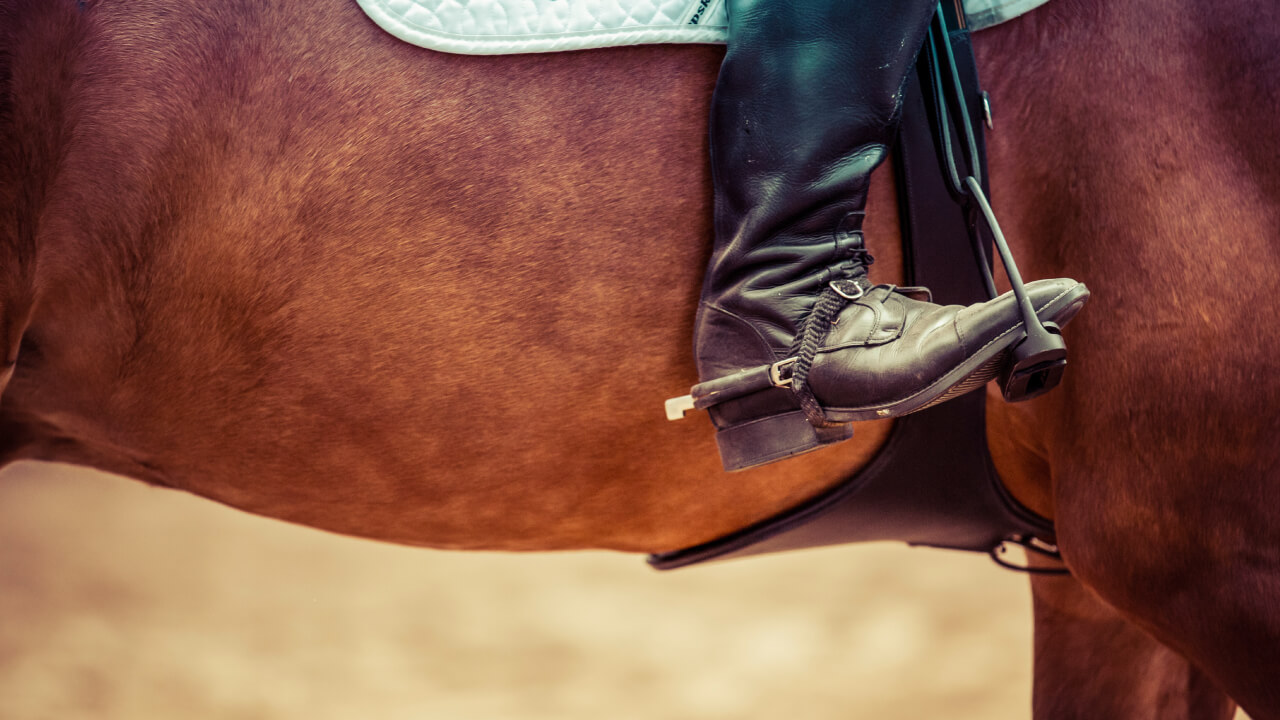
Proper weight distribution on the stirrup is crucial not only for trot but for all gaits. What happens if your weight isn’t centered on the stirrup?
Feet Falling Out of the Stirrup
If you can maintain appropriate weight on the stirrup, your horse’s motion won’t cause you to fall, even if your seat jostles, and your stirrup remains secure. However, relying too much on your seat and letting your feet dangle makes it easier for the stirrup to slip off.
If the stirrup slips off, it increases the risk of falling and hampers your ability to correct your posture, making riding more difficult. Especially in trot, where there’s significant vertical bounce, loose legs can cause the stirrups to come off.
While you don’t need to press your stirrups constantly, try to distribute your weight evenly across the saddle seat and stirrup, imagining your feet firmly on the stirrup when needed.
Instability in Leg Aids
If the stirrup slips, or even if it doesn’t, improper weight placement on the stirrup causes poor pressure on the horse’s sides. An unstable foot position makes it harder to apply aids effectively, especially with the heel and calf pressing into the horse.
In the beginning, it’s hard to notice if your foot pressure is correct until the stirrup slips, but during trot, pay attention to whether you can feel your toes pressing near the ball of your foot and ensure your heel stays down.
Rising in light trot causes hands to rise with the body
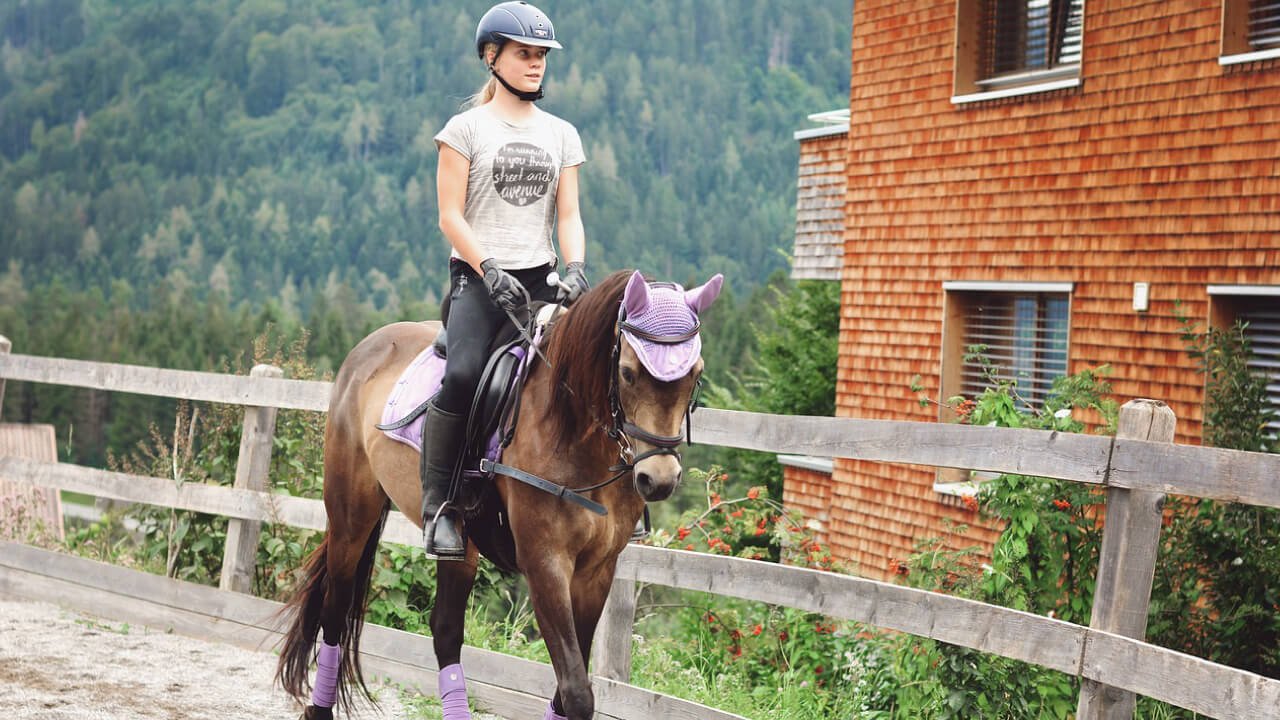
Next, let’s examine the position of your fists. Where should your fists, which hold the reins, be ideally placed? Let’s explore how your fists and the horse’s movement relate.
Fists Moving Up with Rising in Light Trot is Incorrect
When riders stand up during light trot, their fists tend to rise along with their body. This is common among beginners, but it can interfere with effective riding.
May we remind you that leaning your upper body forward to stand up is similar to how we rise from a chair. The center of gravity must stay over your feet to stand properly. Constantly moving your fists upward during trot can cause your posture to become unstable and put strain on the horse.
To avoid excessive forward leaning and fists rising, focus on sitting deeply in the saddle. Aim for your sit bones to align close to directly over the stirrups when viewed from the side.
Keep Weight on the Rear Legs
Applying more weight to the horse’s rear legs, as opposed to the front, can increase propulsion. While human weight is negligible compared to the horse’s, leaning forward excessively makes it harder for the horse to move forward smoothly.
In addition to posture, it’s crucial to be aware of the horse’s center of gravity. By doing so, you’ll find it easier to maintain a balanced and effective riding position.
Summary
If you’re struggling with trot, review your posture and leg aids rather than just trying to push your horse forward. Is your posture unobtrusive, and are your aids clear? Have an instructor check your position or use a mirror to self-assess and improve!