
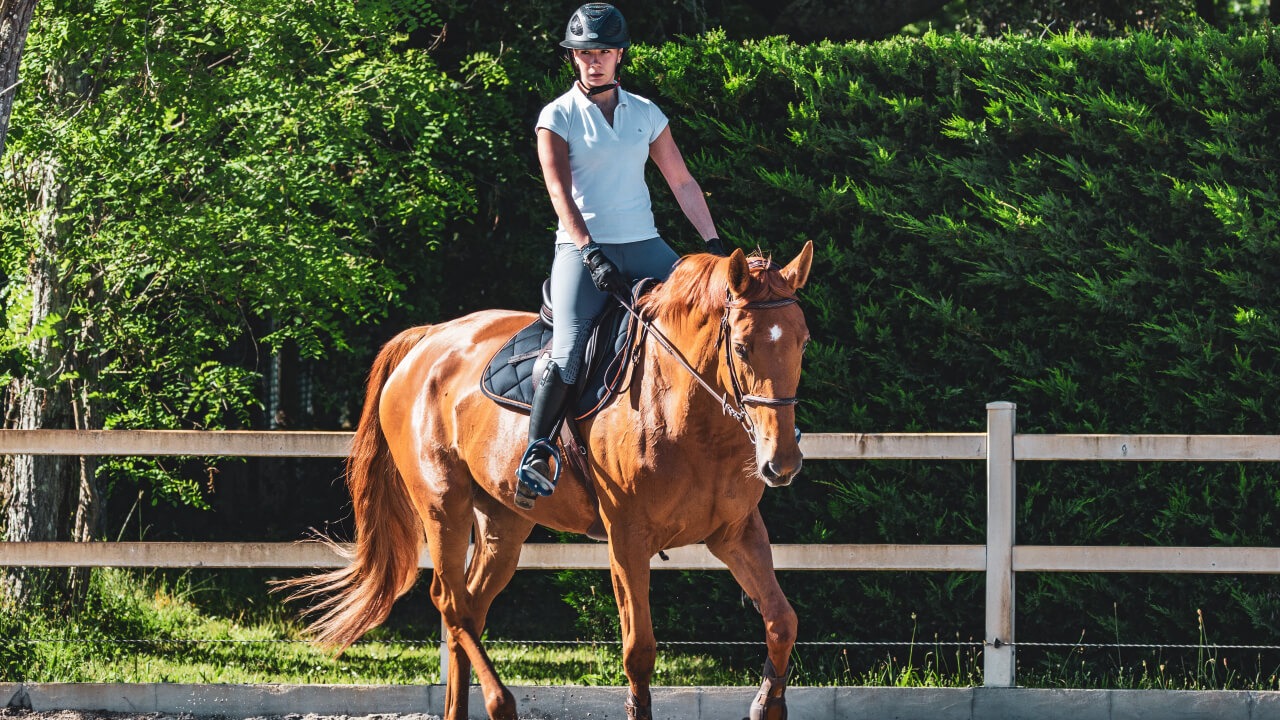
When practicing the trot, some beginners are surprised by the significant up-and-down shaking of the body and may panic at their uncontrollable movements.
However, mastering the trot well makes subsequent cantering easier. There are key techniques to improve your trot.
Here, we introduce those tips.
Causes of Body Bouncing During Trot
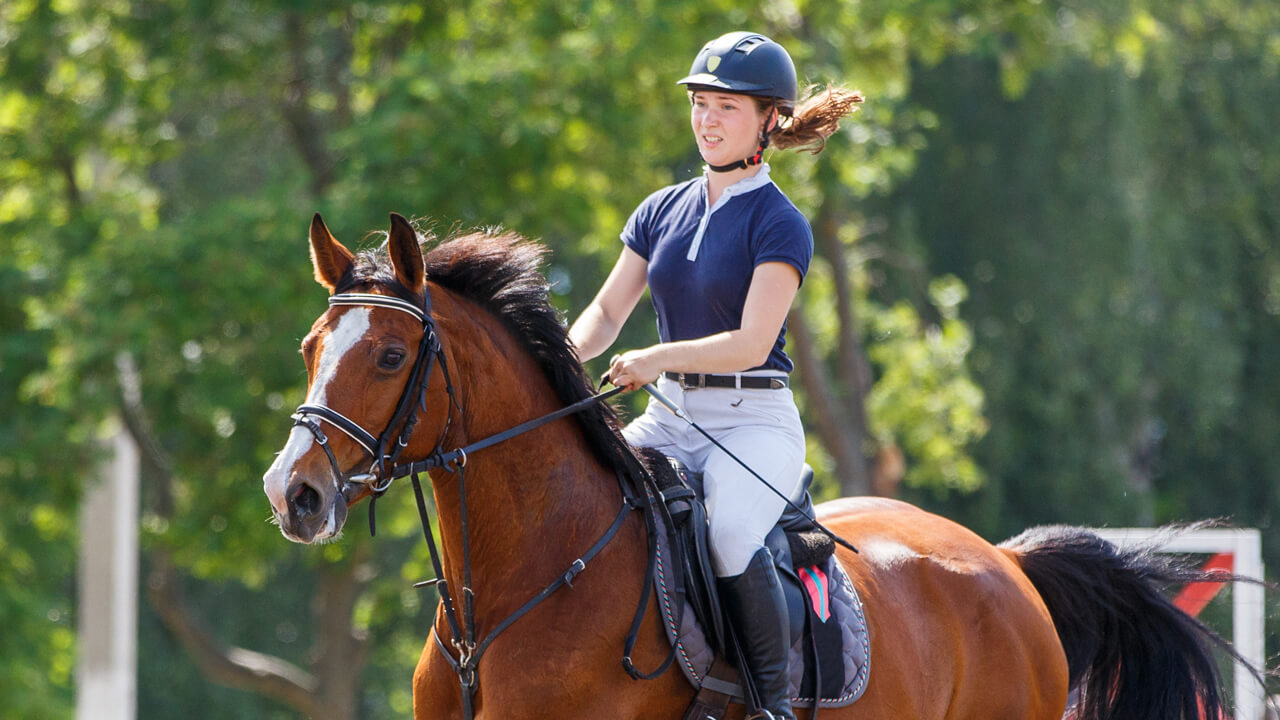
When practicing the walk, you may be used to standing up and sitting down on the horse, or practicing light trot with ‘1, 2, 1, 2,’ then moving on to the trot.
Trotting involves sitting while riding.
Why Practice the Trot Sitting
As you become more comfortable with the light trot, the next step is practicing the sitting trot. Initially, some people experience pain as their hips bounce up. Why do we practice sitting trot despite the discomfort?
One reason is to increase the opportunity to use your legs to give commands to the horse. During the light trot, you cannot give commands with your legs while standing, only when seated.
In contrast, the sitting trot allows constant use of your legs to communicate with the horse.
Another reason is that transmitting rhythm along the saddle to the horse’s back can enhance propulsion.
Why Does the Body Bounce?
Have you ever wondered why your body bounces more in the sitting trot compared to the light trot?
Why do we stand and sit alternately during the light trot? This method helps to absorb the shock of the trot by alternating standing and sitting.
In the sitting trot, staying seated means you receive the full impact of the body’s up-and-down movement, causing the bouncing sensation.
How to Practice Sitting Trot Effectively
When starting with sitting trot, the bouncing can cause discomfort, and you may lean forward or tense your thighs and knees to maintain balance. Additionally, the bouncing can cause your hands to swing and transmit unnecessary force through the reins, stressing the horse’s mouth.
If not done properly, it can stress the horse and result in back pain for the rider. Moreover, it hampers improvement in riding skills.
Adopting a posture that can absorb the bounce is crucial for both rider and horse. Rather than bouncing away from the saddle, aim to keep your hips and saddle as one.
While instructors often give personalized advice, developing an intuitive sense requires practicing and time. Even if instructions seem repetitive, different explanations can resonate differently.
Next, here are three tips for improving your sitting trot skills. Try mental training even without a horse.
Tip 1: Lower Your Heels
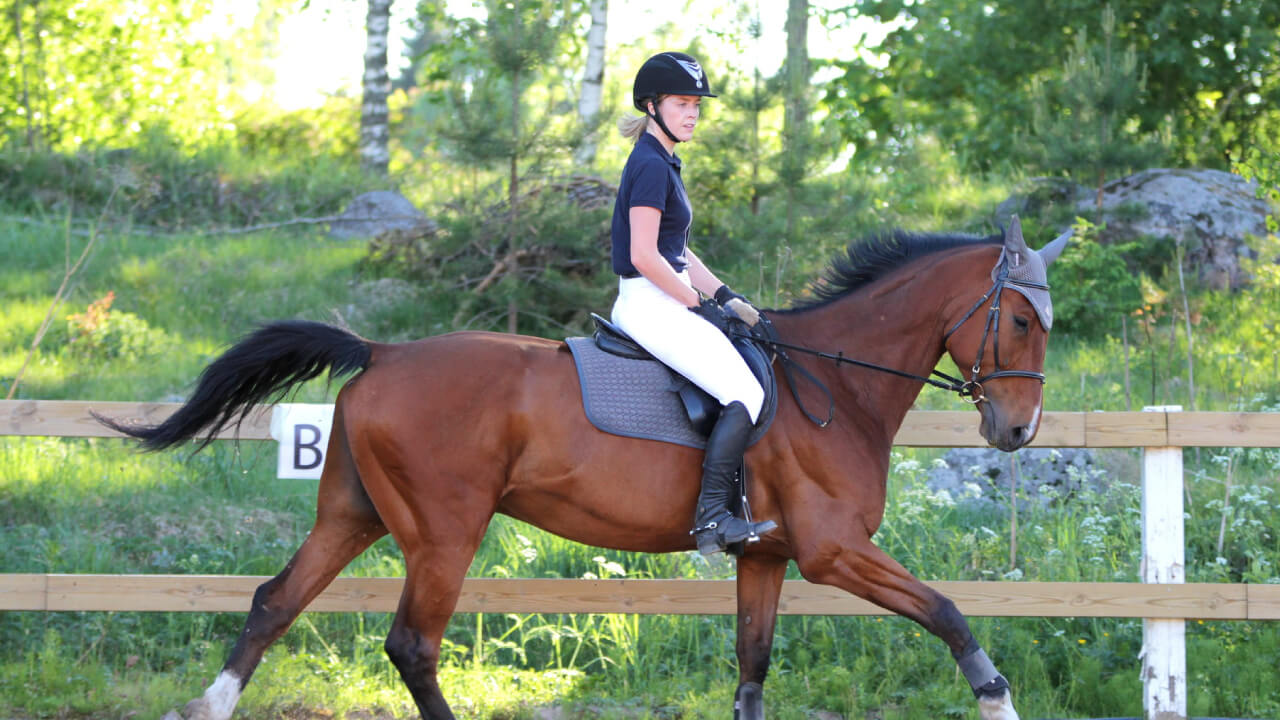
During sitting trot lessons, you might have been told to “lower your heels!” Even if you think you’re doing so, you might not be lowering your heels enough initially. Sometimes, even if you lower your heels at first, they tend to rise during practice.
Especially when you’re trying hard or becoming fatigued, your heels tend to lift again. Why is it necessary to keep your heels down?
The reason is posture. Lowering your heels improves your posture and creates a more elegant and correct stance. This broadens your contact area between your legs and the horse’s belly, aiding in better balance and control.
In particular, in sitting trot, if your heels lift, your balance worsens.
Additionally, with heels up, your lower body becomes stiff, reducing flexibility. It also makes it harder for your stirrups to stay secure and for you to apply pressure effectively. Keeping heels down shifts your center of gravity downward, helping to absorb shocks without slipping out of the stirrups.
The ideal heel position is level with or slightly lower than your toes. If you’re unsure, taking photos or videos for comparison with advanced riders can help improve your form.
Tip 2: Relax Your Abs and Knees
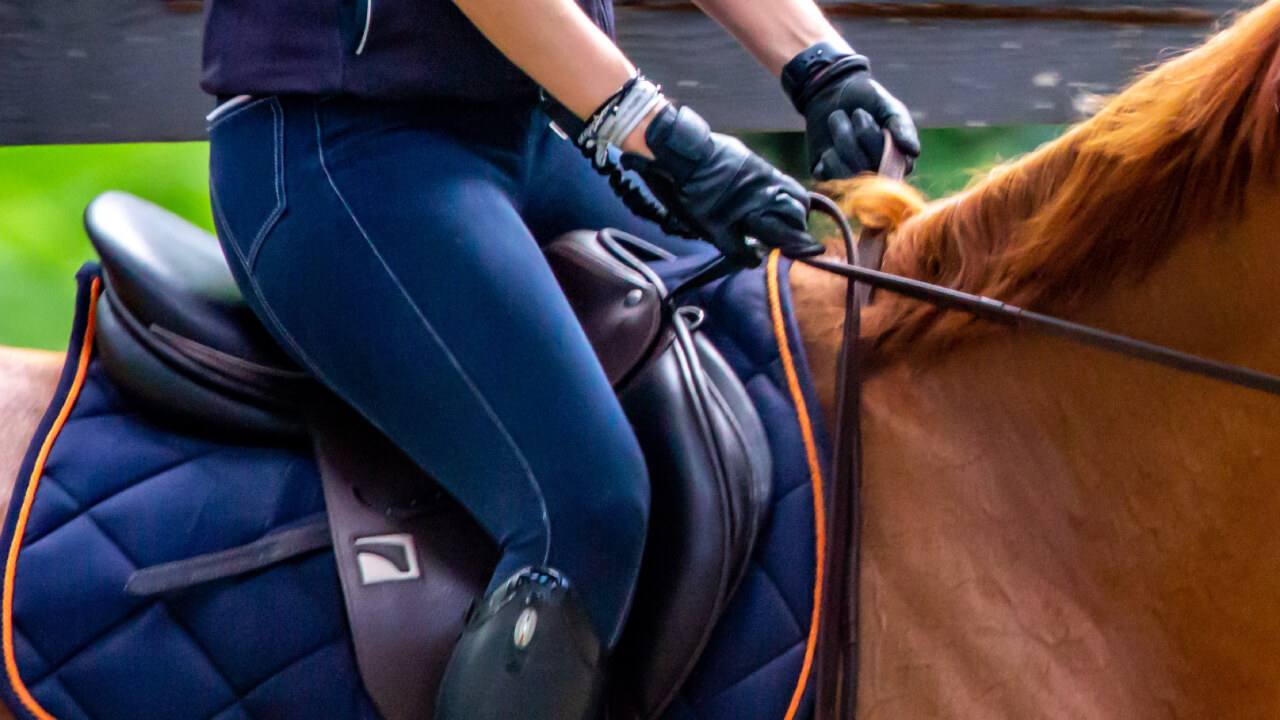
Sitting trot involves significant vertical movement, which may cause you to tense up. Even though you can’t avoid feeling the bounce, consciously relax your body. Tensing makes your body stiff and exaggerates the bounce. Begin by relaxing your abdomen and knees.
Relax Your Abdomen
In training, you may be advised to “engage your hips” or “squeeze your hips,” which can be confusing. The same goes for sitting positions. The abdomen is near the hips, pelvis, and is often involved in these corrections. When focusing on those areas, it’s easy to involuntarily tighten the abdomen.
Instead, focus on maintaining good upper-body posture and consciously relax your abdomen. Imagine channeling your strength from your heels down through your legs, letting it flow outward without clenching.
Relax Your Knees
During sitting trot, the large bounce can cause you to grip tightly with your thighs and knees. However, pressing too hard with your legs may cause the horse to think you’re constantly pressing the accelerator, or make your heels tighten, causing stirrup issues.
Even if your legs and the horse’s sides are not firmly connected, try to keep your legs light and relaxed, focusing on just lightly maintaining contact. Avoid using unnecessary force, and keep the motion smooth and flexible.
Tip 3: Firmly Step into the Stirrups
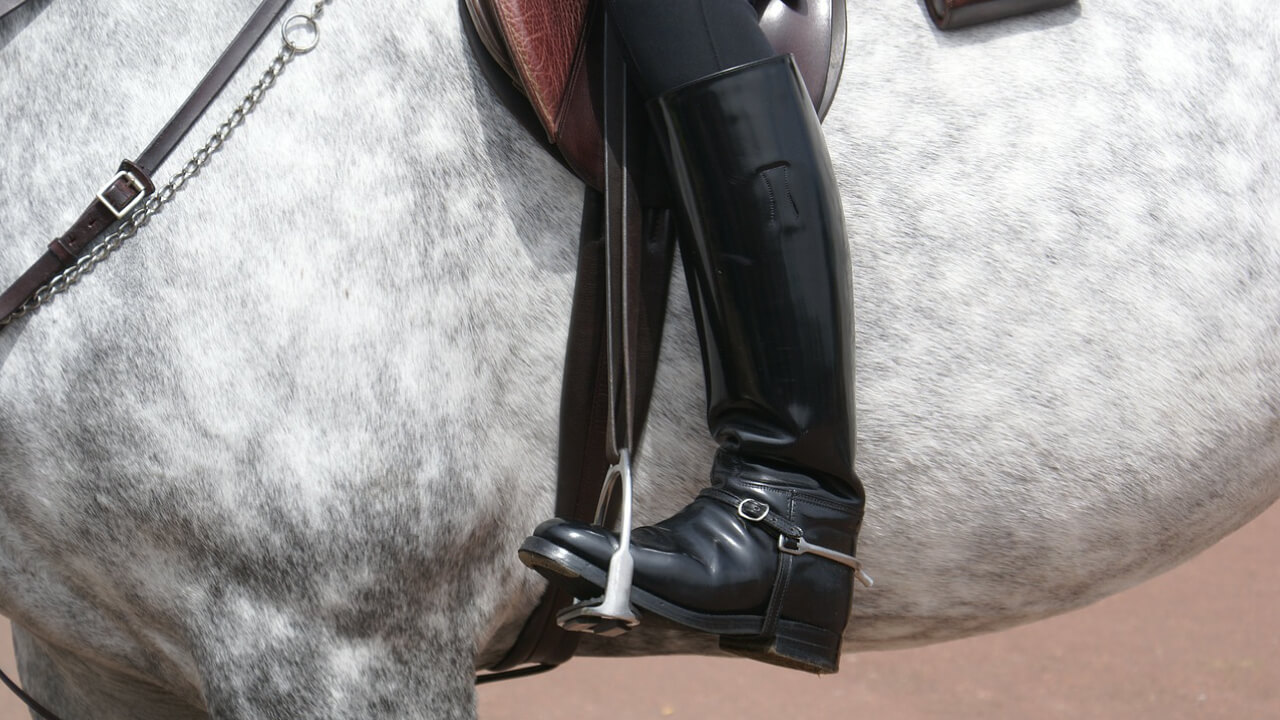
Initially, your body might bounce too much, causing you to slip out of the stirrups before properly stepping down. To prevent this, start by lowering your heels.
Timing and rhythm are crucial for a proper sitting trot.
Timing
In light trot, repeating “stand, sit, stand, sit” helps you to step correctly on the stirrups with each bounce. The same principle applies to sitting trot, but you shouldn’t stay standing all the time; instead, step when timing is right.
Specifically, when your hips land on the saddle after bouncing, step into the stirrups. This corresponds to the moment when the horse’s front legs land, which means that both the horse and rider are lowering their centers of gravity at the same time.
If you try to step into the stirrups when the horse’s legs are off the ground and your body is airborne, it becomes difficult.
To improve timing, try to be mindful of each stride of the horse.
Rhythm
In light trot, you may have counted “1, 2, 1, 2” in your head. The trot involves a rhythm of “step, soften, step, soften,” synchronized with the horse’s movements.
Since you’re experienced with light trot, it should be easier to feel each of the horse’s steps.
Imagine that the pace is quick, similar to dribbling a basketball, rather than slow footfalls.
Summary
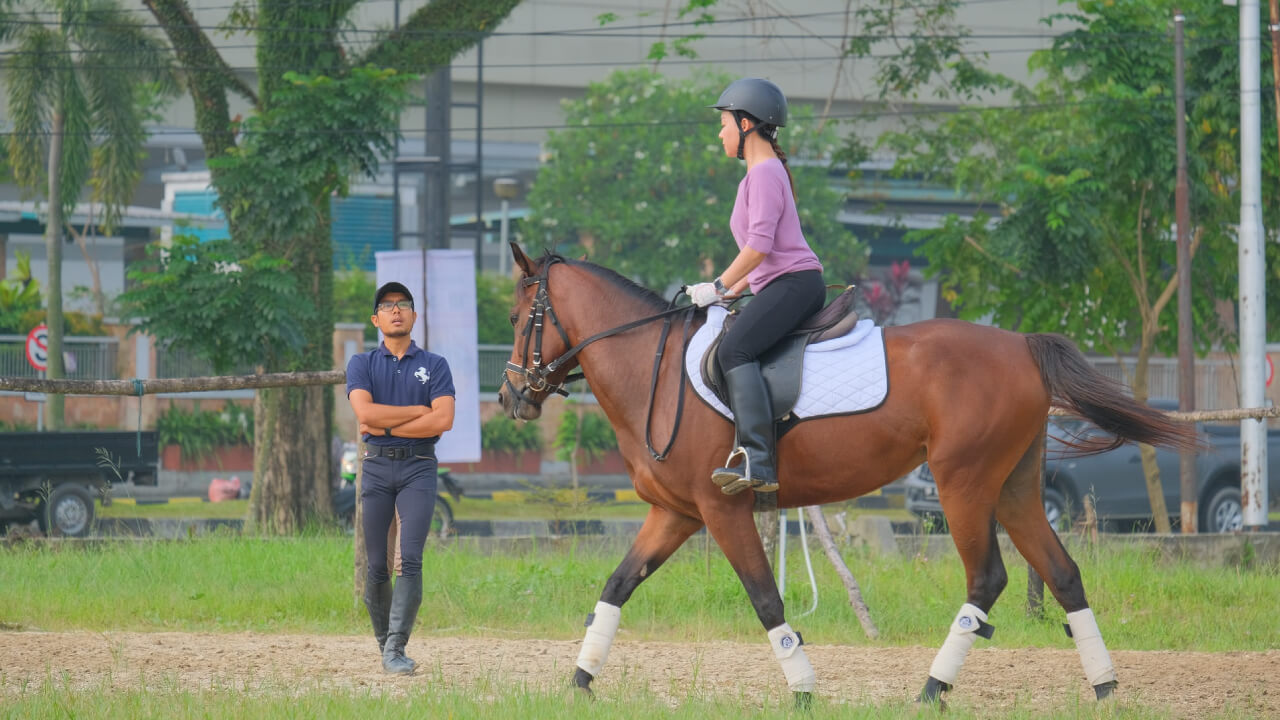
Watching Olympic athletes and advanced riders, it seems like they perform the sitting trot elegantly and effortlessly.
However, in reality, it can be painful and difficult when you try it yourself. Many inexperienced riders experience bouncing and discomfort, and even with lots of advice from instructors, it can be confusing.
It’s often more challenging than it looks to master the sitting trot, and you may worry about being able to succeed. However, once you master it, your legs will move freely, and your balance will improve. It also becomes easier to learn the next step, the canter.
Start by consciously lowering your heels, relaxing your abdomen and knees, and firmly stepping into the stirrups. Why not give it a try?