
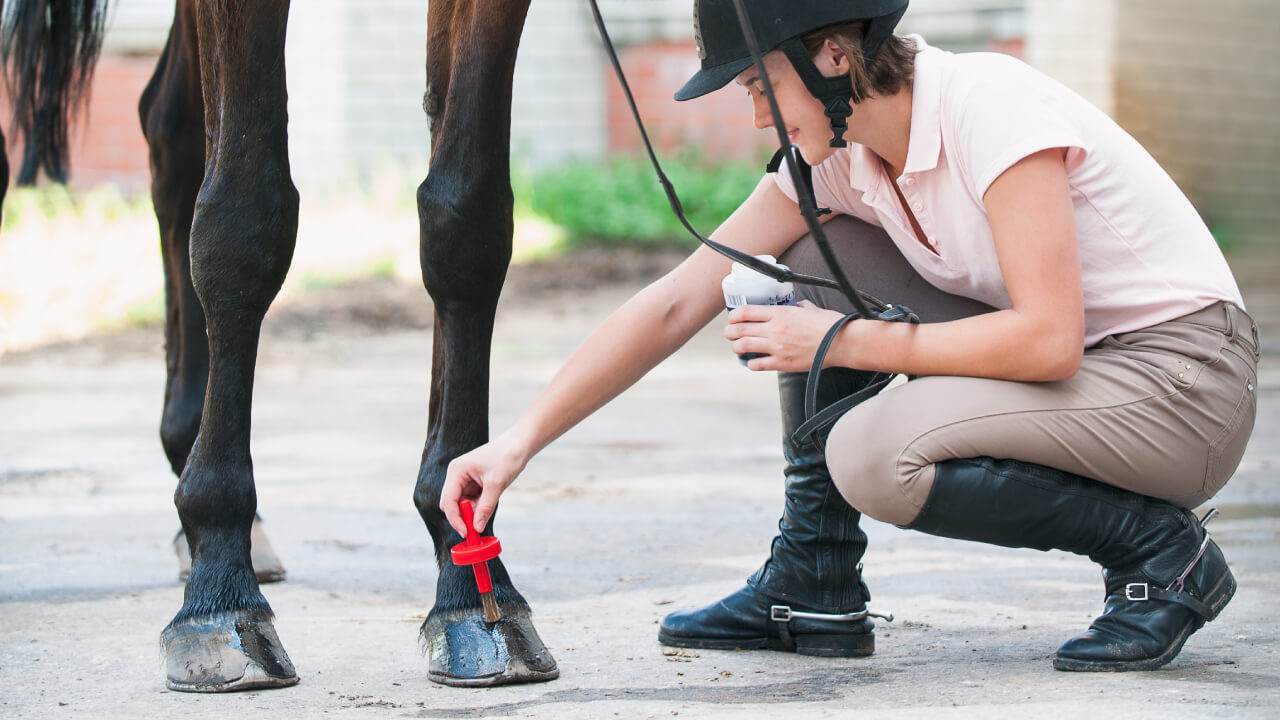
Animal limbs vary widely across species. Cats have round, fluffy paws; humans have limbs with five fingers capable of dexterous tasks; otters have webbed feet, for example — each is adapted to its environment.
Among these, horses have particularly distinctive limbs. Their front and back legs differ in shape, and their hoof structure is even more specialized. Why do horses have these unique hoof shapes? This article explains the form, roles, and the importance of horseshoes for horses.
Do You Know the Secret of Horse Hoof Shapes?
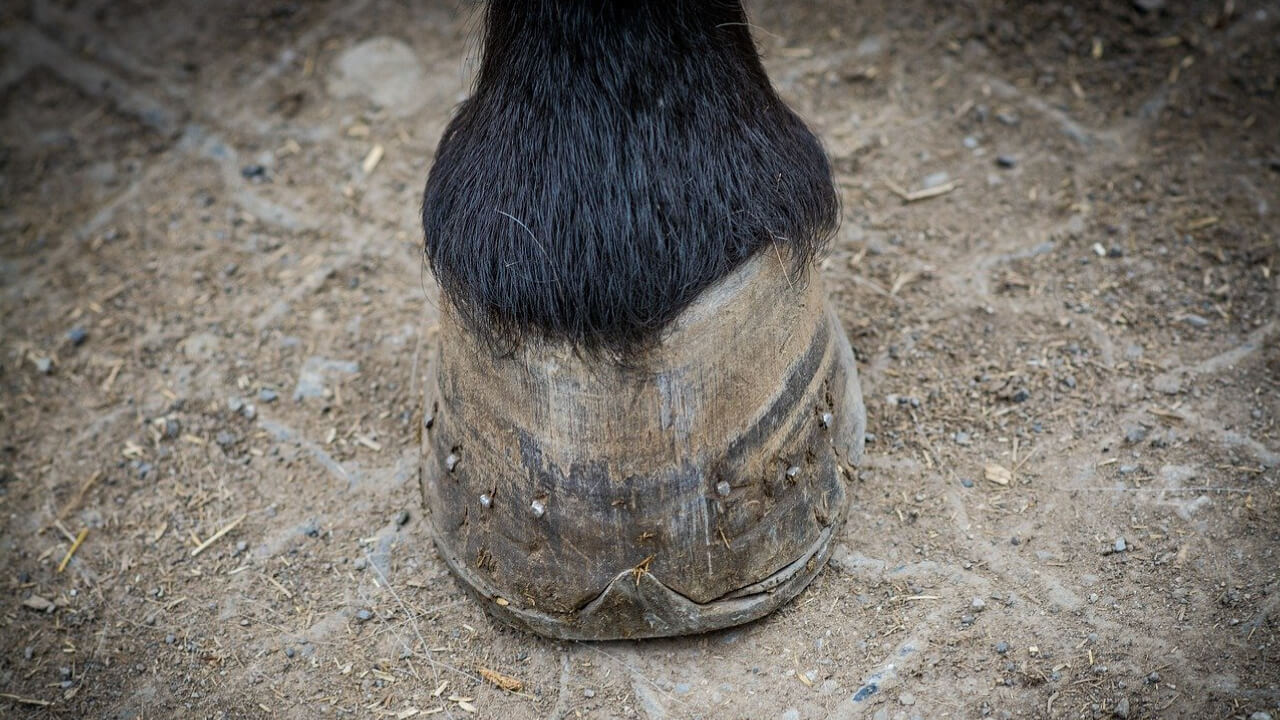
When you think of horse hoof shapes, what do you imagine? As seen in footprints, horses have sleek, strong hooves, supported by long, elegant legs.
While front and hind footprints appear similar—both round—upon closer inspection, their shapes differ. This article introduces the structure of horse hooves.
What is the Shape of Hooves?
As mentioned earlier, the shape of the front and hind hooves differs. Horse hooves, like human nails, are rounded on the bottom, but the front hooves tend to be broader and rounder, while the hind hooves are more elongated vertically.
This difference arises from their distinct roles during movement: the front legs are responsible for steering and turning, while the hind legs provide forward propulsion. The different shapes optimize their respective functions. Details are explained further below, so please refer to that.
Why Have Hooves Evolved into Their Current Shapes?
Horse ancestors are believed to be ‘Eohippus,’ which reportedly looked like a cross between a rabbit, fox, and dog, depending on sources. They had four claws on the front and three on the back, and initially, there was no obvious link to horses based on their appearance.
Research revealed that their skeletal structure is closer to that of horses, confirming their ancestors. The evolution of their hoof shape—from four toes on the front and three on the back—relates to increased body size and weight. As they grew larger and transitioned to a herbivorous diet, their body positioning shifted: the main weight-bearing toes developed to support their size, leading to the characteristic hoof structure.
Evolution also favored racing speed for survival, requiring less ground contact for faster running and stronger ability to push off the ground. These adaptations resulted in the current hoof structure suitable for high speed and agility.
Why Do Hoof Shapes Differ?
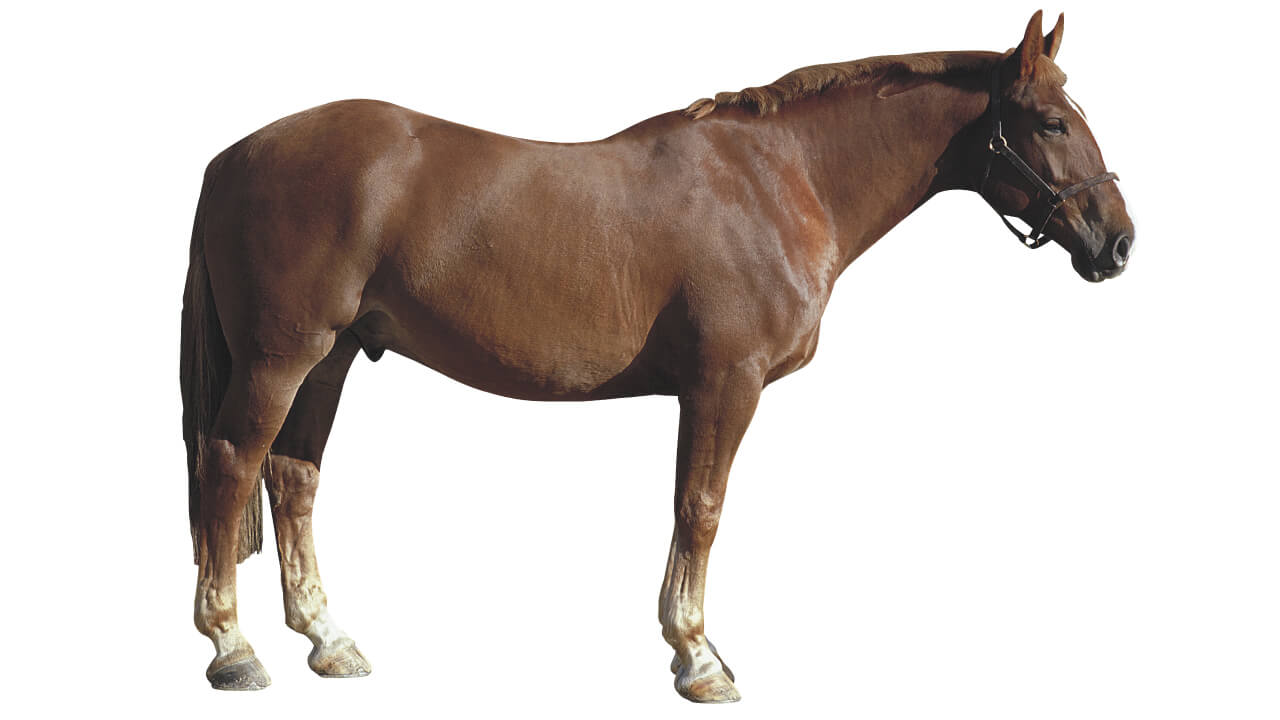
The shape differences, as touched on earlier, are evolved to suit different functions. The front hoof is broader for better turning, while the hind hoof is elongated to maximize forward thrust. But why is the front hoof wider, and the hind hoof longer? This section explains.
When changing direction, especially in larger animals, shifting the center of gravity is necessary. The wider front hoof provides greater stability during turns, supporting balance even if the weight shifts sideways.
By contrast, the hind hoof mainly powers forward movement. Its tall, narrow shape ensures efficient force transmission during running without the need for lateral stability.
The Importance of Horseshoes for Protecting Hooves
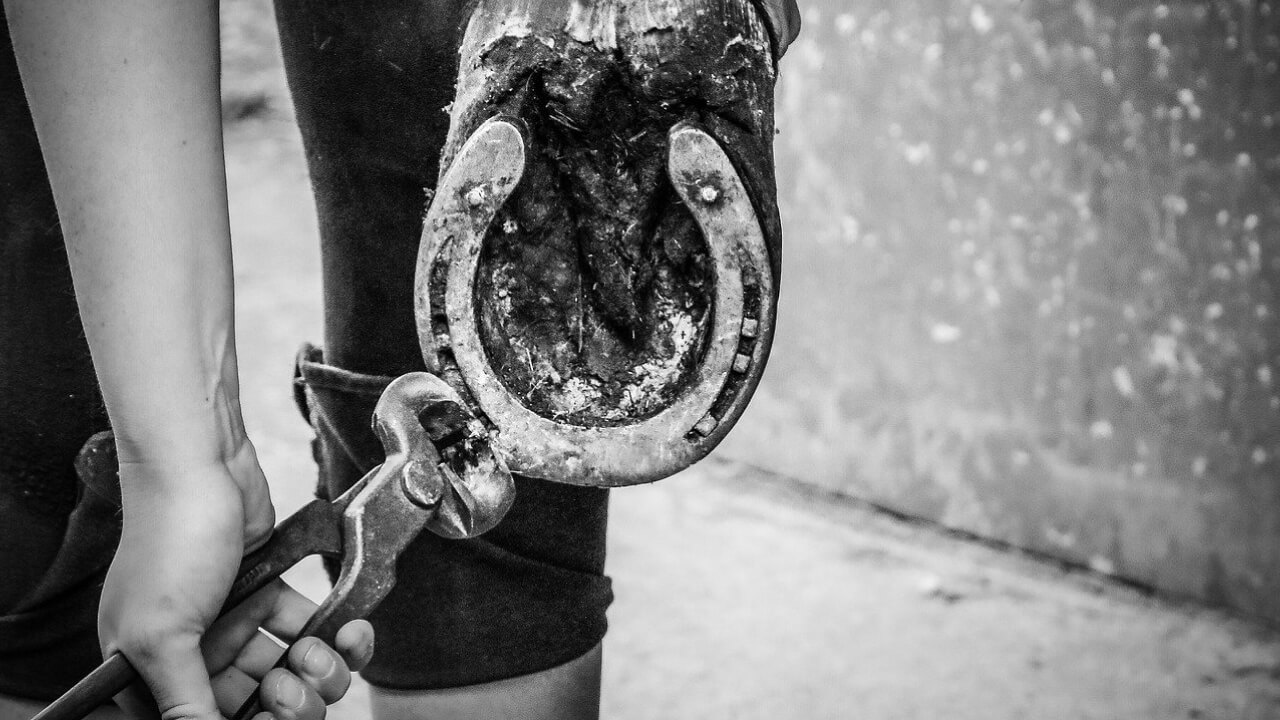
Many people associate horseshoes with horses, as they are essential for hoof protection. But what exactly are horseshoes, and why are they necessary?
Why Are Horseshoes Necessary?
Horseshoes are metal fittings attached to the horse’s hooves, crucial for horses kept by humans — in riding clubs, racecourses, and farms. They serve to protect the hooves from excessive wear.
Horses under human care exert loads on their hooves through activities like riding, pulling loads, or simply standing—causing the hooves to wear down over time. Horseshoes help mitigate this wear.
Are Hooves Weak?
Horse hooves are often called the ‘second heart’ of the horse because of their vital role. To circulate blood efficiently through their large bodies, horses rely on hoof expansion and contraction caused by movement—which helps blood flow back to the heart.
If horses develop hoof diseases or sustain injuries, their lives could be at risk. Regular inspections and care are necessary to prevent problems such as laminitis, cracked hooves, or fungal infections like thrush, all of which require vigilance.
Like human nails, hooves grow continuously, so regular trimming and maintenance are essential to prevent issues. Early detection and treatment of problems are vital for horse health.
The Importance of Managing Horseshoe Fitting
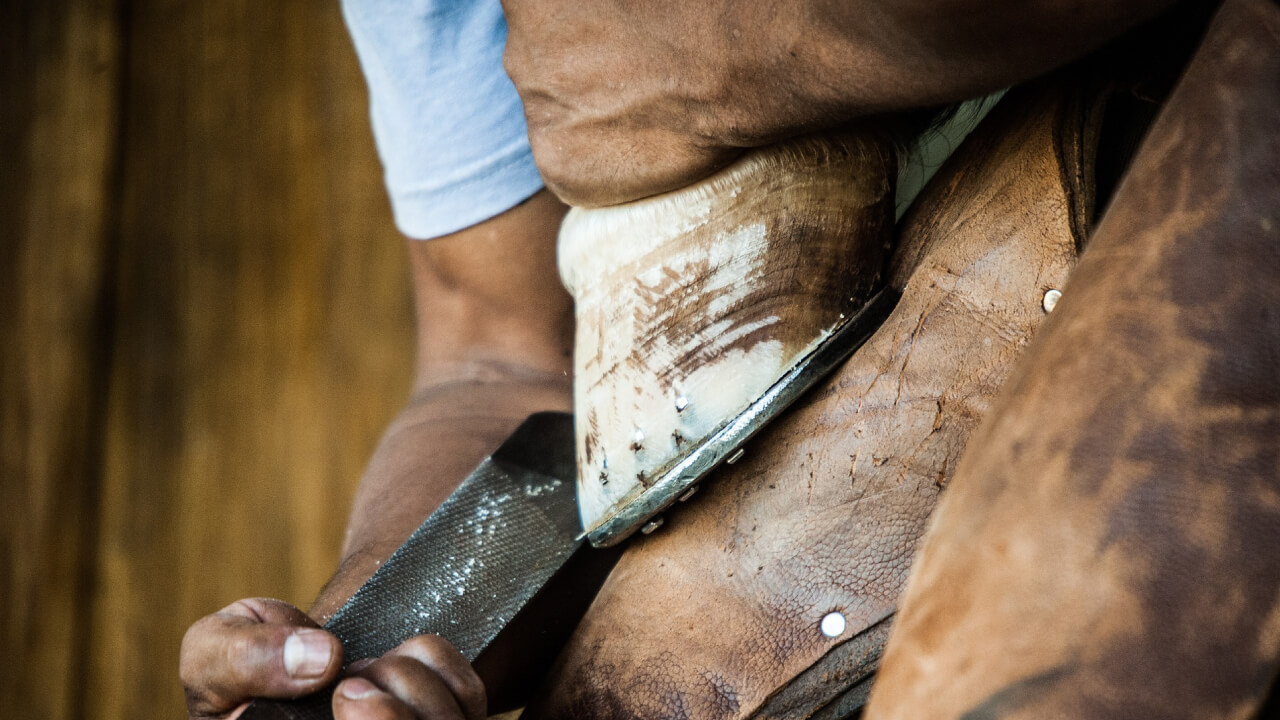
Horseshoes are fixed onto the hoof using specialized nails, placed in areas without nerves, to secure their position firmly. While the placement is precise, even minor shifts can occur, especially during intense activities like racing or jumping.
Since horse hooves grow like human nails, the horseshoe may need adjustment or replacement over time. Misaligned horseshoes can cause injury, so regular checks and maintenance are critical—this is part of overall horse health management.
Horseshoes are typically replaced every 1 to 1.5 months for riding and show horses, and every two weeks for racehorses, which experience greater stress and wear. Proper shoe management prevents accidents and injuries during high-speed racing, where horses can reach speeds of 70 km/h, exerting intense force on their hooves.
Failing to maintain horseshoe fit can lead to lost shoes, increasing the risk of accidents that could harm the horse, rider, and nearby horses. Careful management by blacksmiths is essential for horse safety.
Summary
In conclusion, horse hooves differ between front and back legs, optimized through evolution for speed and agility. The shape differences, such as the broader front hooves and elongated hind hooves, reflect their respective functions.
Noticing the shape variations — wide U-shapes or vertical U-shapes — you may have thought they simply fit different horse sizes. In reality, these differences may primarily be between the front and hind legs, and reflect adaptations to their roles.
By observing these structures closely, you can gain new insights into horses’ hooves and equine health. Enjoy exploring these fascinating features!