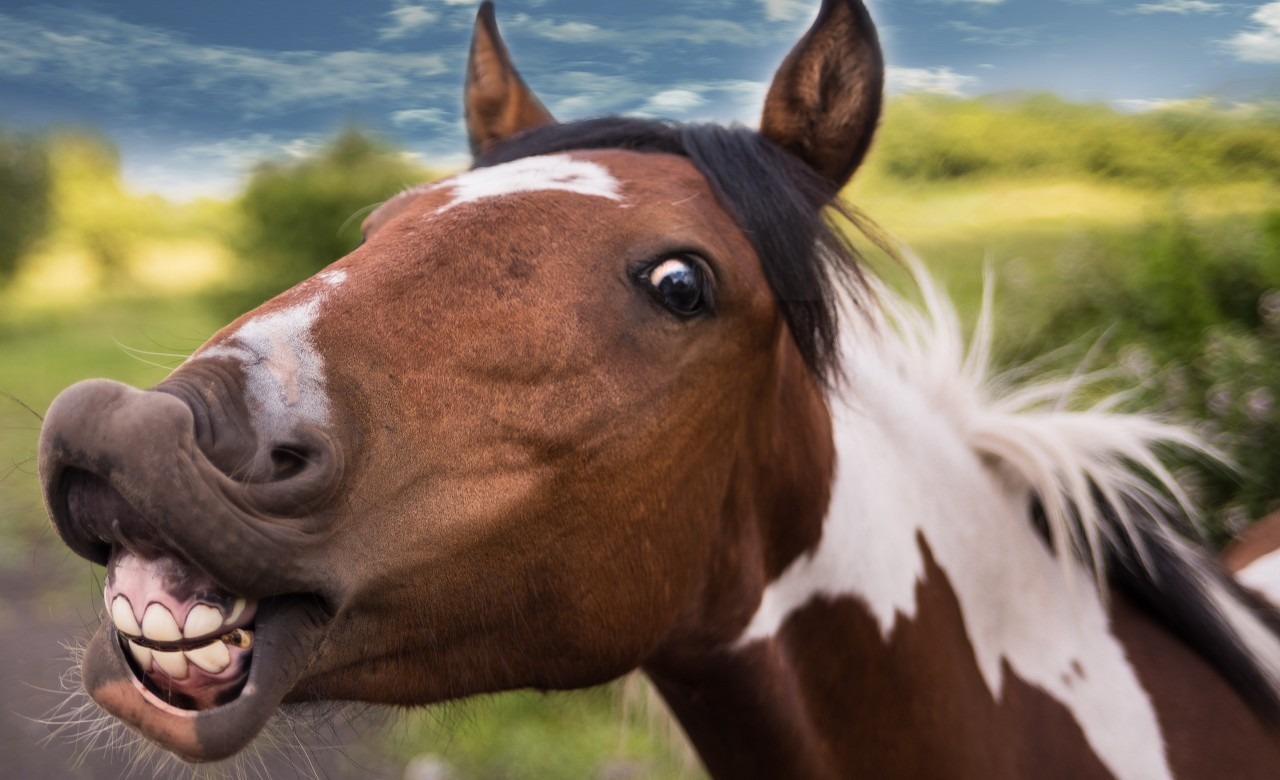
Horses are renowned for their prominent and captivating noses. Their large nostrils are soft and expand widely, often inviting gentle touches from those who wish to communicate with these majestic animals.
Have you ever wondered why a horse’s nostrils are so large and distinctive? With such big nasal openings, it seems they could inhale lots of both good and bad smells. In this article, we focus on the remarkable shape of a horse’s nose, exploring why they have such large nostrils and what this means for their sense of smell and breathing capabilities.
Is That a Deep Breath? Nostrils Size as an Indicator of Heart and Lung Health

The nose of a horse is quite prominent relative to its face, and when you get close, you can notice that their breathing is quite vigorous. This is no coincidence—the size of a horse’s nostrils is closely linked to their respiratory capacity.
Unlike humans, horses breathe only through their noses. This mechanism helps prevent food from entering their windpipe accidentally, making the nose essential for respiration.
To supply enough oxygen for such a large body and to keep running at full speed, horses require a large, efficient nasal passage. Their breathing technique—called “one stride, one breath”—allows them to inhale oxygen efficiently during each step, necessitating broad nostrils for optimal airflow.
The larger the nostrils, the easier it is for a horse to breathe, and this correlates with stronger cardiovascular and respiratory health. In fact, a horse with big nostrils is often seen as having the potential for excellent racing performance, and some people consider nostril size a key factor in selecting competitive racehorses.
Keen Sense of Smell! Their Olfactory Ability is 1000 Times That of Humans

Many animals have an excellent sense of smell, and horses are no exception. You may have seen horses approach and sniff whenever someone gets close—using their sense of smell to identify and assess others.
The olfactory sense of horses is said to be 1000 times more sensitive than that of humans. They use these heightened olfactory abilities to detect safe food, identify potential mates during breeding seasons, and even read emotions through scents. The “Flehmen” response, where a horse curls its lip as if laughing, is part of this scent-checking process.
Horses can even interpret emotions from smells, allowing them to sense small changes or feelings in the people they regularly interact with.
More Than Just Detecting Food—Nasal Function in Communication

Humans communicate through gestures like nodding, shaking hands, and hugging, while also conversing verbally. But how do horses greet each other and communicate?
Their primary mode of communication is through their noses. Horses bring their noses close to each other, sniff, and confirm whether they are part of the same group or to exchange greetings.
Once they recognize each other as friends, horses perform behaviors like grooming to express affection. This behavior—grooming—is common among horses, dogs, and cats, involving licking each other’s necks or backs.
Sometimes, disagreements or dislikes become apparent during greeting interactions—horses may try to kick, bite, or shy away. This shows that the nose plays a vital role in their social interactions.
Beware of Nosebleeds! Nosing Out Diseases

A nosebleed in a horse, or ‘nasal hemorrhage,’ can occur due to various causes. Trauma from a blow or injury is the most common reason, similar to humans. If a horse hits its nose, it can bleed just like a person. Such external injuries are generally not a cause for excessive worry.
Inflammation caused by mold or fungi from poorly maintained bedding or hay can also cause nosebleeds by infecting mucous membranes and capillaries. Ensuring a clean, hygienic environment helps prevent such issues.
In cases of lung hemorrhages often seen in racehorses, intense exercise pushes their respiratory limits. During races, horses may have nosebleeds caused by vascular stress from exertion—when they push beyond their limits, blood vessels can rupture, leading to bleeding from the nose. This can impair airflow, making it harder for the horse to breathe and perform well.
Chronic nosebleeds from lung hemorrhages may require a halt of racing for up to a month, and treatment is necessary to prevent long-term damage. Some top racehorses, like Vodka, Orfevre, and Rise A Flag, have had to retire after repeated nosebleeds, highlighting how serious this issue can be for horses.
Summary
As we have seen, there are clear differences between horse noses and human noses, emphasizing the vital role their large and sensitive noses play in their lives.
Horses rely heavily on their noses for detecting danger, communicating, and demonstrating their strength. Their prominent noses have evolved to support these functions, making them an iconic part of their appearance.
However, because of their multiple roles, they are prone to health issues, some of which can abruptly end a racing career. Maintaining hygiene and watching out for symptoms like nosebleeds are essential for their health.
When interacting with horses, gentle touches on the nose and familiarizing them with scents can help foster trust and communication. Always handle their noses carefully and kindly to build a good relationship.
‘