Some people may find it hard to imagine horses sleeping… Compared to humans, horses are said to sleep for shorter periods. In this article, we explore horse sleep, including how long they sleep, whether they dream, and if they sleep standing up. We’ll also answer common questions about horse rest and sleeping habits.
When Do Horses Sleep?
Are Horses Diurnal?
Animals can be diurnal or nocturnal, but which are horses? Riding clubs’ horses are primarily active during the day, and wild horses are also most active during daylight hours. This suggests that horses are generally diurnal, with sleep mainly occurring at night.
Horse Sleep Patterns
While horses are mainly active during the day, in the dark hours, they sometimes stay awake in their stalls just as during the day. This is a remnant of their wild nature, as they remain alert in case of predators at night, waking up intermittently.
Horses rarely sleep continuously for hours like humans. Most sleep in short bouts of about 30 minutes at a time. You might think this sounds exhausting, but horses naturally require less sleep than humans. During daytime, they rest in short bursts when in a calm environment, so overall, they may actually get enough rest.
Interestingly, horses are relatively good at seeing in darkness, similar to nocturnal animals like cats. The source of the light that makes their eyes seem to glow in darkness is the tapetum lucidum, a structure behind the retina that amplifies light, enabling them to see in dark stalls.
How Long Do Horses Sleep?
Total Sleep Time: 2-3 Hours
Most horses accumulate roughly 2 to 3 hours of total sleep during their resting periods. This includes naps while lying down, though they also rest intermittently while standing. The total sleep time might be slightly longer if we account for all short sleep bouts.
Sleep pattern: Short naps of 15 minutes to a few tens of minutes, alternating between waking and sleeping.

It turns out horses sleep for surprisingly little time. I also didn’t realize they sleep in short bursts like this.

Horses sleep differently from humans, right? It’s like being a short sleeper. Interestingly, they can sleep standing or lying down, and sometimes even sitting. We’ll compare their sleep habits to other animals next!
Comparison with Other Animals
Dogs and cats, animals familiar to us, sleep over 10 hours daily. Human sleep typically lasts around 6 hours. Horses, however, sleep for a remarkably short time, mainly because they are herbivores.
They spend most of their wakeful hours eating large amounts of low-energy food to sustain their large bodies. This habit has driven their evolution towards shorter sleep times to prioritize feeding.
Cattle, also herbivores, sleep for about 3-4 hours daily, somewhat longer than horses. One reason is that cattle ruminate, which allows for efficient nutrient absorption and less sleep needed compared to horses.
Environmental Differences
Horses kept in stables can rest safely and are well taken care of. Wild horses, however, must roam to find grass and face risks from predators, leading to an average sleep of less than 2 hours daily.
Sleep duration also depends on age and health. Foals and old horses need more rest, so they sleep longer than healthy adult horses.
Do Horses Dream?
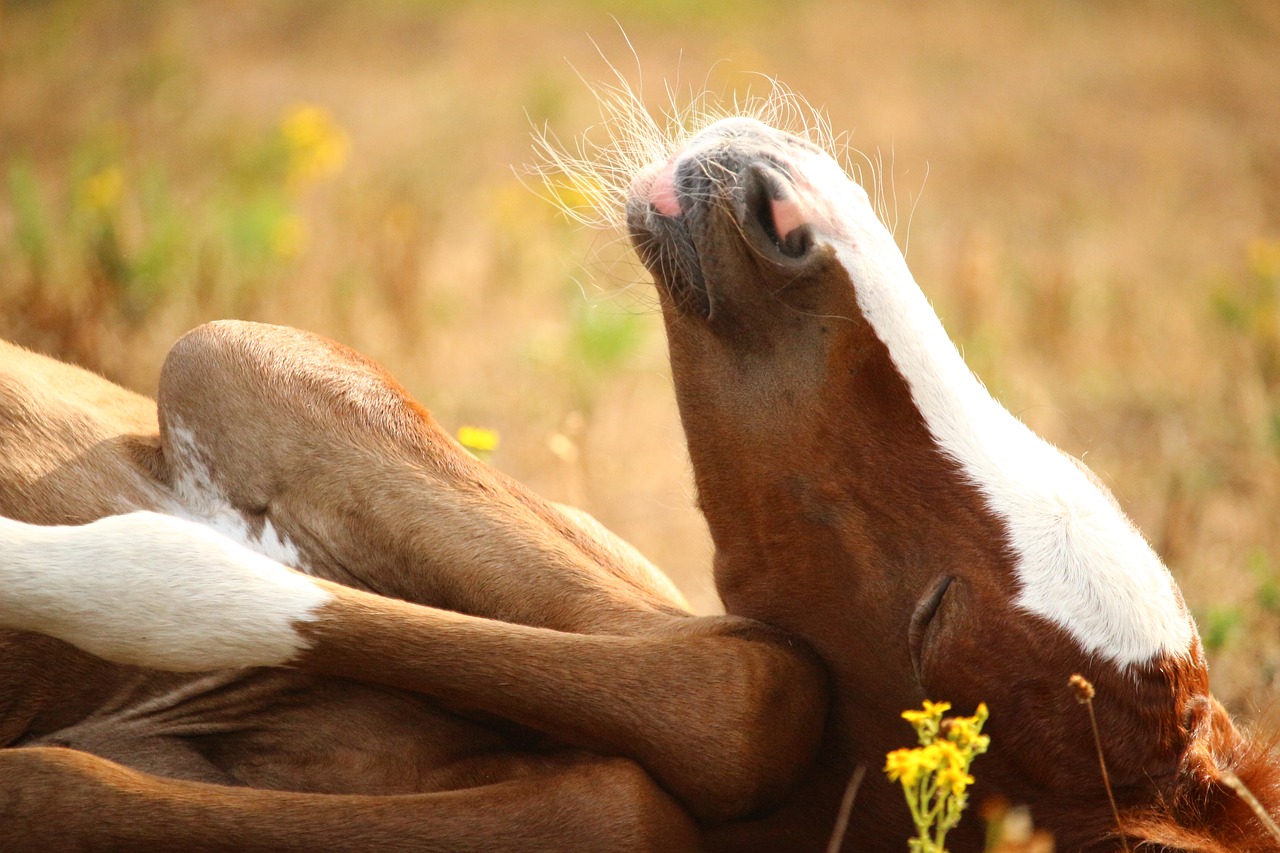
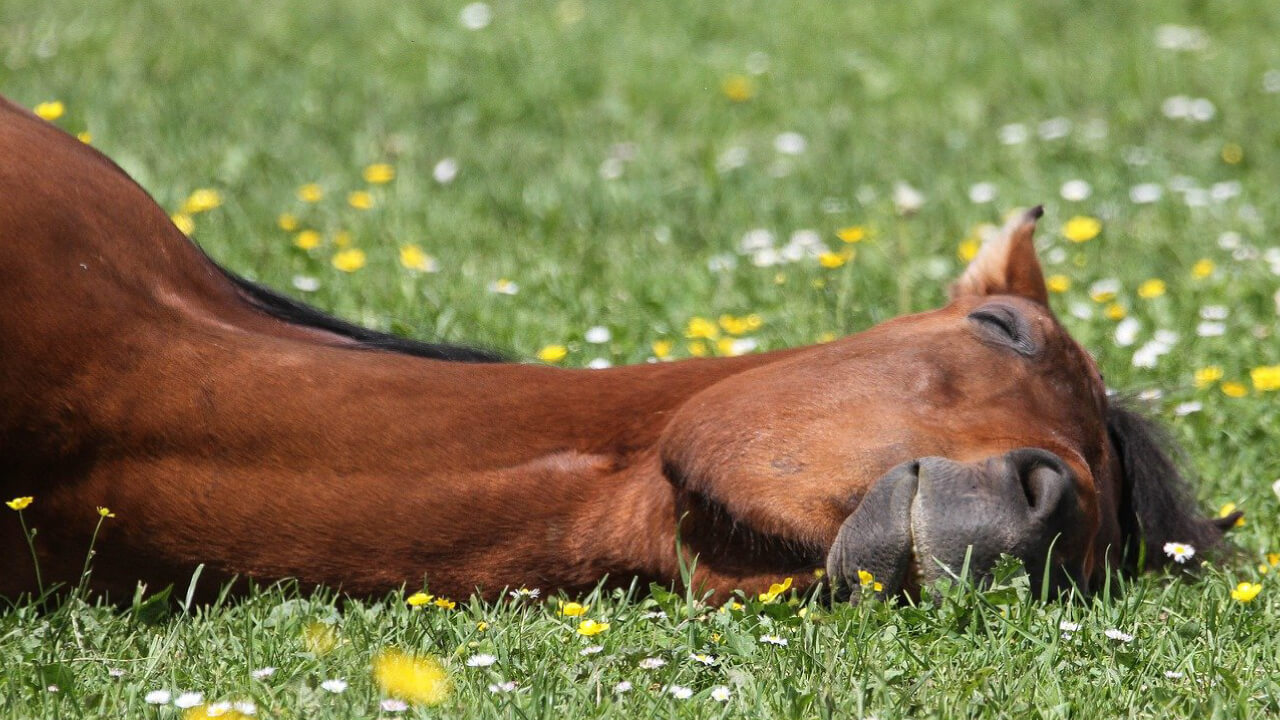
Many mammals and birds go through REM and non-REM sleep during their rest periods. Horses are likely to experience similar sleep cycles, which suggests they probably dream as well.
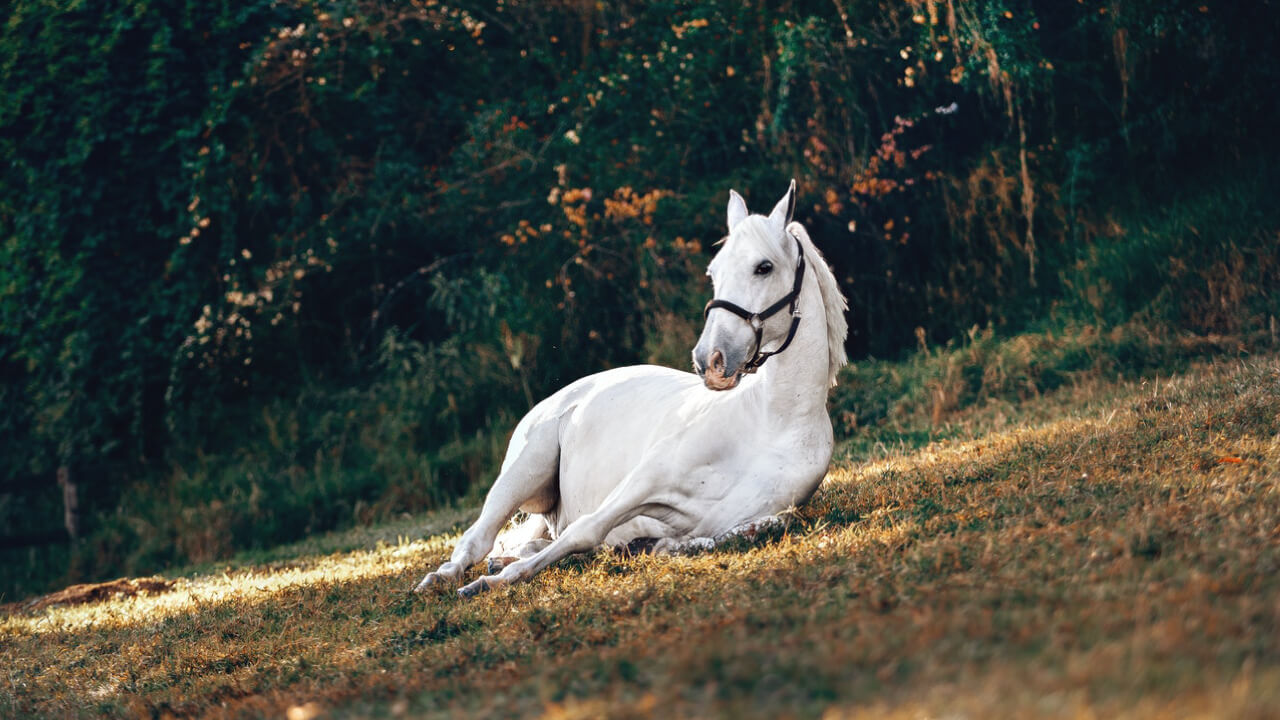
When they sleep deeply, horses sometimes move their legs or whinny slightly. They might be dreaming about walking or interacting with other horses, similar to humans.
Sometimes, horses appear to be struggling or their eyes may be half-open. This can look worrying but is a normal part of sleep, and it’s adorable when they talk in their sleep or seem to be dreaming.
How Do Horses Sleep – Positions?
Standing Sleep
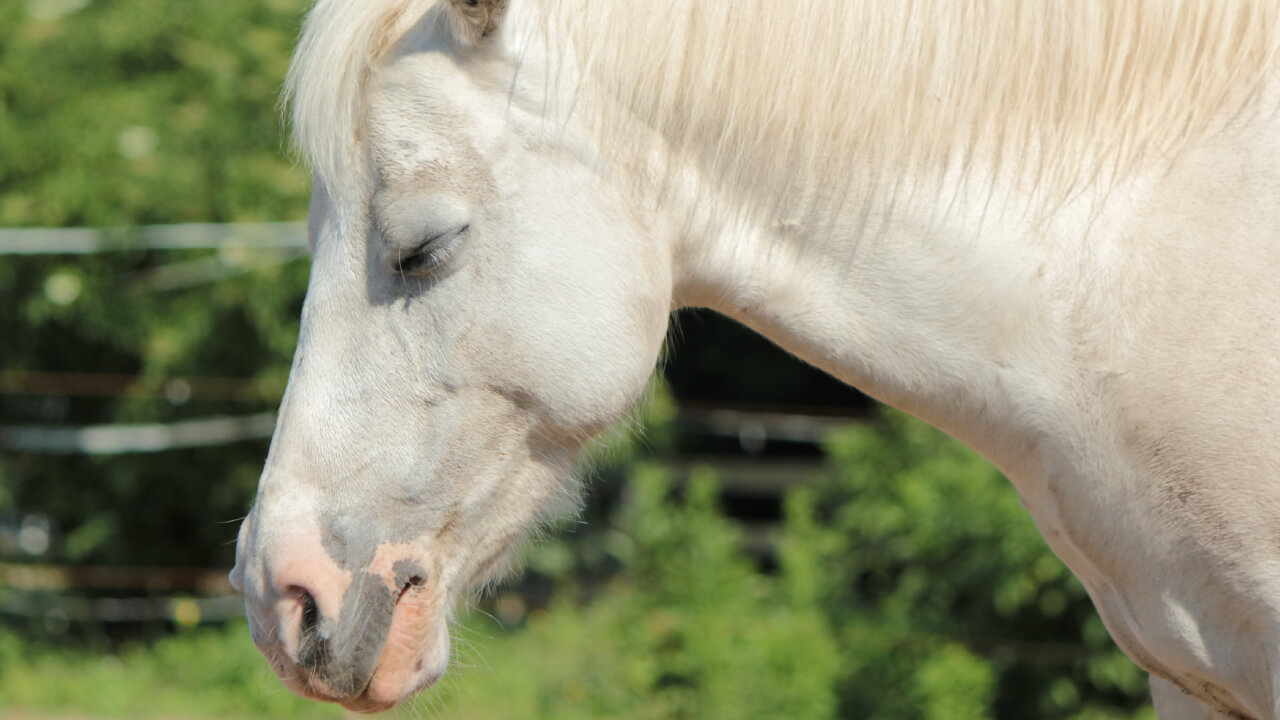
While sleep with muscles relaxed, humans would fall over. Horses, however, can sleep standing thanks to their structural adaptations. Their legs can lock in position, allowing them to stand and sleep without collapsing.
The secret lies in their leg structure. Horses can maintain a standing position without using muscle power, thanks to ligaments keeping their joints extended. This allows them to sleep upright.
Usually, when standing, horses do not keep all four legs straight all the time. Typically, they rest one leg while supporting with the other three, giving a clever way to balance resting and alertness.
Lying Down
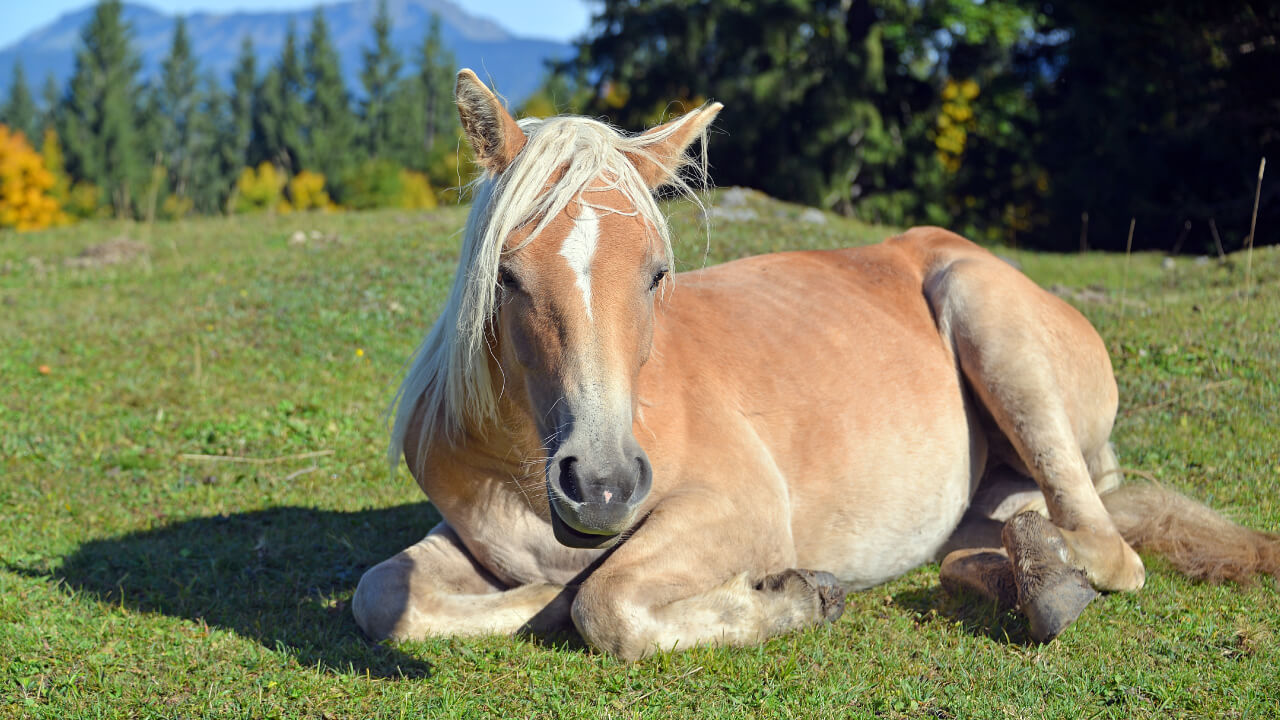
There is also a common myth that horses die if they lie down. This is partly true but not exactly. While horses do lie down for restful sleep, they also sleep standing much of the time. When they lie down, they are more relaxed and likely to experience deeper sleep, especially during longer naps or dreaming.
Foals and many domesticated horses often lie down to sleep. It’s a sign they are feeling safe and relaxed, since lying down can be vulnerable from a safety perspective. Nevertheless, if a horse cannot stand due to illness or injury, it can be dangerous and potentially fatal for them to be unable to stand or lie properly.
Additionally, the hoofs are called the “second heart” because they work as a pump to circulate blood. When horses are unable to stand, their hoofs cannot pump blood effectively, which can lead to serious health issues or death.
Summary
Horses have adapted their sleeping habits to fit their lifestyle, which is somewhat similar to humans, yet fundamentally different in how much and when they sleep. Understanding these differences helps us better care for and appreciate these amazing animals.
How to monitor your horse’s temperature and health without a thermometer