
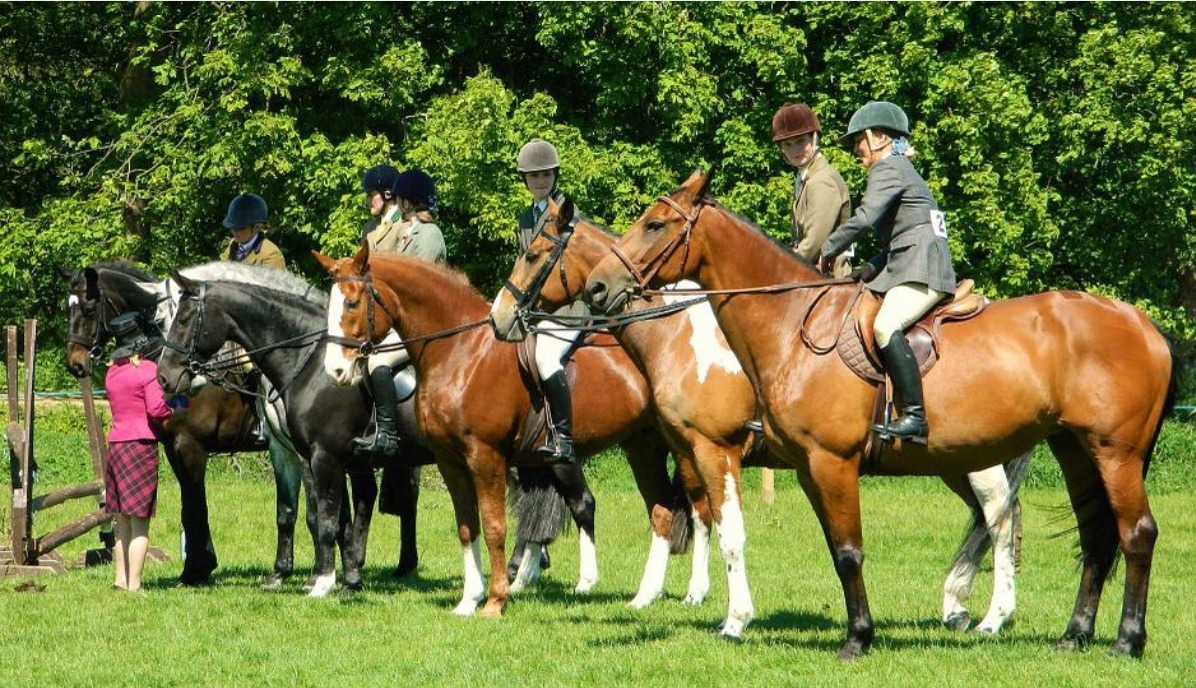
Riding in groups with multiple horses and riders can be challenging, especially when trying to maintain a consistent distance from the horse in front. In this article, we’ll explain how to keep safe distance and control your speed to avoid rear-ending the horse ahead!
Getting a Feel for One Horse Length

In riding groups, maintaining an appropriate distance between horses is crucial for safety and coordination. The standard distance is often referred to as “one horse length,” approximately 2.4 meters. Keeping this distance helps prevent accidents like horses startling or kicking each other.
What is One Horse Length?
One horse length is roughly the length of a single horse, generally about 2.4 meters. This distance should be maintained unless instructed otherwise. Properly keeping this distance allows you to avoid collisions and maintain smooth riding flow.
Practicing speed adjustments and distance control often involves instructions from instructors, like “increase distance to two horse lengths” or “return to one horse length.” As you become more experienced, practicing both extending and shortening this distance can improve your riding skills.
Understanding One Horse Length
While 2.4 meters is a good guideline, accuracy depends on your horse’s size and posture. When maintaining proper distance, you should see from the horse’s ears to the fetlocks of the horse in front.
If only the top of the horse’s hindquarters is visible, you’re too close. Conversely, seeing the ground between the horses suggests you might be lagging behind.
Reducing Horse’s Stride

Starting with the correct distance of one horse length is important, but speed control is key when the horses are not moving at the same pace. One way to control speed is by adjusting the stride length, often called “pace” in riding terminology.
There are two main ways to change speed: slowing down by taking smaller steps or adjusting stride length. These adjustments help maintain even spacing and prevent sudden closeness or distancing.
When nearing the horse in front, shorten your stride by subtly pulling the reins and adjusting your aids without stopping or accelerating abruptly. More detailed techniques for adjusting stride will be discussed in another article.
Avoid Over-using the Reins

Pulling too hard on the reins to slow down can backfire, causing the horse to stop suddenly. Avoid over-using the reins; instead, subtly adjust aids to gently shorten the stride without forcing the horse into a halt. This prevents confusion and ensures smooth control.
Yanking the reins excessively can also cause the horse to stop or become tense, making it harder to maintain safe distance. Be gentle and precise with your rein aids, and avoid overreaction.
Adjusting the Horse’s Heading (Going Outward)

If the pace is hard to control, temporarily riding on an outside curve around the horse can help slow down. This method provides more space and can be an effective quick fix, but should not be relied on as a long-term solution. Always aim to control speed mainly with your aids.
Overdoing outside circling can affect the flow and cause issues with other riders, so use it as a temporary measure. When the horse ahead is too close, a slight inside turn can help regain an appropriate distance.
Keep Your Center of Gravity Slightly Behind

Most animals tend to curl up or lean forward when tense, which makes balancing difficult. People are no exception. When feeling tense or trying to control speed, the body often unconsciously leans forward, shifting the center of gravity ahead, which can increase speed.
On a horse, leaning forward also causes the horse to accelerate as if it’s running faster. To prevent this, consciously shift your weight slightly behind and settle into a stable position. This helps ensure the horse’s hind legs carry weight effectively, improving control and safety.
Summary
Many riders worry about catching up from behind rather than falling behind. Proper distance management, paying attention to stride length and center of gravity, is key to avoiding accidents. Even if initial attempts are challenging, consistent practice will gradually improve your control over speed and spacing. Keep practicing, and you’ll develop a better sense of maintaining safe distances in riding groups!