
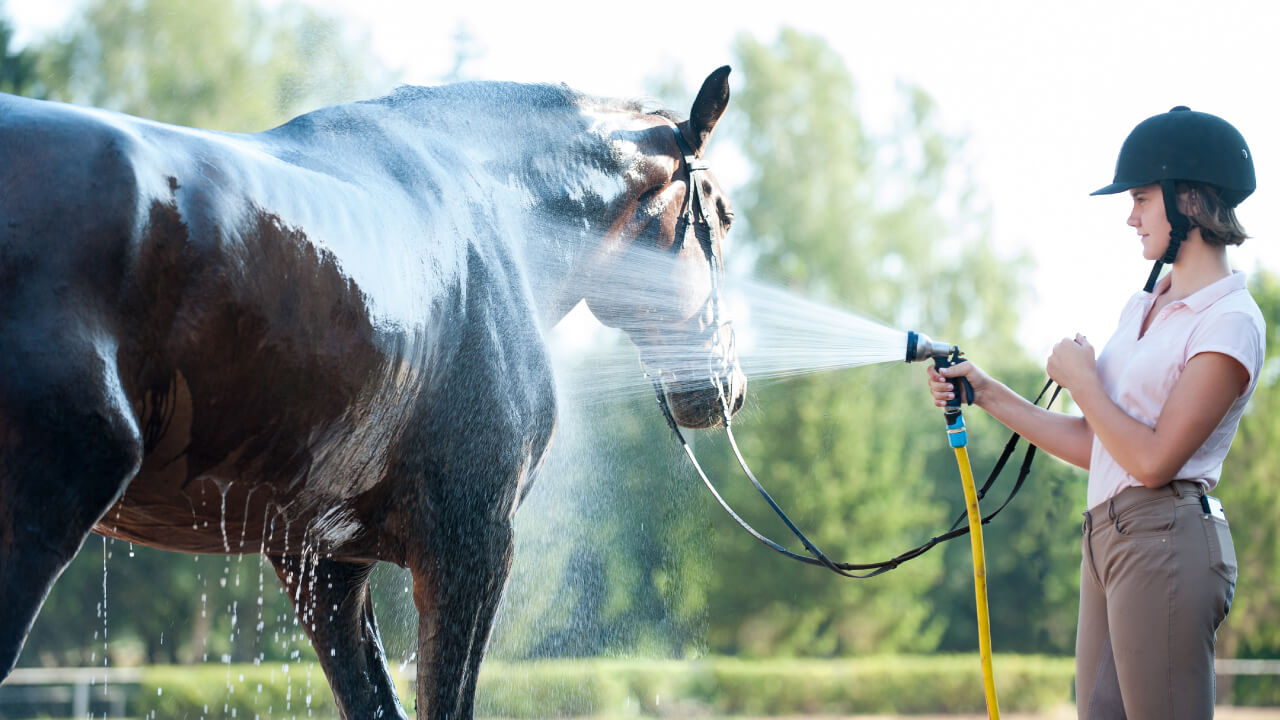
As the hot season arrives, it’s a time when many of us start to sweat when outside. Some people find sweating refreshing, while others dislike it and try to avoid it.
Sweating plays a vital role for animals enduring hot weather, and horses are no exception. Horses also sweat all over their bodies on hot days.
But what functions does sweat serve for horses? Are there differences between horse sweat and human sweat?
In this article, we focus on horse sweat, exploring how horses sweat and what their sweat contains. Please use this information as a reference.
Horses Are Very Sweaty Animals

Are you a sweaty person? As the weather gets hotter, humans sweat all over their bodies to release internal heat. It’s not only humans; animals like cattle, hippos, and horses also sweat across their entire bodies.
Have you ever wondered if all animals sweat the same way? Have you seen dogs or cats with their bodies soaked in sweat?
The truth is, only a few animals, such as those mentioned earlier, sweat across their whole bodies. Among these animals, humans and horses are especially notable for sweating heavily. It’s no exaggeration to say that humans and horses are among the most sweat-prone animals.
Differences Between Human and Horse Sweat Glands

Even among sweat-prone animals, there are significant differences in how they sweat. The causes of sweating differ between humans and horses.
Humans tend to generate more body heat when exposed to high temperatures. To offload this heat, the body produces sweat, which evaporates to cool down the body, helping maintain a stable temperature even in summer heat.
Horses, on the other hand, sweat not only to regulate temperature but also in response to physical activity, nervousness, or excitement. The types of sweat glands have evolved differently in humans and horses, influencing when and why they sweat heavily.
Humans have well-developed eccrine glands, while horses mainly utilize apocrine glands for sweating. Eccrine glands trigger sweat due to skin stimuli, whereas apocrine glands respond to adrenaline secretion.
In general, apocrine glands are less involved in sweating, which is why animals like dogs and cats usually don’t sweat heavily across their bodies—except on their paw pads, where eccrine glands are present. Horses, having highly developed apocrine glands, can sweat extensively, which is a remarkable evolutionary trait to help with body temperature regulation.
In addition, dogs and cats also have eccrine glands on their paw soles, so they may sweat and become damp when overheated or under extreme stress.
Why Does Horse Sweat Turn White?

You may have seen a horse sweat, which turns white and foamy after heavy sweating. This can often be seen after a lesson when horses return to the stables. You might wonder, “Why is it white?”
Horse sweat contains lanolin, a component similar to soap. That’s why veins of foam form when horses sweat extensively.
Lanolin acts as a surfactant, spreading across the horse’s entire body. This white foam helps in temperature regulation by aiding in heat dissipation over the large body surface.
Can Sweating Reveal a Horse’s Health?

For those who enjoy horse racing, the health of a horse on race day can be crucial for winning or losing. Long-term observation allows caretakers to judge a horse’s condition based on appetite and movement. But this is often only possible for those who closely care for the horses.
What should race enthusiasts observe to assess a horse’s condition? Many look at coat condition and walk patterns at the paddock, but in summer, many also pay attention to sweating as an indicator of health.
As mentioned earlier, sweating helps regulate body temperature. For racehorses, being able to sweat properly is vital. If a horse does not sweat enough and retains heat, it’s at risk of heatstroke.
Horses are vulnerable to heat. Poor temperature regulation can cause collapse during or after a race, leading to injuries for both the horse and rider.
Summary
How was that? It’s clear that sweating plays an important role. Among animals, only a few species sweat across their entire bodies, and horses are among those special animals.
Sweating is essential for horses to adapt to their environment. Despite having sweat glands that are less prone to producing excess sweat, horses have evolved to sweat heavily, which helps them efficiently regulate their large bodies’ temperatures.
If you see a horse that isn’t sweating at all on a hot day, it’s thoughtful to check whether it might be suffering from heatstroke — something riders can keep an eye on to ensure their horses’ safety.