
In period dramas, you may have heard of urgent messages being delivered by ‘sending a courier on a fast horse.’ So, what exactly was a fast horse (hayouma / hayama)? In this article, we explore interesting facts about these horses and how fast they could really go!
What Were the Breeds of Fast Horses?

In period dramas, you often see Arab or Thoroughbred horses at riding clubs. But what kind of horses actually served as fast couriers in old Japan?
What Is a Fast Horse Anyway?
Let’s first understand what a fast horse was. In times before email and telephone, it was an emergency communication method. When walking to deliver messages was too slow, messengers were sent on horseback to deliver letters or messages.
This practice was especially prevalent during the Muromachi through Edo periods, mainly used by daimyo and samurai. Since only certain classes could afford good horses, it was a privilege of the elite.
Interestingly, the term ‘fast horse’ referred to this emergency communication method, and in some contexts, it even described the messenger themselves rather than the horse.
Japanese Native Horses
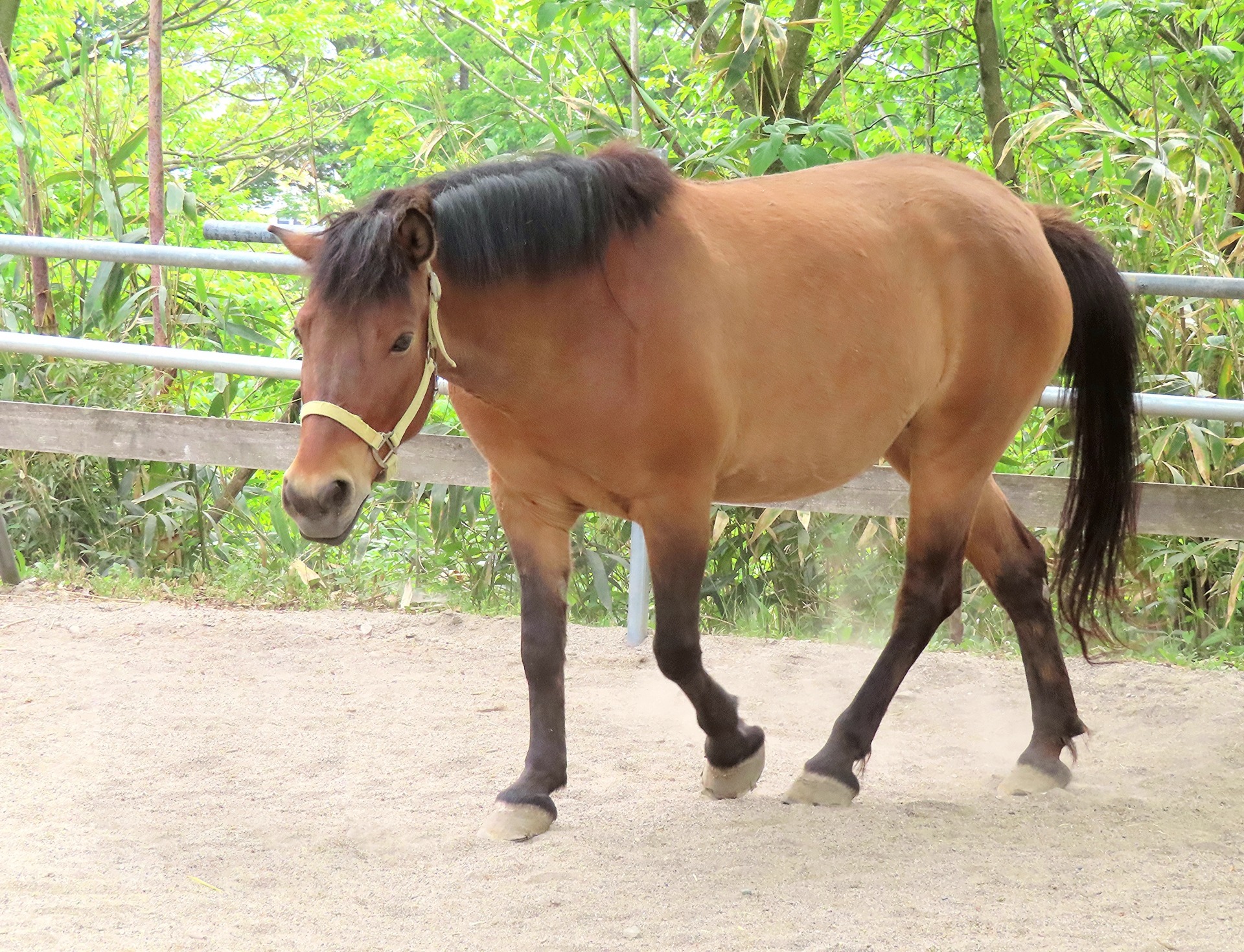
Back then, samurai didn’t ride the sleek English breeds we see today. Instead, they relied on native Japanese breeds, which you can still see in regions where horses like Dosanko, Kiso, or Yonaguni are bred.
These native Japanese horses are small, sturdy, with small, hard hooves and a calm, patient temperament, making them suitable for endurance and long-distance travel.
Unlike modern horse-people might assume, many Japanese native horses did not wear horseshoes because their hooves were naturally hard, and roads were unpaved, mainly dirt paths.
In fact, when protection was necessary, horses were often shod with straw shoes similar to sandals, as seen in old ukiyo-e prints.
Surprisingly Slow? How About Short-Distance Speed?

Compared to thoroughbreds, Japanese native horses are smaller. How fast could they actually go when serving as a fast courier?
Maximum Speed is About 30-40 km/h—But…
Research by a traditional Japanese horsemanship group revealed that when a Kiso horse was ridden by an adult in armor, its top speed was around 30-40 km/h. Though about half the speed of a thoroughbred, it might feel quite fast!
Of course, horses are living creatures, and their endurance is limited. No horse can run at full speed for more than an hour, so they couldn’t have been delivering messages at 60 km in an hour constantly.
How to Prevent Horse Exhaustion
Body size differences make it difficult to compare the endurance of large exotic breeds and small native Japanese horses directly.
Unlike in dramas where horses are shown running at full gallop, it appears they were not pushed to maximum speed all the time but used techniques to preserve their stamina.
In Japan, horses carried heavy armor and traveled long distances, so specialized riding methods like ‘kura-una’ were developed to avoid tiring the horses too quickly.
For longer, faster travel by horse, preventing exhaustion was more important than maximum speed. Japanese traditional horsemanship included many techniques suitable for relay horses like these.
The Tokaido Post Station Relay System

This method, called ‘relay system,’ involved passing messages from one horse to another in a relay extending from start to finish. It’s akin to a baton relay race.
The most famous example is the ‘Tokaido post station relay.’ When Tokugawa Ieyasu developed the Tokaido, he established 53 post stations along it, connecting Edo to Kyoto.
Originally, these stations served as facilities to support government officials, providing necessary personnel and horses. Later, they evolved into places where samurai could stay and traders could conduct commerce.
Interestingly, although these stations were initially for official use, operators found that outsourcing transportation during off-duty times increased profits, including private cargo shipments.
The Fastest Messenger? The Relay Runners!

When it comes to relays, the true speedsters weren’t the horses but the runners who carried the messages in relay. While horses were vital for transportation and long-distance relay, messengers on foot could deliver messages even faster.
It’s believed that a messenger could connect the distance from Osaka to Edo in just 2-3 days—faster than a horse relay. Even for official government dispatches, the average time was about a week.
Interestingly, the image of a courier is often of a lightweight person with a headband, running with a stick with a small bundle. But, in fact, some couriers did use horses, too.
Summary
Back in old Japan, ‘fast horses’ for urgent dispatches moved at speeds that might seem slow from a modern perspective, but considering they relied on native Japanese breeds and long-distance riding, they were probably quite efficient for their time.